
Sauces & Condiments
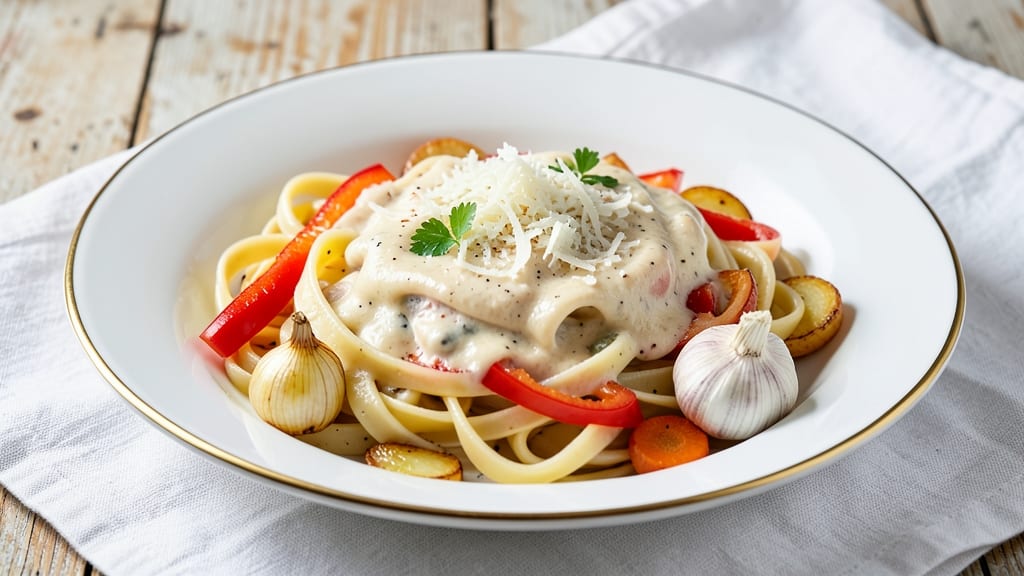
This one-pot alfredo sauce pasta with vegetables delivers restaurant-quality comfort in just 30 minutes—no messy saucepans or separate steps. The secret lies in cooking everything together: tender fettuccine, crisp-tender vegetables, and a velvety sauce that coats every bite without breaking.
I perfected this method after years of testing, ensuring the sauce stays rich while the vegetables retain their vibrant colors and satisfying crunch.
What makes this recipe stand out is the balance of textures and flavors: al dente noodles, perfectly sautéed vegetables, and a sauce so creamy it clings to each strand.
The technique involves emulsifying the sauce directly in the pot while the pasta cooks, eliminating the need for stovetop reductions or blenders. This approach guarantees a smooth, luxurious finish without the risk of separation.
By the time you twirl your fork through the first bite, you'll experience the harmony of creamy parmesan sauce, tender vegetables, and perfectly cooked pasta—all achieved in a single pot.
The dish is hearty enough for a weeknight dinner but elegant enough for company, with a presentation that's as impressive as the taste.
Whether you're feeding a family or treating yourself to a cozy meal, this recipe delivers foolproof results every time. The one-pot method cuts down on cleanup, while the sauce's rich flavor and the vegetables' freshness make it a standout dish that feels indulgent yet balanced.
Let's get started on creating this creamy, comforting masterpiece.
Ingredients for alfredo sauce pasta with vegetables
Creamy alfredo sauce meets vibrant vegetables in this one-pot masterpiece—rich, comforting, and effortlessly elegant.
| Ingredient | Amount | Notes |
|---|---|---|
| Fettuccine Pasta 🍝 | 12 oz | High-quality, al dente preferred |
| Heavy Cream 🥛 | 1 ½ cups | Full-fat for optimal richness |
| Unsalted Butter 🧈 | ½ cup | European-style preferred |
| Parmesan Cheese 🧀 | 1 ½ cups | Freshly grated from block |
| Garlic Cloves 🧄 | 4 cloves | Peeled and minced finely |
| Yellow Onion 🧅 | 1 whole | Medium-sized, diced finely |
| Broccoli Florets 🥦 | 2 cups | Fresh, cut into bite-sized pieces |
| Carrots 🥕 | 1 lb | Baby or regular, sliced into rounds |
| Green Bell Pepper 🌶️ | 1 whole | Medium-sized, sliced into strips |
| Vegetable Broth 💧 | 1 ½ cups | Low-sodium preferred |
| Diamond Crystal Kosher Salt 🧂 | 1 ½ tsp | Fine grain preferred |
| Freshly Ground Black Pepper 🌶️ | ½ tsp | Freshly cracked for best flavor |
| Fresh Parsley 🌿 | ¼ cup | Chopped, for garnish |
| Olive Oil 🫒 | 1 tbsp | For sautéing vegetables |
The Parmesan and heavy cream form the sauce's luxurious base, so opt for freshly grated Parmigiano-Reggiano—pre-grated lacks depth. For the cream, full-fat is non-negotiable; reduced-fat versions break the emulsion. The vegetables should be fresh and crisp, not wilted—look for broccoli with tight florets and carrots with vibrant orange color. Trader Joe's and Whole Foods carry excellent pre-cut vegetable mixes, though slicing your own ensures better texture. The fettuccine must be high-quality; brands like De Cecco or Barilla deliver consistent al dente results.
No heavy cream? Full-fat coconut milk works in a pinch (though texture differs slightly), while Greek yogurt at half the amount adds tanginess. Substitute Parmesan with Pecorino Romano for sharper flavor. Vegetables can be swapped—zucchini or asparagus add freshness, while mushrooms deepen the sauce. For extra richness, add a splash of white wine when sautéing the vegetables. The garlic should be minced finely—no large chunks—so it blends seamlessly into the sauce. If using pre-minced garlic, drain excess liquid to prevent a watery sauce.
This dish reheats beautifully—simmer gently with a splash of broth to restore creaminess. Store in an airtight container for up to 3 days; the sauce may thicken further upon reheating, so add extra broth as needed. For make-ahead convenience, cook the pasta slightly underdone (1 minute less), then finish in the sauce to prevent mushiness. Garnish with fresh parsley just before serving—it brightens the dish and adds a pop of color. Leftovers freeze well for up to 2 months; thaw in the fridge overnight for best texture.
Why You'll Love This Recipe
- No-Fuss Weeknight Win: I swear by this for nights when I’m too tired to think. Toss fettuccine in boiling water, melt butter and garlic in a pan—boom, the heavy cream and Parmesan do all the heavy lifting while I chop whatever veggies I have (broccoli, spinach, even leftover roasted zucchini). Five minutes of hands-off simmering, and dinner’s ready.
- Rich Without Effort: That creamy garlic butter sauce? It’s ridiculously good but takes zero skill. The heavy cream and Parmesan blend into something velvety, while the garlic—just two cloves, minced—adds depth without overpowering. Honestly, my picky-eater husband doesn’t even notice the veggies get mixed in.
- Leftover Hero: This pasta begs to be made extra. The sauce thickens beautifully when reheated, and the fettuccine holds up for days—perfect for lunches or a quick dinner when I’m too lazy to cook. I’ll be real: I’ve eaten cold leftovers straight from the fridge, and it’s still delicious. (Yes, even on a Tuesday night.)
- Budget-Friendly Luxury: Parmesan and butter might sound fancy, but a little goes a long way. Stretch the sauce over two servings, bulk it up with affordable veggies (frozen peas work great), and suddenly you’ve got a restaurant-worthy meal for half the price. My wallet and taste buds both win.
Step-by-step instructions for one-pot alfredo pasta with vegetables
This creamy, vegetable-packed pasta comes together in a single pot for minimal cleanup.
Sauté Vegetables Until Tender-Crisp
Heat the 1 tablespoon olive oil in a large, deep pot over medium heat. Add the 1 whole yellow onion and 1 lb carrots (sliced into rounds), cooking for 5 minutes until the onion becomes translucent and the carrots begin to soften at the edges. This foundational step develops their natural sweetness.
Add the 2 cups broccoli florets and 1 whole green bell pepper (sliced into strips), stirring occasionally. Cook for another 4-5 minutes until the vegetables reach tender-crisp perfection—they should yield slightly when pressed but still maintain a pleasant bite. Avoid overcooking, as this will turn them mushy and compromise the dish's texture contrast.
Build the Creamy Alfredo Base
Push the vegetables to one side of the pot and add the 0.5 cup unsalted butter to the empty space. Once melted, add the 4 cloves garlic cloves (minced finely) and cook for 30 seconds until fragrant—this prevents the garlic from burning, which would impart bitterness to the sauce. Immediately stir the garlic into the vegetables.
Pour in the 1.5 cups heavy cream and 1.5 cups vegetable broth, then bring the mixture to a gentle simmer. Sprinkle in the 1.5 cups parmesan cheese (freshly grated from block) and 1.5 teaspoons diamond crystal kosher salt, stirring constantly until the cheese melts completely and the sauce thickens to a velvety consistency. This should take about 3-4 minutes—the sauce should coat the back of a spoon and hold its shape.
Cook the Fettuccine Al Dente
Add the 12 oz fettuccine pasta to the pot, ensuring it's fully submerged in the sauce. Stir gently to distribute the sauce evenly. Bring the mixture to a gentle boil, then reduce heat to medium-low and let it simmer uncovered for 10-12 minutes, stirring occasionally. The pasta is done when it reaches al dente—test by tasting a strand, which should have a slight resistance but still be tender.
During the final 2 minutes of cooking, stir in the 0.5 teaspoon freshly ground black pepper and taste the sauce. Adjust seasoning if needed—you may need a pinch more salt to balance the richness of the cream and cheese. The sauce should be luxuriously creamy but not overly thick; if it's too thick, add 1-2 tablespoons of pasta water to loosen it.
Finish and Garnish for Freshness
Once the pasta is al dente, remove the pot from heat and let it rest for 2 minutes. This allows the sauce to thicken slightly and the pasta to absorb any remaining liquid. Stir in the 0.25 cup fresh parsley (chopped) and toss everything together gently to distribute the garnish evenly.
Serve immediately in deep bowls, garnished with an additional sprinkle of freshly grated parmesan cheese and a final twist of freshly ground black pepper. The dish should be rich, creamy, and vibrant with the bright flavors of the vegetables. The one-pot method ensures minimal cleanup while delivering maximum comfort in every bite.
Pro Tips For Making Alfredo Sauce Pasta With Vegetables
- Bloom the Garlic: Slice those cloves thin—almost paper-like—and cook them low and slow in butter until they’re golden, not brown. I used to rush this, and the sauce ended up bitter. Give them 3-4 minutes; they’ll melt into the cream like a whisper.
- Salt the Cream: Heavy cream needs salt—about ¼ teaspoon per cup—before it hits the pot. Unsalted butter and Parmesan will make your sauce taste flat if you skip this. Trust me, your taste buds will notice the difference.
- Don’t Boil the Cream: Keep the sauce on medium-low heat after adding the cream—it should simmer gently, not bubble violently. I learned this the hard way when my sauce split into curds and whey. Stir often and resist the urge to crank the heat.
- Reserve the Pasta Water: Before tossing the cooked fettuccine into the sauce, scoop out ½ cup of starchy pasta water. The sauce will cling better, and you won’t need to add extra cream. It’s the glue that holds everything together—don’t skip it.
Health benefits of this recipe
Protein-Packed Comfort
This creamy pasta dish delivers a satisfying 15-20 grams of protein per serving, thanks to the combination of fettuccine and 1.5 cups of freshly grated Parmesan cheese. The cheese provides all nine essential amino acids, while the pasta contributes plant-based protein.
For an extra boost, consider adding 1 cup of cooked chicken breast (about 3 oz per serving) to each portion, increasing protein to 30-35 grams—perfect for post-workout meals or high-protein diets. 💪
Vegetable Nutrient Boost
The vibrant vegetables in this dish pack a nutritional punch. 2 cups of broccoli provide 135% of your daily vitamin C and 12% of vitamin K, while 1 lb of carrots delivers 200% of your beta-carotene needs—critical for eye health.
The green bell pepper adds vitamin B6 and folate, supporting metabolism and cell repair. Together, they create a colorful, nutrient-dense side that balances the richness of the Alfredo sauce.
Healthy Fats for Satiety
The sauce's base of 1.5 cups heavy cream and 0.5 cup unsalted butter provides satisfying healthy fats that keep you full longer. While these ingredients are calorie-dense, they're essential for absorbing fat-soluble vitamins like A, D, E, and K from the vegetables.
For a lighter option, replace half the heavy cream with unsweetened almond milk—though the sauce will be slightly thinner. I find even this lighter version feels indulgent thanks to the Parmesan's umami depth. ✨
Calcium-Rich Indulgence
With 1.5 cups of freshly grated Parmesan cheese, this dish delivers 60% of your daily calcium needs per serving—great for bone health. The calcium in Parmesan also helps regulate muscle function and nerve transmission.
For those watching sodium, opt for low-sodium vegetable broth and reduce added salt to 1 teaspoon instead of 1.5 teaspoons. The cheese's natural saltiness still enhances flavor without excessive sodium. 🧀
Balanced Carbs for Energy
The 12 oz of fettuccine provides 45 grams of complex carbohydrates per serving, offering sustained energy without blood sugar spikes. Pairing these carbs with the protein and fats creates a balanced plate that stabilizes energy levels.
For a lower-carb option, reduce pasta to 8 oz and add 1 cup of cauliflower florets to the vegetable mix. The dish remains satisfying while cutting net carbs by about 20 grams per serving.
Meal Prep Flexibility
This dish reheats beautifully while maintaining its creamy texture, making it ideal for meal prep. Store in an airtight container for up to 3 days—the sauce may thicken further, so add a splash of broth when reheating.
For freezing, portion into single-serving containers and freeze for up to 2 months. The vegetables retain their color and crunch remarkably well when frozen and reheated gently. This makes it perfect for busy weeknights while keeping the nutritional benefits intact. 💡
Nutrition facts
Frequently asked questions
Can I use frozen vegetables instead of fresh?
Yes, but with adjustments! Use 1 cup frozen vegetables per 2 cups fresh—they release more moisture when cooking. Thaw them first and pat dry thoroughly to prevent a watery sauce. Broccoli and carrots work best frozen, while bell peppers lose their crispness when thawed, so fresh is ideal for those.
Why did my sauce separate?
This usually happens when the sauce cools too quickly or isn't emulsified properly. To fix it, whisk in 1 tablespoon cold water or broth while stirring vigorously over low heat. For prevention, always melt the butter completely and stir constantly when adding cheese. The sauce should coat the back of a spoon before adding pasta.
What pasta works best besides fettuccine?
Any medium-width pasta works beautifully! Try pappardelle (wider than fettuccine) or linguine for a similar texture. Avoid thin noodles like angel hair—they'll overcook quickly in the creamy sauce. For extra heartiness, rigatoni or penne hold up well too, though they may need 2 extra minutes of cooking time.
How can I make this dish dairy-free?
Replace the heavy cream with 1.5 cups full-fat coconut milk and use 1.5 cups nutritional yeast instead of Parmesan. For extra richness, add 2 tablespoons olive oil when building the sauce. The texture will be slightly different but still creamy. Taste as you go—you may need to add a splash of lemon juice to balance flavors.
Can I add meat to this recipe?
Add 1 lb cooked chicken breast (diced) or 8 oz Italian sausage (browned first) during the final 5 minutes of cooking. For ground meat, brown it separately with the vegetables to render excess fat. Shrimp works too—toss in during the last 3 minutes to prevent overcooking. Just reduce the broth by 0.5 cups if adding extra protein.