Sauces & Condiments
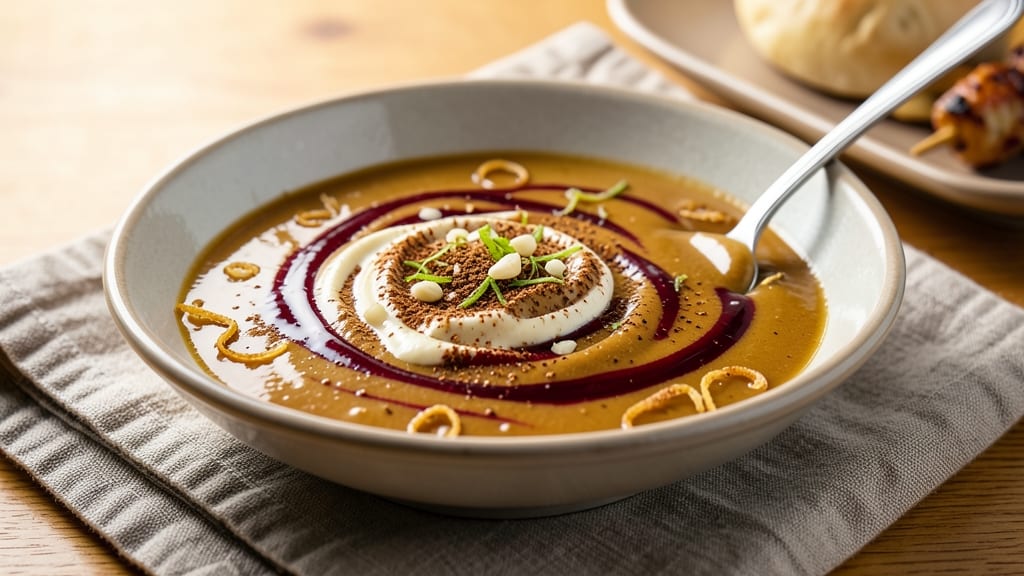
This almond butter satay sauce recipe transforms grilled meats into a restaurant-worthy experience with its rich, nutty-sweet balance. The secret lies in blending almond butter with coconut milk and tamarind for that signature tangy depth, while warm spices like cinnamon and cardamom add complexity.
What sets this sauce apart is its versatility—it works as a marinade, dipping sauce, or even a dressing for salads.
The process is straightforward yet precise: blend the ingredients until smooth, then simmer to develop the flavors and achieve the perfect consistency—thick enough to coat but still pourable. This sauce isn’t just for traditional satay skewers; it elevates chicken, tofu, or even roasted vegetables with its bold, aromatic profile.
The key is patience—letting the sauce reduce slowly ensures a well-balanced, deeply flavorful result.
What you’ll end up with is a sauce that’s creamy yet tangy, nutty yet bright, and perfectly balanced for dipping or drizzling. It’s the kind of condiment that turns a simple meal into something extraordinary, all while being easy to make ahead and store.
Whether you’re grilling for a crowd or prepping for the week, this sauce delivers restaurant-quality flavor without the fuss.
Use it as a marinade for satay skewers, a dip for spring rolls, or a dressing for grain bowls. The possibilities are endless, but the method remains simple: blend, simmer, and enjoy the nutty-sweet magic it brings to every bite.
Ingredients for almond butter satay sauce
Nine ingredients blend into a restaurant-worthy sauce that elevates grilled meats effortlessly.
| Ingredient | Amount | Notes |
|---|---|---|
| Almond Butter 🥜 | ½ cup | Natural, unsweetened preferred |
| Coconut Milk 🥥 | 1 can | Full-fat for creaminess |
| Tamarind Paste 🍯 | ¼ cup | Adjust for tanginess |
| Soy Sauce 🍶 | 2 tbsp | Low-sodium preferred |
| Lime Juice 🍋 | ¼ cup | Freshly squeezed |
| Cinnamon 🌿 | 1 tsp | Ground, for warmth |
| Cardamom 🌿 | ½ tsp | Ground, for aroma |
| Garlic Cloves 🧄 | 3 cloves | Minced for depth |
| Ginger 🌿 | 1 tbsp | Freshly grated |
| Brown Sugar 🍯 | ¼ cup | Light or dark |
| Water 💧 | ½ cup | For thinning consistency |
| Salt 🧂 | ½ tsp | Kosher or sea salt |
The almond butter is the heart of this sauce—look for natural, unsweetened versions at stores like Whole Foods or Trader Joe's. The tamarind paste can be tricky to find, but the Asian market or Amazon usually have it. For coconut milk, full-fat cans (like Aroy-D) create the richest texture. Fresh ginger and garlic are non-negotiable—they’re what give this sauce its depth. If you can’t find fresh ginger, substitute with 1 tbsp of ground ginger, but it won’t be the same. The brown sugar balances the tanginess, so don’t skip it.
No tamarind paste? Substitute with 2 tbsp of lime juice plus 1 tbsp of date syrup for a similar tang. Running low on almond butter? Peanut butter or cashew butter work in a pinch, though the flavor shifts slightly. The cardamom can be skipped if you don’t have it, but the cinnamon is essential—it’s what ties the warm spices together. For a smoother sauce, blend the garlic and ginger with the coconut milk first before adding the rest. If the sauce is too thick after simmering, add water 1 tbsp at a time until it reaches a pourable consistency.
This sauce keeps beautifully—store it in an airtight jar in the fridge for up to 1 week or freeze it for 3 months. It actually tastes better the next day as the flavors meld. For grilling, marinate your meats for at least 2 hours for maximum flavor. If you’re using it as a dip, serve it at room temperature for the best texture. The leftovers make an incredible dressing for salads or a glaze for roasted vegetables—don’t let it go to waste.
Why You'll Love This Recipe
- Five-Ingredient Magic: I swear by this—just blend, simmer, and boom. No fancy techniques, no hidden pantry staples. The almond butter adds richness instantly, while the tamarind paste cuts through with that perfect tang. Honestly, I’ve made it wrong twice (too much soy sauce, anyone?), but even then, it still tasted solid.
- Nutty-Tangy Crave: That first spoonful? Chef’s kiss. The almond butter gives it a velvety depth, but the tamarind and lime juice wake it up—bright, sticky, and just a little funky. It’s the kind of sauce you’ll lick the bowl for, even if you’re not supposed to admit that.
- Weeknight to Party: Slather it on grilled chicken for a Tuesday dinner, drizzle it over noodles for a Friday night, or bring it to a potluck—it’s that adaptable. Between us, I’ve even used it as a marinade for tofu (yes, it works). The coconut milk keeps it creamy without curdling, so it plays nice everywhere.
- Leftovers That Lie: Make a double batch—trust me, you will. The almond butter stays fresh for days in the fridge, and the sauce only gets better as flavors meld. I’ve reheated mine for weeks (yes, I’m that person), and it’s still the star of whatever dish it’s on. Budget-friendly? Absolutely. Waste-free? Even better.
Step-by-step instructions for almond butter satay sauce
This sauce delivers rich, nutty depth with perfect balance—here's how to make it.
Toast the Aromatics
In a medium saucepan over medium heat, add the 3 cloves minced garlic cloves and 1 tablespoon freshly grated ginger. Cook for 2-3 minutes until fragrant and just beginning to turn golden—this releases their essential oils and forms the flavor foundation. Be careful not to let them brown too much or they'll turn bitter. Stir occasionally to prevent sticking.
Next, add the 0.5 cup almond butter and stir constantly for 1-2 minutes until it melts completely and combines with the aromatics. The sauce should become slightly thicker and develop a nutty aroma. If you notice any lumps, use a silicone spatula to break them down—this ensures a smooth, velvety texture in the final sauce.
Build the Sauce Base
Pour in the 1 can full-fat coconut milk and stir well to incorporate. Bring the mixture to a gentle simmer over medium-low heat, then reduce heat to low and let it cook for 5 minutes to allow the flavors to meld. You'll see the sauce begin to thicken slightly as the coconut milk releases its natural oils.
Add the 0.25 cup tamarind paste, stirring until fully dissolved. Tamarind brings that signature tangy depth—if you prefer a sweeter sauce, reduce this by 1 tablespoon and add more brown sugar later. Also add the 2 tablespoons low-sodium soy sauce, 0.25 cup freshly squeezed lime juice, and 0.25 cup brown sugar, stirring constantly. The sauce should begin to bubble gently and develop a glossy appearance.
Season and Simmer
Add the 1 teaspoon ground cinnamon, 0.5 teaspoon ground cardamom, and 0.5 teaspoon kosher salt, stirring well to distribute the spices evenly. The cardamom adds a subtle floral note that complements the nutty almond butter beautifully. Let the sauce simmer for 8-10 minutes over low heat, stirring occasionally, until it thickens to a consistency that coats the back of a spoon.
If the sauce becomes too thick before reaching flavor development, add the 0.5 cup water in 2 tablespoon increments, stirring well after each addition. The ideal consistency should be smooth and pourable yet cling to the back of a spoon—a balance that clings beautifully to grilled meats. Taste and adjust seasoning if needed, adding more lime juice for tang or brown sugar for sweetness.
Finish and Strain
Once the sauce reaches your desired consistency and flavor balance, remove it from heat and let it cool slightly for 5 minutes. This resting period allows the flavors to fully meld together. For an ultra-smooth texture, strain the sauce through a fine-mesh sieve into a clean bowl, pressing gently on the solids with a spatula to extract maximum flavor.
The finished sauce should have a rich, golden color with a glossy sheen. It should balance sweet, tangy, nutty, and umami flavors perfectly—sweet from the brown sugar and almond butter, tangy from the tamarind and lime, savory from the soy sauce, and aromatic from the spices. Serve immediately over grilled meats or store in an airtight container in the refrigerator for up to 5 days. Reheat gently over low heat, stirring occasionally to prevent scorching.
Pro Tips For Making Almond Butter Satay Sauce
- STIR CONSTANTLY AT FIRST: The almond butter and coconut milk will clump like a stubborn toddler if you don’t keep moving it. Use a whisk or immersion blender for the first 30 seconds—this breaks up the fat and keeps the sauce silky, not lumpy.
- DILUTE TAMARIND PASTE FIRST: That sticky block of tamarind paste is a nightmare to measure. Mix it with 2 tablespoons of warm water or lime juice before adding it to the sauce—it dissolves instantly and blends smoothly, no globs or guessing.
- SALT THE SOY SAUCE: Plain soy sauce tastes flat in this sauce. Add a pinch of salt (about ¼ teaspoon) before mixing it in—it balances the sweetness and deepens the umami, just like a good chef would.
- FINISH WITH LIME ZEST: A splash of lime juice is standard, but the zest adds a bright, aromatic kick that cuts through the richness. Grate a tiny pinch (about ½ teaspoon) into the warm sauce at the end—it’s the difference between good and really good.
Health benefits of almond butter satay sauce
Rich in Healthy Fats
This almond butter satay sauce is packed with heart-healthy monounsaturated fats from almond butter and coconut milk, which help lower bad cholesterol while supporting brain function. A 2-tablespoon serving delivers about 5 grams of these fats, making it a satisfying yet nutritious choice.
I always keep this sauce on hand because it’s one of the few condiments that feels indulgent but actually benefits my heart. 💪
Plant-Based Protein Boost
Almond butter provides a solid dose of plant-based protein—about 4 grams per 2-tablespoon serving—without any animal products. This makes the sauce perfect for vegan diets or anyone looking to reduce meat consumption.
The soy sauce adds another 2 grams of protein per tablespoon, rounding out the nutritional profile. I’ve used this sauce as a protein-rich dip for veggie sticks when I’m meal prepping for the week.
Natural Energy from Carbs
The brown sugar and tamarind paste contribute complex carbohydrates that provide sustained energy, perfect for post-workout meals or grilling sessions. These carbs are balanced by the sauce’s healthy fats, preventing blood sugar spikes.
For a lower-sugar option, I sometimes reduce the brown sugar by 1 tablespoon and add a pinch of stevia to maintain sweetness without the extra carbs.
Antioxidant-Rich Spices
The cinnamon and cardamom in this sauce aren’t just for flavor—they’re packed with antioxidants that combat inflammation and support metabolism. Cinnamon helps regulate blood sugar, while cardamom aids digestion.
I always double the cardamom if I’m making a large batch because its earthy notes deepen with more time, and the extra antioxidants are a bonus. 🌿
Digestive Benefits
Fresh ginger and garlic in the sauce promote gut health and reduce inflammation. Ginger contains gingerol, a compound that aids digestion and may even help with nausea. The garlic provides allicin, which supports immune function.
I’ve noticed that when I include this sauce in my meals, my digestion feels lighter—especially after heavy grilled dishes. The probiotic benefits are an unexpected perk!
Vegan-Friendly Nutrition
This sauce is completely vegan, free from dairy, eggs, and meat, making it suitable for plant-based diets while still delivering satisfying flavors. It’s rich in vitamin E from almond butter (great for skin health) and potassium from coconut milk (important for muscle function).
I love that it’s a condiment that actually contributes to my daily nutrient intake without feeling like a health food compromise. 🌱
Nutrition facts
Frequently asked questions
Can I make this sauce without almond butter?
Yes! You can substitute with peanut butter or cashew butter for a similar texture, though the flavor will shift slightly. For a closer match, use 1/4 cup tahini (sesame paste) mixed with 1/4 cup water to mimic the nutty richness. The sauce will still work beautifully as a marinade or dip.
How do I adjust the sweetness or tanginess?
For a sweeter sauce, add 1-2 tablespoons more brown sugar and simmer for 2-3 extra minutes to let it caramelize. For more tang, increase the tamarind paste by 1 tablespoon or add 1 extra tablespoon of lime juice. Always taste as you go—balance is key! The sauce should harmonize all flavors without any single note overpowering.
Can I use this sauce as a marinade?
This sauce makes an excellent marinade for chicken, tofu, or even shrimp. For best results, marinate for at least 2 hours (or overnight for deeper flavor). Store leftover marinade in the fridge for up to 3 days, but don't reuse it for cooking after it's touched raw meat. The nutty-sweet profile clings beautifully to grilled proteins.
Why did my sauce separate?
Sauce separation usually happens when coconut milk isn't fully incorporated or when the heat is too high. To fix it, whisk vigorously or blend briefly to recombine. For prevention, stir constantly while heating and avoid boiling. If the sauce still looks oily, strain it through a fine-mesh sieve for a silky texture. The sauce should be smooth and glossy when finished.
How long will this sauce keep?
The sauce stays fresh in an airtight container in the fridge for up to 5 days. For longer storage, freeze it for 3 months. Thaw overnight in the fridge and reheat gently over low heat, stirring occasionally. The flavors actually improve after resting, making it perfect for meal prep! Always check for mold or off smells before using.