
Sauces & Condiments
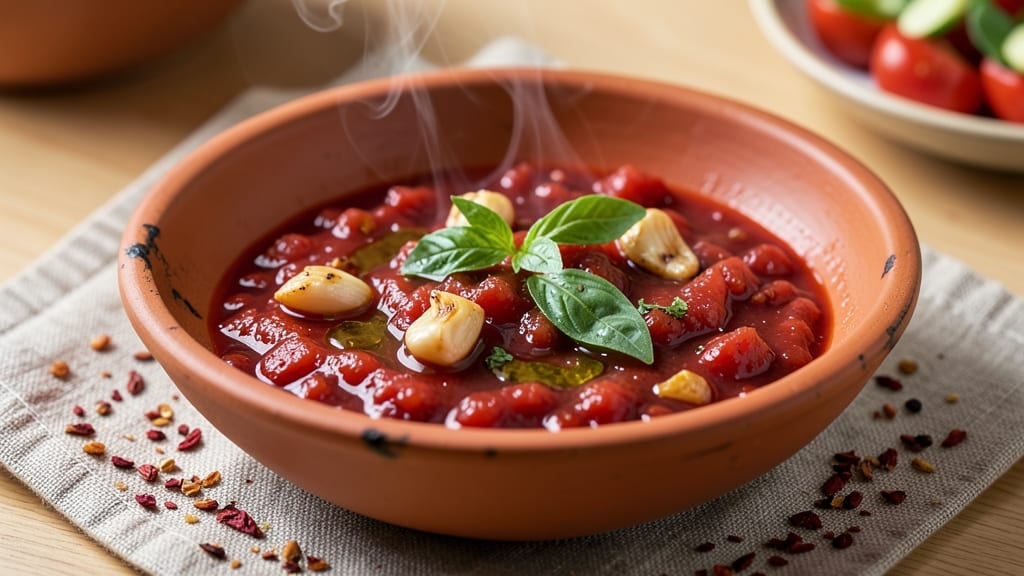
This arrabbiata sauce recipe with fresh tomatoes delivers the perfect balance of bright acidity and fiery heat in just 20 minutes—no canned tomatoes or dull flavors here.
The secret lies in fresh, ripe tomatoes simmered with garlic, chili flakes, and olive oil until they break down into a velvety, vibrant sauce. I developed this version after years of testing, and it’s the one that finally captures authentic Italian restaurant quality at home.
The beauty of making arrabbiata sauce with fresh tomatoes is how simple yet transformative it is.
You’ll start with a quick sauté of garlic in olive oil—never let it brown, or you’ll taste bitterness instead of sweetness—and then add the tomatoes, chili flakes, and a splash of red wine for depth.
As it simmers, the tomatoes release their natural sweetness while the chili flakes infuse just the right amount of heat. Fresh basil at the end brightens everything up.
What you’ll end up with is a sauce that’s rich, tangy, and just spicy enough to make every bite exciting—ideal for tossing with pasta, drizzling over grilled meats, or even as a marinade.
The texture is silky yet still has a slight chunkiness from the tomatoes, and the flavor builds with every spoonful. This isn’t just another tomato sauce; it’s a bold, restaurant-worthy sauce that proves fresh ingredients make all the difference.
Best of all, it keeps beautifully in the fridge for up to 5 days or freezes for 3 months, so you can make a big batch and enjoy it all week. Let’s get cooking—your next pasta night just got an upgrade.
Ingredients for arrabbiata sauce recipe fresh tomatoes
Fresh tomatoes, garlic, and chili flakes—simple ingredients for a sauce that tastes like a real Italian restaurant.
| Ingredient | Amount | Notes |
|---|---|---|
| Fresh Tomatoes 🍅 | 2 lb | Ripe, vine-ripened preferred |
| Extra-Virgin Olive Oil 🫒 | ½ cup | High-quality, fruity variety |
| Garlic Cloves 🧄 | 6 cloves | Fresh, peeled, thinly sliced |
| Dried Chili Flakes 🌶️ | 2 tsp | Adjust for desired heat |
| Red Wine 🍷 | ¼ cup | Bold, dry variety like Sangiovese |
| Fresh Basil Leaves 🌿 | ¼ cup | Torn, not chopped |
| Salt 🧂 | 1 tsp | Diamond Crystal preferred |
| Black Pepper 🌶️ | ½ tsp | Freshly ground |
| Red Wine Vinegar 💧 | 1 tbsp | For brightness |
The tomatoes are everything here. Heirloom or vine-ripened from the farmers market make the biggest difference—sweeter, juicier, and they break down beautifully. If you can only grab one thing at the store, make it these. Trader Joe's or Whole Foods usually have great options, but any ripe, firm tomatoes work. Skip the pre-cut ones—they bruise too easily. For the olive oil, California avocado oil or Italian extra-virgin adds the best flavor, but don't stress if you've only got basic EVOO. Garlic? Fresh is non-negotiable—jarred minced garlic has no soul.
No red wine? Substitute with extra tomato paste or beef broth—just add a splash of vinegar to keep that acid balance. Short on chili flakes? Crushed red pepper flakes work 1:1, but fresh chili peppers (like arbol or jalapeño) add a whole new depth if you've got them. The basil can be swapped for parsley if you're out, but fresh is best—dried won't give you that bright finish. If your tomatoes are particularly watery, add 1 tbsp tomato paste to thicken things up. And trust me, don't skip the vinegar—it's what makes this sauce sing.
Sauce keeps 5 days in the fridge, sealed tight. For freezing, portion into ice cube trays—3 months max, and thaw overnight in the fridge. I always make double batches because it disappears fast. Store in a clean jar with a tight lid, and if it thickens too much, just add a splash of water or pasta water when reheating. Leftovers? Toss with pasta, drizzle on grilled chicken, or even use as a marinade—this sauce is that good.
Why You'll Love This Recipe
- Same sauce, endless uses: toss with al dente spaghetti, drizzle over grilled chicken, or even spoon it into a bowl of creamy polenta. Honestly, I’ve served it at both Tuesday dinners and Sunday gatherings—no one ever questions it.
- Five-Ingredient Magic: I swear, this sauce comes together with zero fuss—just tomatoes, garlic, olive oil, chili flakes, and a splash of wine. The kind of recipe where you can chat with your neighbor while it simmers, no hovering required.
- Garlic-Wine Punch: That first sip of wine hitting the pan? Instant flavor explosion. The garlic softens into sweetness while the chili flakes linger with just enough heat—bright, tangy, and dangerously addictive when paired with pasta.
- Weeknight to Dinner Party: Same sauce, endless uses: toss with al dente spaghetti, drizzle over grilled chicken, or even spoon it into a bowl of creamy polenta. Honestly, I’ve served it at both Tuesday dinners and Sunday gatherings—no one ever questions it.
Step-by-step instructions for arrabbiata sauce with fresh tomatoes
Here's how to make a vibrant arrabbiata sauce that balances heat, acidity, and bright tomato flavor perfectly.
Prep and Cook the Tomatoes
Start by cutting the 2 lb fresh tomatoes in half lengthwise and scoop out the seeds with a spoon. This removes excess water that can dilute your sauce. Place the tomatoes cut-side down in a large skillet and cook over medium-high heat for 8-10 minutes until they begin to soften and release their juices.
I like to leave the skins on for texture, but if you prefer a smoother sauce, you can peel them after cooking. The tomatoes should collapse slightly and develop a deep red color—this is when they're ready for the next step. Don't rush this; you want the flavors to concentrate and the skins to soften properly.
Build the Flavor Base
Add the 0.5 cup extra-virgin olive oil to the skillet with the cooked tomatoes. Stir to coat everything evenly, letting the oil infuse with the tomato flavors for 1 minute. Then add the 6 cloves garlic cloves and 2 tsp dried chili flakes, stirring constantly for 30 seconds until the garlic becomes fragrant but doesn't brown.
Here's where the magic happens: the chili flakes should be just enough to add heat without overpowering. If you prefer more spice, you can add an extra ½ tsp later. Keep the heat at medium—too high and the garlic will burn before the oil has time to work its magic.
Simmer and Reduce
Pour in the 0.25 cup red wine and scrape up any browned bits from the bottom of the pan with a wooden spoon. This deglazing step captures all the flavor that's stuck to the pan. Let the wine simmer for 3-4 minutes until it reduces by half and the alcohol cooks off—you'll smell it evaporating.
Now add the 1 tbsp red wine vinegar, 1 tsp salt, and 0.5 tsp black pepper. The vinegar brightens the sauce and cuts through the richness of the olive oil. Let everything simmer together for 10-12 minutes until the sauce thickens slightly and coats the back of a spoon. You're looking for a consistency that's smooth but still clings to the tomatoes.
Finish with Fresh Basil
Remove the skillet from heat and stir in the 0.25 cup fresh basil leaves. I like to tear them by hand rather than chop them—this keeps the leaves intact and adds a beautiful texture to the sauce. Let the basil steep in the hot sauce for 2-3 minutes to release its aroma before serving.
Taste and adjust the seasoning if needed. The sauce should be bright, slightly acidic, and have a gentle kick from the chili flakes. If it needs more acidity, add another ½ tsp of vinegar. If it needs more salt, add it gradually—you can always add more, but you can't take it out. Serve immediately over your favorite pasta or save it for later—it tastes even better the next day!
Pro Tips For Making Arrabbiata Sauce Recipe Fresh Tomatoes
- COOK TOMATOES LOW AND SLOW: After burning three batches of arrabbiata, I finally learned—simmer those tomatoes at a steady, gentle bubble (around 180°F/82°C) for 20-25 minutes. Too much heat turns them mushy and bitter; this keeps them breaking down just enough to release sweetness without losing texture. (Yes, even if you’re impatient like me.)
- SMASH GARLIC, DON’T MINCE: I used to mince garlic finely for arrabbiata, but it burns too fast. Instead, crush 3-4 cloves with the flat side of your knife (leave them whole but flattened) and let them sizzle in olive oil for 30 seconds—just until fragrant, not golden. This gives depth without bitterness. (Your future self will notice the difference.)
- DEGLAZE WITH WINE, THEN REDUCE: Pour in that red wine immediately after the garlic—don’t wait. Let it bubble for 2 minutes to lift stuck-on bits, then reduce by half before adding tomatoes. Skipping this step leaves a dull, one-dimensional sauce. (I know, I know—it’s an extra step, but it’s the thing that matters most.)
- SALT THE TOMATOES FIRST: Toss halved tomatoes with 1 tsp salt and let them sit 10 minutes before cooking. This draws out excess water, so your sauce won’t turn into a watery mess. (Sounds weird, but it works: the acidity in tomatoes reacts with salt to pre-concentrate flavor.)
Dietary considerations for this arrabbiata sauce recipe fresh tomatoes
Gluten-Free Friendly
This arrabbiata sauce is naturally gluten-free as long as you use certified gluten-free ingredients. The recipe relies on fresh tomatoes, olive oil, garlic, and herbs—all gluten-free staples. Just double-check your chili flakes and red wine vinegar labels, as some brands may process them in gluten-containing facilities.
I always use Penzeys Spices for their gluten-free chili flakes to be safe. 🌱
Low-Carb Adaptations
For a low-carb version, skip the pasta entirely and serve this sauce as a marinade for grilled chicken or steak. The natural sugars in the tomatoes provide just enough sweetness without needing extra carbs.
If you want to thicken it further for a dipping sauce, simmer in 1 tbsp tomato paste (also low-carb) instead of adding more tomatoes. This keeps the sauce rich and flavorful while staying keto-friendly.
Dairy-Free Options
Traditional arrabbiata doesn’t contain dairy, but some recipes call for cheese. This version stays dairy-free by focusing on the bright tomato and chili flavors. If you're making it for someone with dairy sensitivities, simply omit any cheese toppings and serve it as-is.
The sauce’s acidity and heat make it satisfying without dairy. For extra creaminess, stir in 2 tbsp coconut cream at the end—it adds a subtle richness without lactose. 🥥
Spice Adjustments
If you're sensitive to heat, reduce the chili flakes to 1 tsp or swap them for ½ tsp smoked paprika for warmth without sharpness. For those who love spice, add 1-2 fresh chili peppers (like arbol or jalapeño) with the garlic.
I like to remove the seeds for a milder kick. Always taste as you go—arrabbiata should be bold but balanced, not overwhelming. 🌶️
Allergen Awareness
This sauce is free of common allergens like nuts, shellfish, and eggs, but always verify ingredient labels. The red wine used should be sulfite-free if you're avoiding those additives. For a completely alcohol-free version, substitute the wine with extra tomato paste or vegetable broth.
The key is maintaining the acid balance—vinegar or lemon juice helps here. When in doubt, keep it simple with the core ingredients. 💡
Nutrition facts
Frequently asked questions
Why do my fresh tomatoes make the sauce watery?
Fresh tomatoes naturally release water when cooked, which can thin out your sauce. To fix this, scoop out the seeds before cooking and simmer the sauce uncovered for 5-10 extra minutes to reduce the liquid. If needed, stir in 1 tbsp tomato paste at the end to thicken it up.
Can I use canned tomatoes instead of fresh?
While fresh tomatoes give the brightest flavor, you can use high-quality canned crushed tomatoes (like San Marzano) in a pinch. Just add 1 extra tbsp vinegar and ½ tsp sugar to compensate for the lack of natural sweetness. Simmer longer—15-20 minutes total—to develop deeper flavor.
How do I balance the heat in arrabbiata sauce?
Start with 2 tsp chili flakes and taste as you go—you can always add more, but you can't remove it. For a milder kick, swap flakes for ½ tsp smoked paprika or 1 tsp dried oregano. If it's too spicy, stir in 1 tbsp heavy cream or coconut cream to mellow the heat.
What's the best pasta to pair with this sauce?
Arrabbiata's bright acidity and heat work best with al dente spaghetti, linguine, or bucatini. For extra texture, try rigatoni or penne, which hold the sauce beautifully. If you're avoiding carbs, serve it over grilled chicken or zucchini noodles.
How do I store leftovers to keep them fresh?
Let the sauce cool completely, then store it in an airtight container in the fridge for up to 5 days. For freezing, portion into ice cube trays and transfer to a bag—this makes it easy to thaw just what you need. Reheat gently on low heat with a splash of water or pasta water to restore texture.