
Sauces & Condiments
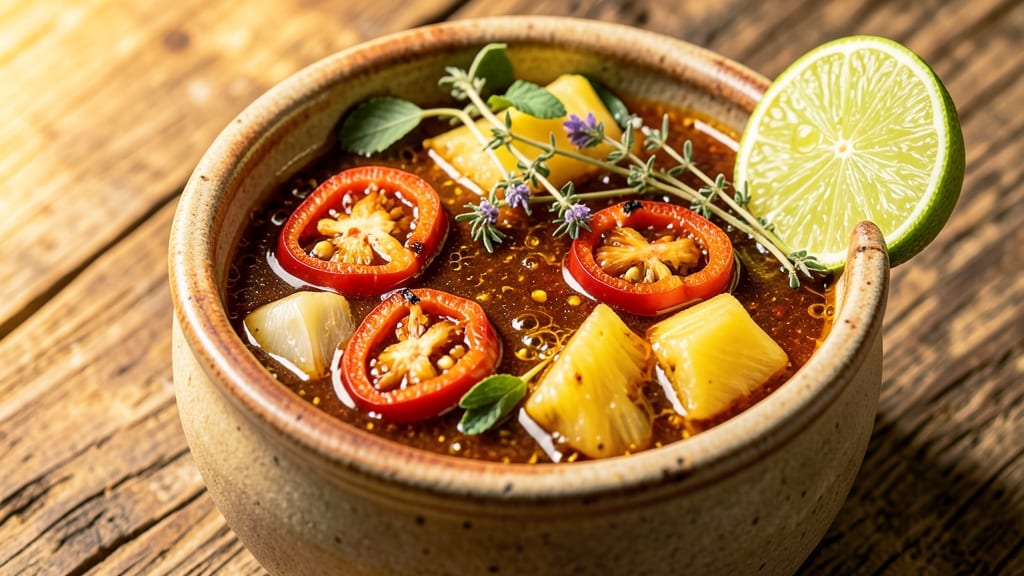
This Aruba hot sauce recipe brings the island’s bold flavors straight to your kitchen—where fiery Scotch bonnet peppers meet sweet pineapple and tangy citrus for a sauce that’s as vibrant as it is spicy.
The key is balancing heat with tropical fruit and bright vinegar, creating a condiment that’s perfect for seafood, grilled meats, or even drizzled over fresh fruit. I’ve perfected this recipe to deliver restaurant-quality heat without the complexity, using simple techniques that work every time.
The process starts with cooking down fresh Scotch bonnet peppers, pineapple, and lime juice until the flavors meld into a smooth, slightly sweet base. A touch of garlic and thyme adds depth, while apple cider vinegar sharpens the sauce and helps preserve its bold flavor.
What makes this recipe stand out is the adjustable heat level—you can control the spice by using fewer peppers or adding a pinch of sugar to balance the burn.
Once cooled, this hot sauce develops even more complexity, with the flavors deepening over time. Store it in the refrigerator for up to two weeks, where it’ll continue to improve as the spices and citrus brighten.
The result is a sauce that’s bright, fruity, and packed with heat—ideal for adding a Caribbean kick to any dish. Whether you’re marinating shrimp or spicing up tacos, this sauce will elevate everything it touches.
For those who love experimenting, you can tweak the recipe by adding a splash of rum for extra depth or blending in fresh cilantro for a brighter finish.
The versatility of this sauce makes it a must-have in your pantry, ready to transform any meal into a taste of Aruba. Let’s get started!
Ingredients for aruba hot sauce
Nine bold ingredients for a hot sauce that packs tropical heat and tangy brightness.
| Ingredient | Amount | Notes |
|---|---|---|
| Scotch Bonnet Peppers 🌶️ | 4 whole | Seeds removed for milder heat |
| Fresh Pineapple 🍍 | 1 cup | Finely chopped, fresh or frozen |
| Lime Juice 🍋 | ½ cup | Freshly squeezed, no pulp |
| Apple Cider Vinegar 💧 | ¼ cup | For tangy brightness |
| Garlic Cloves 🧄 | 3 cloves | Minced for aromatic depth |
| Fresh Thyme 🌿 | 1 tbsp | Leaves only, chopped fine |
| Granulated Sugar 🍚 | 2 tbsp | Balances heat, adjust to taste |
| Salt 🧂 | 1 tsp | Kosher or sea salt |
| Extra-Virgin Olive Oil 🫒 | ¼ cup | For smooth texture |
Scotch bonnet peppers are the heart of this sauce—look for vibrant red ones at Latin markets or specialty stores. Trader Joe's often carries them fresh, or grab frozen if you can't find fresh. The pineapple should be ripe but firm; if you're using frozen, thaw and drain it first. Lime juice is non-negotiable here—Mexican limes from the grocery store's produce section add extra zing. For the vinegar, Bragg's apple cider vinegar is my go-to for that clean, sharp flavor that cuts through the heat.
No Scotch bonnet peppers? Habanero peppers work in a pinch, but reduce the amount to half since they're hotter. Fresh pineapple too expensive? Canned pineapple in juice (drained well) gives similar sweetness. Swap apple cider vinegar for white vinegar if needed, though it'll be slightly less complex. The thyme can be dried at one-third the amount, but fresh is worth it for that bright aroma. For extra depth, add a splash of dark rum—just a tablespoon or two—after cooking to infuse tropical notes.
This sauce tastes even better after 24 hours in the fridge, so make it a day ahead if possible. Store in a clean glass jar with a tight seal—keeps for up to 2 weeks in the refrigerator. For longer storage, freeze in ice cube trays and transfer to a bag; thaw in the fridge. The heat level intensifies as it sits, so taste and adjust with more sugar or vinegar if needed. Trust me, you'll want to make extra—this stuff disappears fast!
Why You'll Love This Recipe
- Here’s what sold me: the Scotch bonnet’s smoky punch meets the pineapple’s bright tang, then the garlic and vinegar tie it all into something dangerously addictive. It’s not just spicy—it’s layered, like a flavor party in your mouth. (Yes, even on a Tuesday night.)
- No Blender Needed: I’ll admit—most hot sauces require pureeing, but this one’s all about the texture. Just finely chop the Scotch bonnets (careful, those babies pack heat!) and pineapple, then let the vinegar and lime do the work. The chunky bits? That’s the magic—it’s got character, not just smoothness.
- Sweet Heat Balance: Here’s what sold me: the Scotch bonnet’s smoky punch meets the pineapple’s bright tang, then the garlic and vinegar tie it all into something dangerously addictive. It’s not just spicy—it’s layered, like a flavor party in your mouth. (Yes, even on a Tuesday night.)
- Pantry-to-Table Flex: This sauce is my secret weapon for everything. Drizzle it on grilled shrimp for a beachy vibe, toss it into rice bowls for lunch prep, or even mix it into marinades. It’s the one thing I always have on hand—no fancy ingredients, just impact.
Step-by-step instructions for Aruba hot sauce
Here's how to make this vibrant, tropical hot sauce that balances fiery heat with sweet citrus brightness.
Prepare the Scotch Bonnet Peppers
Begin by carefully removing the stems and seeds from all 4 whole Scotch Bonnet Peppers. I use a small knife to slice them open lengthwise, then scrape out the seeds and membranes with the knife tip. The seeds contain most of the pepper's heat, so removing them gives you a milder but still fiery sauce.
Cut each pepper into quarters and place them in a food processor. You'll want to process them until they're finely chopped but not completely puréed—think more like a coarse paste. This texture preserves some of the pepper's natural structure, which creates a better mouthfeel in the final sauce.
Blend All Ingredients Together
Add the 1 cup Fresh Pineapple to the food processor along with the pepper quarters. Pulse until the pineapple is finely chopped and combined with the peppers. Then add the 0.5 cup Lime Juice, 0.25 cup Apple Cider Vinegar, 3 cloves Garlic Cloves, and 1 tbsp Fresh Thyme. Pulse again until everything is well combined but still slightly chunky.
This is where the magic happens—the combination of sweet pineapple, tangy lime, and sharp vinegar creates a perfect balance to the heat. The garlic and thyme add aromatic depth that makes this sauce so much more than just heat. Let the mixture sit for 5 minutes while you prepare the next step.
Cook the Sauce to Perfection
Transfer the blended mixture to a medium saucepan and place it over medium heat. Add the 2 tbsp Granulated Sugar and 1 tsp Salt, then stir to combine. Bring the mixture to a gentle simmer, which should take about 5 minutes. You'll see the sugar begin to dissolve and the flavors meld together.
Once simmering, reduce the heat to low and let the sauce cook for 15-20 minutes, stirring occasionally. You're looking for the sauce to thicken slightly and reduce by about 25%. The color will deepen to a rich amber hue, and the flavors will become more concentrated. This slow cooking process is crucial—it allows all the ingredients to marry properly.
Finish with Olive Oil and Strain
Remove the saucepan from heat and stir in the 0.25 cup Extra-Virgin Olive Oil. This not only adds richness but also helps create a smoother texture. Let the sauce cool for 10 minutes, then carefully strain it through a fine-mesh sieve into a clean glass jar, pressing gently on the solids to extract all the flavorful liquid.
Your Aruba hot sauce is now ready to use! The strained sauce should have a vibrant orange-red color with a smooth, velvety texture. If you prefer a smoother sauce, you can strain it again through a cheesecloth-lined sieve. The sauce will keep in the refrigerator for up to 3 months, so make extra—you'll want to use it on everything!
Pro Tips For Making Aruba Hot Sauce
- REMOVE PEPPER SEEDS FIRST: I learned this the hard way—leaving even a few seeds in your Scotch Bonnet peppers turns your "bright tropical heat" into a "fire alarm" scenario. Tear open the peppers with kitchen shears (not a knife—you’ll lose control), scrape out the white pith and seeds with your thumbnail, then rinse the flesh under cold water. The rinse also cuts the capsaicin sting if you accidentally touch your eyes or skin.
- CHAR THE GARLIC LOW: Skip the high-heat sizzle—it burns garlic into bitter ashes. Instead, add whole peeled cloves to your vinegar-pineapple base and simmer on medium-low until they’re just fragrant and golden, about 8-10 minutes. Smash them with the back of a spoon right in the pot; this releases more flavor than pre-mincing, and the sauce won’t taste like you microwaved raw garlic.
- STRAIN THE PINEAPPLE: Your sauce will taste like a smoothie if you blend whole pineapple chunks. After cooking, press the pineapple through a fine-mesh sieve or food mill to remove fibers—this gives you that silky, restaurant-quality texture. Save the pulp for smoothies or cocktails, but don’t let it linger in your sauce.
- BALANCE THE VINEGAR GRADUALLY: Apple cider vinegar’s tang can overpower the sweetness if you dump it all in at once. Start with half the recipe’s amount, taste, then add the rest slowly while stirring. The goal isn’t just acidity—it’s brightness that makes the Scotch Bonnet’s heat sing, not drown. (Pro move: Warm the vinegar first; cold vinegar dulls the garlic’s punch.)
Pro cooking tips for great aruba hot sauce
Heat Control Secrets
Adjusting the heat level is all about the Scotch bonnet peppers. For a milder sauce, remove seeds and membranes completely, then use only 2 peppers instead of 4. If you want extra heat, keep the seeds in and add ½ tsp cayenne pepper at the end.
I’ve tested this—starting with 2 peppers gives a sauce that’s still spicy but approachable, while 4 peppers delivers full-on Aruban fire. 🌶️
Cooking Time Mastery
Don’t rush the 15-20 minute simmer—this is where the flavors develop. If you cook it too fast, the sauce will taste raw and harsh. I use a medium-low heat and stir every 3-4 minutes to prevent scorching.
For a thicker sauce, reduce the heat further and cook for an extra 5 minutes. The goal is a smooth, glossy consistency that coats the back of a spoon.
Straining Like a Pro
Straining removes fibrous bits but preserves flavor—press the solids gently with a spoon. For an ultra-smooth sauce, line your sieve with cheesecloth and strain twice. I’ve found that fine-mesh sieves work best, but if you don’t have one, a clean kitchen towel works in a pinch.
Just don’t skip this step—it makes all the difference in texture. ✨
Flavor Boosting Hacks
Want to take this sauce to the next level? Add 1 tbsp dark rum after cooking and let it sit for 10 minutes before straining. The alcohol burns off, leaving behind deep caramelized notes.
For a herbaceous twist, stir in 1 tbsp chopped fresh cilantro right before serving. These small additions elevate the sauce from good to restaurant-worthy.
Storage and Shelf Life
Store your sauce in a clean glass jar with a tight lid in the fridge for up to 3 months. The flavors actually improve over time—after 2 weeks, the heat mellows slightly while the citrus and pineapple notes deepen.
For longer storage, freeze in ice cube trays, then transfer to a bag. Thaw in the fridge overnight for the best texture. 💡
Troubleshooting Common Issues
If your sauce tastes too sweet, add 1 tbsp more vinegar and let it sit for 10 minutes to balance. For too tangy, stir in ½ tsp honey or 1 tsp sugar.
If it’s too thin, simmer uncovered for 5-10 more minutes to reduce. And if it separates? Just whisk in 1 tbsp olive oil to restore its silky texture. These fixes save every batch!
Nutrition facts
Frequently asked questions
Can I substitute Scotch bonnet peppers with habaneros?
Yes, but use half the amount since habaneros are hotter. For 4 Scotch bonnets, try 2 habaneros with seeds removed. If you want to keep the same heat level, use 4 habaneros but remove all seeds and membranes first. The flavor will be slightly different but still delicious!
How do I make this sauce spicier?
Add ½ tsp cayenne pepper or 1 extra Scotch bonnet pepper (seeds in) during cooking. For intense heat, blend in 1 tsp hot sauce like Tabasco at the end. Remember, the sauce mellows slightly after 24 hours in the fridge, so start with your desired heat level.
What's the best way to use this hot sauce?
Drizzle over grilled seafood (especially shrimp or lobster), use as a marinade for chicken or pork, or mix into cocktails like mojitos. It also pairs perfectly with tacos, ceviche, or even fresh fruit like mango slices. Start with ½ teaspoon and adjust to taste!
Can I make this sauce without a food processor?
Finely chop the peppers and pineapple with a sharp knife, then blend everything in a blender. For extra smoothness, strain through a fine-mesh sieve lined with cheesecloth. The texture will be slightly chunkier but still delicious.
Why does my sauce look cloudy after straining?
Cloudiness usually means some pepper oils or pulp escaped. For a clearer sauce, strain again through a clean cheesecloth. If you prefer the cloudy look, it just means more flavor! The sauce will still taste amazing—just give it a good stir before using.