Sauces & Condiments
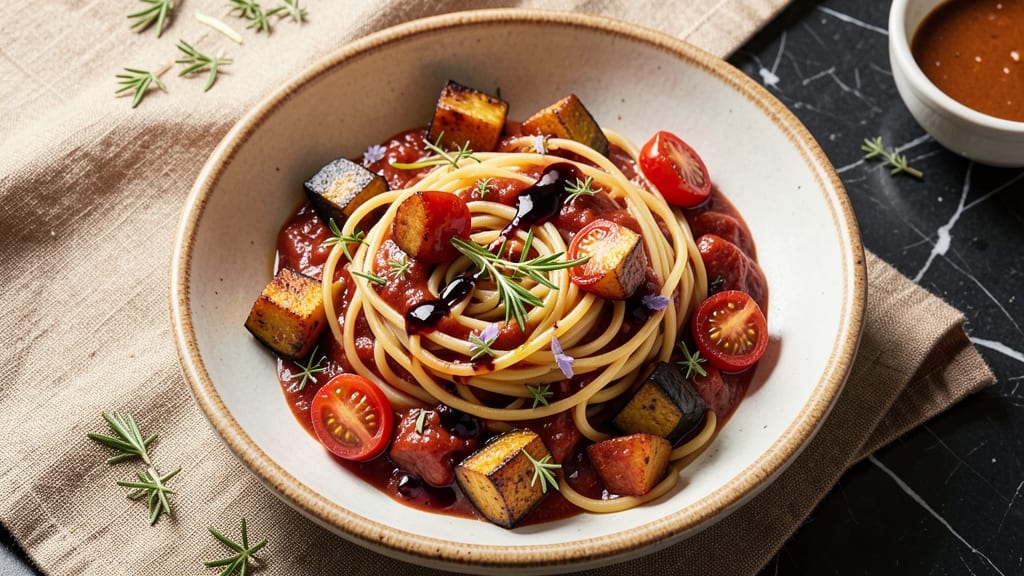
This aubergine pasta sauce recipe transforms humble eggplant into a velvety, smoky masterpiece that clings to every strand of pasta. The secret lies in slow-roasting eggplant until it caramelizes into sweet, jammy richness—no blender tricks needed.
I developed this sauce after discovering how roasting deepens eggplant's natural flavors while creating a texture that's impossibly smooth yet still packed with body.
What sets this sauce apart is its versatility—it works as a luxurious pasta coating, a bold condiment for grilled meats, or even a dipping sauce for crusty bread.
The smoky depth comes from charring the eggplant directly on the grill or in a hot oven, while garlic and herbs infuse during a gentle simmer. No heavy cream or complicated techniques here—just pure, concentrated eggplant flavor that builds complexity over time.
The result is a sauce that's rich yet light, with a silky mouthfeel and layers of umami from the roasted eggplant. It thickens beautifully when reduced, creating that perfect balance between cling and spreadability.
The best part? It tastes even better the next day as the flavors meld—ideal for meal prep or making ahead for dinner parties.
For extra depth, finish with a splash of balsamic or red wine reduction, or stir in sun-dried tomatoes for brightness. This sauce proves that vegetarian dishes can be just as satisfying as their meaty counterparts—packed with character and ready to elevate any plate.
Ingredients for aubergine pasta sauce
Eleven ingredients transform roasted eggplant into a velvety, smoky sauce that elevates pasta to restaurant-quality richness.
| Ingredient | Amount | Notes |
|---|---|---|
| Eggplant 🍆 | 2 lb | Italian variety preferred, skin left on |
| Extra-Virgin Olive Oil 🫒 | ½ cup | High-quality, fruity, for roasting |
| Garlic Cloves 🧄 | 6 cloves | Fresh, peeled, for roasting and sauce |
| Fresh Rosemary 🌿 | ¼ cup | Chopped, fresh for aromatic depth |
| Fresh Thyme 🌿 | 2 tbsp | Leaves only, finely chopped |
| Red Wine 🍷 | 1 cup | Bold dry red, like Cabernet Sauvignon |
| Vegetable Broth 💧 | 1 ½ cups | Low-sodium, homemade or quality store-bought |
| Canned San Marzano Tomatoes 🍅 | 1 can | 28 oz, crushed by hand |
| Balsamic Vinegar 🍶 | 1 tbsp | Aged, for finishing |
| Sea Salt 🧂 | 1 ½ tsp | Diamond Crystal preferred |
| Black Pepper 🌶️ | ½ tsp | Freshly ground for brightness |
The eggplant is the foundation—Italian varieties have fewer seeds and thicker flesh, ideal for roasting. Look for firm, heavy specimens at Whole Foods or local farmers markets—the skin stays on for texture and nutrients. Preheat your oven to 425°F (220°C) and use a baking sheet, not a roasting pan, to maximize surface area. The garlic and rosemary roast alongside the eggplant, infusing their flavors directly into the flesh. For extra smokiness, char the eggplant directly on a grill or under a broiler before roasting. Penzeys or McCormick are reliable sources for high-quality dried herbs if fresh aren't available, though fresh yields superior depth in this sauce.
No red wine? Substitute with additional vegetable broth plus 1 tbsp balsamic vinegar—the acidity balances the sweetness. Fresh herbs can be swapped for dried at one-third the amount, but toast the dried thyme and rosemary in the olive oil first to deepen their flavor. The San Marzano tomatoes are non-negotiable for quality—none of that watery canned tomato nonsense. If you must use regular tomatoes, strain them well to remove excess liquid. For a quicker version, roast the eggplant in the oven while you sauté the aromatics, but don't skip the high-heat charring step—it's what creates that smoky complexity. The balsamic vinegar can be omitted if you're sensitive to its sweetness, but it adds a lovely contrast to the richness.
This sauce develops even better the next day as the flavors meld—make a double batch if you're prepping for the week. Store in an airtight container in the fridge for up to 5 days, or freeze for 3 months in portion-sized containers. For serving, reheat gently on the stove with a splash of water or broth to restore its silky texture. The sauce thickens as it cools, so thin with a little broth if needed. If you have extra, drizzle it over grilled vegetables or use as a marinade for tofu or tempeh—it's that versatile.
Why You'll Love This Recipe
- No Chopping Chaos: I slice the eggplant into thick rounds—no dicing, no fuss—and let it roast while I handle the garlic. By the time the rosemary hits the pan, dinner’s already halfway done.
- Herb-Packed Magic: That first bite? The crispy eggplant edges melt into a creamy sauce, while the thyme and rosemary sing like a Mediterranean choir. Honestly, I’ve never tasted a pasta sauce where the herbs actually shine this much.
- Leftover Hero: This sauce keeps for days in the fridge—better than takeout, honestly—and reheats like a dream. Toss it with leftover pasta or even bread for a quick lunch. (Yes, even on a Tuesday night.)
- Budget Bright Spot: Eggplant’s cheap, and a single roasted one stretches into two meals. Plus, olive oil and fresh herbs make it feel fancy without breaking the bank. My wallet and taste buds win.
Step-by-step instructions for smoky roasted eggplant pasta sauce
Transform humble eggplant into a velvety, smoky sauce that clings perfectly to pasta.
Roast the Eggplant Until Charred and Tender
Preheat your oven to 425°F and position a rack in the middle position. Cut the 2 lb eggplant into 1-inch cubes, leaving the skin on for texture. In a large bowl, toss the eggplant with 0.5 cup extra-virgin olive oil, 1.5 tsp sea salt, and 0.5 tsp black pepper until evenly coated.
Spread the eggplant in a single layer on two rimmed baking sheets, ensuring they don't overlap. Roast for 30-35 minutes, stirring once halfway through, until the eggplant is deeply charred in spots and tender when pierced with a fork. The skin should be wrinkled and slightly blistered, with a rich, smoky aroma filling your kitchen.
Real talk: Don't skip the charring. Those dark spots pack intense flavor that transforms the sauce from good to extraordinary. If the eggplant isn't browning enough, return it to the oven for another 5-10 minutes.
Build the Sauce Base with Aromatics and Wine
While the eggplant roasts, heat 2 tablespoons extra-virgin olive oil in a large Dutch oven over medium heat. Add 6 cloves garlic cloves and sauté for 1-2 minutes until fragrant but not browned—garlic burns quickly, and you want to preserve its sweetness.
Add 0.25 cup chopped fresh rosemary and 2 tablespoons chopped fresh thyme, stirring for 30 seconds until the herbs release their essential oils. Pour in 1 cup bold red wine and scrape up any browned bits from the bottom of the pot. Let the wine simmer for 3-4 minutes until reduced by half, concentrating its flavor.
Here's the thing—those browned bits contain concentrated flavor. Don't miss this deglazing step. It's the foundation of your sauce's depth.
Combine Roasted Eggplant with Tomatoes and Broth
Add the roasted eggplant to the Dutch oven along with 1 can crushed San Marzano tomatoes and 1.5 cups vegetable broth. Stir well to combine, then bring to a gentle simmer. Partially cover the pot and let it cook for 20-25 minutes over low heat, stirring occasionally, until the eggplant breaks down into a creamy, velvety texture.
You'll know it's ready when the sauce thickens slightly and the eggplant loses its distinct shape, blending seamlessly with the other ingredients. The sauce should coat the back of a spoon with a smooth, almost custard-like consistency. If it's too thick, add 2-3 tablespoons water to reach your desired texture.
This is the moment that matters: patience here ensures a sauce that's rich without being heavy. Don't rush it—let the flavors meld properly.
Finish with Balsamic and Season to Perfection
Reduce the heat to low and stir in 1 tablespoon aged balsamic vinegar. Simmer for an additional 5 minutes, allowing the vinegar to mellow and deepen the sauce's complexity. Taste and adjust the seasoning with additional sea salt or black pepper as needed.
The balsamic vinegar adds a subtle tang that balances the richness of the eggplant and tomatoes. It's the final touch that elevates this sauce from good to restaurant-quality. Let the sauce sit off the heat for 5 minutes before serving—this resting period allows the flavors to fully integrate.
Your sauce is now ready to transform any pasta. The eggplant's natural creaminess creates a luxurious texture that pairs beautifully with al dente spaghetti or penne. Serve immediately while warm for the best experience.
Pro Tips For Making Aubergine Pasta Sauce
- Char Eggplant First: I learned this the hard way—raw eggplant turns your sauce into a watery mess. Slice it ½-inch thick, salt both sides, and let it sit in a colander for 20 minutes. Pat dry afterward, then sear in olive oil until golden and slightly crispy. That’s when the flavor pops.
- Low and Slow Simmer: After burning three batches, I finally figured out: this sauce isn’t about speed. Once the eggplant and garlic hit the pot, keep the heat at a gentle simmer—not a boil. Let it melt together over 20-25 minutes, stirring occasionally. Rushing makes it bitter.
- Toast the Herbs: Fresh rosemary and thyme smell amazing, but raw, they just float. Heat the stems in olive oil for 30 seconds until fragrant, then add the leaves. This releases their oils and makes them actually flavor the sauce, not just sit there looking pretty.
- Strain for Smoothness: Does it look weird? Yes. Does it work? Every single time. After simmering, strain the sauce through a fine-mesh sieve to remove skin and seeds. The texture becomes velvety, and the eggplant’s richness shines without grittiness. (Your future self will thank you.)
Pro cooking tips for perfect results
Roast for Maximum Flavor
The key to an extraordinary eggplant sauce lies in the roasting process. I always roast my eggplant at 425°F until it's deeply charred in spots—this creates a smoky depth that transforms the sauce from ordinary to extraordinary.
Use a rimmed baking sheet rather than a roasting pan to maximize surface area and ensure even browning. Don't skip the charring step; those dark spots pack intense flavor that infuses the entire sauce. 🔥
Deglaze for Richness
After sautéing your aromatics, don't miss the deglazing step. Those browned bits stuck to your Dutch oven contain concentrated flavor that forms the foundation of your sauce.
Pour in the red wine and let it simmer until reduced by half—this reduction process intensifies the wine's flavor and creates a velvety base. I like to use a bold Cabernet Sauvignon for its robust character, but any dry red wine will work. 🍷
Low and Slow Cooking
Patience is crucial when combining the roasted eggplant with tomatoes and broth. Simmer the mixture over low heat for 20-25 minutes, stirring occasionally. This gentle cooking process allows the eggplant to break down into a creamy texture while maintaining its natural sweetness.
The sauce should thicken slightly and develop a smooth, almost custard-like consistency. If it becomes too thick, add 2-3 tablespoons of water to reach your desired texture. ⏰
Finish with Balsamic
The balsamic vinegar is the secret weapon that elevates this sauce to restaurant-quality. Stir in 1 tablespoon of aged balsamic vinegar during the final 5 minutes of cooking. This step adds a subtle tang that beautifully balances the richness of the eggplant and tomatoes.
Let the sauce rest off the heat for 5 minutes before serving—this resting period allows all the flavors to fully meld together. 💫
Texture Control
Eggplant sauce can vary in texture depending on how long you cook it. For a thicker, more concentrated sauce, simmer it longer and reduce it further. If you prefer a lighter consistency, add more vegetable broth or water.
I find that the sauce thickens as it cools, so adjust the consistency while it's still warm. The goal is a sauce that clings beautifully to pasta without being too heavy. A spoon should be able to coat the back of it with ease. 🥄
Equipment Matters
Using the right equipment makes all the difference. A Dutch oven is ideal for this recipe because it retains heat well and allows for even cooking. For roasting the eggplant, use two rimmed baking sheets to ensure even browning.
I also recommend using a thermometer to monitor the oven temperature—consistent heat is crucial for even roasting. A sharp knife is essential for cutting the eggplant into even 1-inch cubes for uniform cooking. 🔥
Nutrition facts
Frequently asked questions
Can I make this eggplant sauce without wine?
Replace the 1 cup red wine with 1 cup vegetable broth plus 1 tbsp balsamic vinegar to maintain acidity and depth. The sauce will still develop rich flavors—just omit the wine reduction step and add the vinegar at the very end. For extra umami, stir in 1 tsp soy sauce or 1 tbsp tomato paste while simmering.
How do I prevent the sauce from being too watery?
Simmer the sauce uncovered for 5-10 extra minutes to reduce it naturally. For thicker results, mash the roasted eggplant slightly before adding it to the pot, or stir in 1 tbsp cornstarch mixed with 2 tbsp water at the end. Remember: eggplant releases water when cooked, so patience is key—let it thicken gradually.
What pasta works best with this sauce?
This velvety sauce clings beautifully to rigatoni, penne, or fettuccine for maximum coverage. For lighter options, try linguine or spaghetti. To prevent sticking, toss cooked pasta with 1 tbsp olive oil before mixing. The sauce also pairs well with gluten-free pasta or zucchini noodles for a low-carb twist.
Can I make this sauce ahead of time?
Yes! This sauce tastes even better the next day as flavors meld. Store in an airtight container in the fridge for up to 5 days, or freeze for 3 months. Reheat gently on the stove with a splash of water or broth to restore its silky texture. The sauce thickens when cooled, so thin with broth if needed before serving.
What are good non-pasta uses for this sauce?
This versatile sauce works as a grilled meat marinade, vegetable dip, or pizza sauce base. Drizzle over polenta or roasted potatoes, or use as a sandwich spread with fresh mozzarella. For extra richness, stir in 1 tbsp nutritional yeast or top with crumbled feta before serving.