
Sauces & Condiments
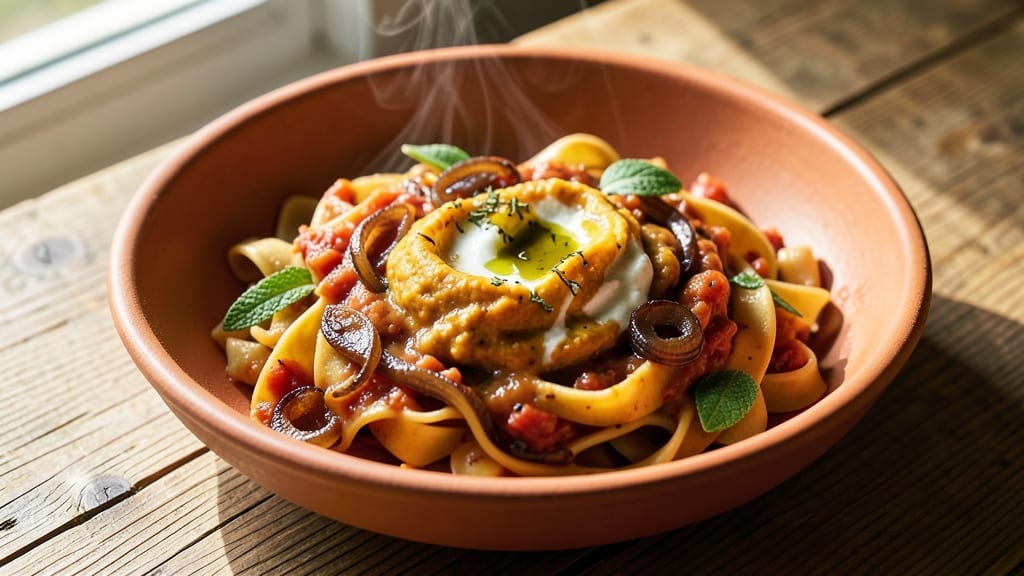
This autumn harvest pasta sauce recipe transforms simple ingredients into a velvety, spiced masterpiece that captures the essence of fall. 🌿 The secret lies in roasted butternut squash and fresh sage, which infuse the sauce with natural sweetness and earthy depth.
Unlike store-bought options, this recipe builds rich, complex flavors from scratch—no shortcuts, just pure seasonal satisfaction.
The sauce starts with a base of roasted butternut squash puree, which adds natural sweetness and thickness without overpowering the dish. A blend of tomatoes, aromatic herbs, and a touch of cream (or plant-based alternative) creates a luxurious texture that clings beautifully to pasta.
Nutmeg and cinnamon add warmth, while fresh sage brings that unmistakable autumn aroma.
What you’ll end up with is a sauce that’s rich yet balanced, with a velvety consistency perfect for tossing with penne, gnocchi, or even fresh egg noodles.
The flavors deepen as it simmers, making it ideal for prepping ahead—store it in the fridge for up to 5 days or freeze for up to 3 months. Each spoonful delivers layers of spiced butternut, herbal brightness, and just enough warmth to feel like a cozy autumn embrace.
Pair it with crusty bread for dipping or drizzle it over roasted vegetables for a complete seasonal meal. The best part? This sauce is versatile enough to elevate simple weeknight dinners into something special without requiring extra effort. Let’s make it—your taste buds will thank you.
Ingredients for autumn harvest pasta sauce
Roasted squash, aromatic herbs, and creamy richness create this velvety autumn sauce.
| Ingredient | Amount | Notes |
|---|---|---|
| Butternut Squash 🎃 | 2 cups | Roasted and pureed smooth |
| Onion 🧅 | 1 medium | Diced finely |
| Garlic Cloves 🧄 | 3 cloves | Minced for aromatic depth |
| Canned Crushed Tomatoes 🍅 | 1 can (15 oz) | San Marzano preferred |
| Fresh Sage Leaves 🌿 | ½ cup | Chopped finely |
| Onion 🧅 | 1 whole | Yellow or red, diced |
| Heavy Cream 🥛 | ½ cup | Full-fat for richness |
| Ground Nutmeg 🌶️ | ¼ tsp | Freshly grated preferred |
| Ground Cinnamon 🌶️ | ¼ tsp | Warm spice balance |
| Extra-Virgin Olive Oil 🫒 | ¼ cup | For roasting squash |
The butternut squash is the star—look for small, dense squash with a vibrant orange color and no soft spots. Trader Joe's and Whole Foods carry excellent options year-round. Roast it until tender, then puree until completely smooth—no lumps, or the sauce will feel gritty. For the onions, yellow or red work equally well, but avoid sweet onions like Vidalia if you want to maintain that savory depth. The garlic should be fresh, not dried—it makes all the difference in the aromatic base. Store your fresh sage in a damp paper towel in the fridge for up to 5 days—it wilts fast once picked.
No butternut squash? Sweet potato puree works in a pinch, though it’ll have a slightly different texture. Short on fresh sage? Dried sage at one-third the amount gets you close, but it lacks that bright herbal punch. The heavy cream can be swapped for coconut cream or cashew cream for a dairy-free version, though the texture will be slightly lighter. For the tomatoes, San Marzano cans are worth the splurge—they’re sweeter and less acidic. If you can’t find them, any good-quality crushed tomatoes will do. The nutmeg and cinnamon are non-negotiable for that autumn warmth, but if you’re sensitive to spices, start with half the amount and adjust to taste.
This sauce tastes even better the next day as the flavors meld. Store it in an airtight container in the fridge for up to 5 days, or freeze for 3 months in portion-sized containers. To reheat, warm gently on the stove with a splash of water or pasta water—it thickens as it cools. For a quick shortcut, freeze the sauce in ice cube trays and pop out individual portions for easy use. The roasted squash puree can be prepped ahead and stored in the fridge for 3 days before making the sauce.
Why You'll Love This Recipe
- Roasted Squash Shortcut: I swear by roasting the butternut squash ahead—just toss cubes with olive oil, salt, and a pinch of sugar, then roast until caramelized. No peeling, no stress, and the flavor? Chef’s kiss. Ten minutes of hands-off work changes everything.
- Sage & Garlic Magic: That crispy sage and minced garlic? They turn this sauce from good to ridiculously good—earthy, bright, and just sweet enough from the roasted squash. Honestly, the aroma alone makes my kitchen smell like autumn, and that’s before the first bite.
- Weeknight to Dinner Party: Same sauce, endless uses. Slap it on pasta for a quick weeknight meal, or drizzle it over polenta with toasted breadcrumbs for a fancier spread. My daughter’s friends asked for the recipe after one taste—proof it works for both.
- Budget-Friendly Leftovers: Butternut squash stretches like crazy, and crushed tomatoes? A pantry staple. Make a double batch, freeze half, and thank me later when you’re reheating a cozy meal after a long day. (Yes, even on a Tuesday night.)
Step-by-step instructions for autumn harvest pasta sauce
Here's how to craft this velvety sauce with rich autumn flavors and perfect texture.
🔥 Step 1: Roast and Puree the Butternut Squash
Preheat your oven to 400°F. Cut the 2 cups butternut squash into 1-inch cubes and toss them with 1 tablespoon of the 0.25 cup extra-virgin olive oil on a rimmed baking sheet. Roast for 25-30 minutes until tender and golden brown, stirring halfway through.
Transfer the roasted squash to a blender or food processor and puree until completely smooth. I like to add 2 tablespoons of the roasting liquid to ensure a silky texture. Set the puree aside—it's the flavor foundation of this sauce.
🍳 Step 2: Sauté Aromatics Until Fragrant
In a large saucepan, heat the remaining 0.15 cup extra-virgin olive oil over medium heat. Add the 1 whole onion (diced) and cook for 5-6 minutes until softened and translucent. This is where the sweetness develops—don't rush this step.
Add the 3 cloves garlic cloves (minced) and cook for 30 seconds until fragrant. Here's the thing—garlic burns fast, so keep an eye on it. Immediately add the 0.5 cup chopped fresh sage leaves and stir for 1 minute until the sage wilts slightly. This aromatic trio forms the flavor backbone of the sauce.
🍳 Step 3: Build the Sauce with Tomatoes and Spices
Pour in the 1 can (15 oz) crushed tomatoes and bring to a gentle simmer. Add the 2 cups butternut squash puree and stir well. The sauce should bubble gently—if it gets too vigorous, reduce heat slightly. Season with the 0.25 tsp ground cinnamon and 0.25 tsp ground nutmeg, stirring to combine.
Let the sauce simmer uncovered for 15-20 minutes until thickened. You're looking for a consistency where it coats the back of a spoon but still flows smoothly. If it thickens too much, add 2-3 tablespoons water to adjust. The spices should mellow and blend seamlessly with the other flavors.
🥘 Step 4: Finish with Cream for Velvety Texture
Reduce heat to medium-low and stir in the 0.5 cup heavy cream. The sauce will immediately thicken and become luxuriously smooth. Simmer gently for 3-4 minutes to let the cream fully incorporate and warm through.
Taste and adjust seasoning with salt and black pepper if needed. The sauce should balance sweet squash, tangy tomatoes, earthy sage, and warm spices. For best results, let it rest off heat for 5 minutes before serving—this allows the flavors to meld completely.
Pro Tips For Making Autumn Harvest Pasta Sauce
- Char the Onion First: I learned this the hard way—skipping the char on the onion means your sauce will taste sweet but bland. Get the pan smoking hot and let those onions blacken in spots before stirring. That bitterness cuts through the squash’s natural sweetness and builds depth faster than slow cooking ever could.
- Cube the Squash Small: Big chunks of butternut squash stay tough and gummy. Cut it into ½-inch cubes—small enough to soften in 15 minutes but not so fine they turn to mush. If you’re short on time, microwave them for 3 minutes first, then sear. (Yes, even if you’re impatient like me.)
- Salt the Tomatoes Early: Dump that crushed tomato can into the pot right after the onions and garlic, then add a full teaspoon of salt. Let it sit for 5 minutes before adding anything else—this breaks down the skins and mellows the acidity. Skipping this step means your sauce will taste sharp and unfinished, no matter how long you simmer.
- Toast the Sage Leaves: Toss whole sage leaves into the hot oil with the garlic for 30 seconds until they crisp just slightly. Remove them with a slotted spoon (save for garnish) and let the oil infuse. Fresh sage burns fast—watch it like a hawk, but don’t skip this. The aroma alone makes the difference between "good" and "wow."
Make-ahead tips for this recipe
Prep Ahead Essentials
Start by roasting the butternut squash up to 3 days in advance and storing the puree in an airtight container in the fridge. This saves you 30 minutes of active prep time when you're ready to make the sauce.
I like to freeze the puree in 1-cup portions for even easier use later. 🎃
Freezer-Friendly Strategy
Freeze the completed sauce in quart-sized freezer bags with 1 inch of headspace for expansion. Label with the date—it keeps for 3 months without losing flavor.
When ready to use, thaw overnight in the fridge, then reheat gently on the stove with a splash of water or pasta water to restore that velvety texture.
Sauce Thickening Tips
If your sauce seems too thin after reheating, simmer it uncovered for 5-10 minutes—the moisture will evaporate naturally. For extra richness, stir in 1 tablespoon butter or 1 teaspoon olive oil while reheating.
The sauce should coat the back of a spoon but still flow smoothly when tossed with pasta. 🥘
Portion Control
Divide the sauce into 1-cup portions before freezing or storing. This makes it perfect for single servings—just thaw and toss with your favorite pasta. I keep a few portions in the fridge at all times for spontaneous dinner nights.
The 1-cup servings also work beautifully for stuffing ravioli or as a dipping sauce for crusty bread.
Flavor Boosting Tricks
Before storing, stir in an extra pinch of salt and black pepper—the flavors deepen overnight. For a smoky twist, add ½ teaspoon smoked paprika when reheating. If you're short on time, skip the fresh sage and use ½ teaspoon dried sage instead—it still delivers that autumnal aroma. 🌿
Equipment Shortcuts
No food processor? Use an immersion blender to puree the roasted squash directly in the saucepan. For measuring, a liquid measuring cup works perfectly for the squash puree and tomatoes. Keep a small saucepan on hand for reheating portions—it heats evenly and prevents scorching. 🍲
Nutrition facts
Frequently asked questions
Can I make this sauce without butternut squash?
Yes! Swap the butternut squash for 2 cups roasted sweet potato puree or 1 cup pumpkin puree (not pumpkin pie filling). For a deeper flavor, add 1 teaspoon maple syrup to compensate for the natural sweetness difference. The texture will be slightly lighter, but still delicious.
How do I adjust the sauce for dairy-free diets?
Replace the 0.5 cup heavy cream with 0.5 cup coconut cream or cashew cream (blend 1 cup soaked cashews with 0.5 cup water until smooth). For extra richness, stir in 1 tablespoon nutritional yeast after cooking. The sauce will be slightly lighter but still velvety.
What's the best way to reheat this sauce?
Gently reheat on the stove over low heat with 2-3 tablespoons pasta water or water to restore its silky texture. Avoid high heat—it can break the sauce's delicate balance. If it thickens too much, stir in 1 teaspoon olive oil or 1 tablespoon butter to smooth it out.
Can I use dried sage instead of fresh?
Use ½ teaspoon dried sage for every 0.5 cup fresh sage called for. Toast the dried sage in a dry pan for 30 seconds to release its aroma before adding. Fresh sage gives a brighter flavor, but dried works perfectly when fresh isn't available.
What pasta works best with this sauce?
This velvety sauce pairs beautifully with penne, gnocchi, or fettuccine—their ridges and textures hold the sauce well. For extra indulgence, toss with wild rice pasta or chickpea pasta for added heartiness. Avoid delicate pastas like angel hair that might overcook in the sauce.