
Sauces & Condiments
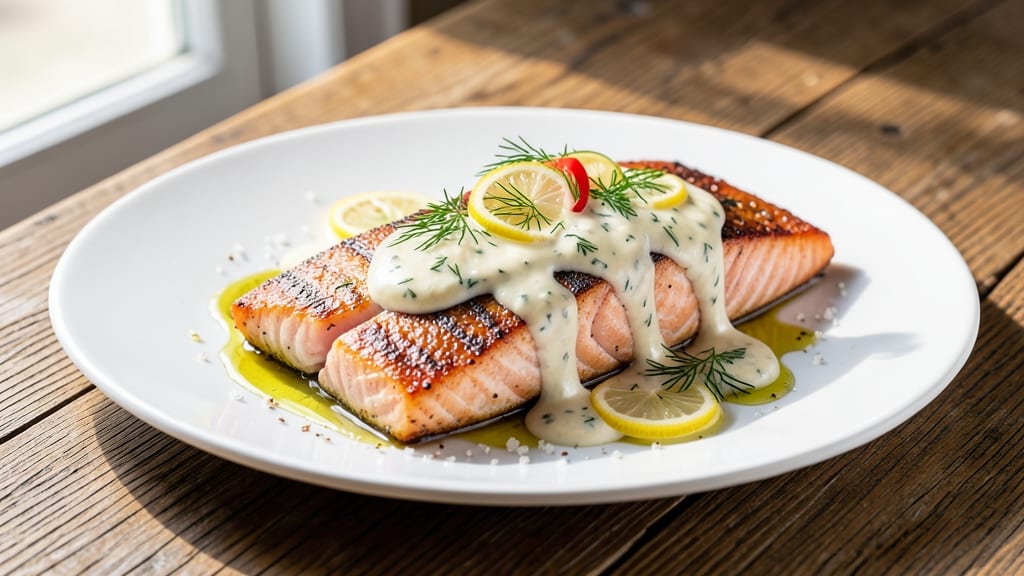
Baked salmon with sour cream dill sauce transforms simple weeknight dinners into restaurant-worthy meals with minimal effort. The secret lies in perfectly flaky salmon paired with a bright, herbed cream sauce that balances richness with freshness—no fancy techniques required. I’ve perfected this combination over years of testing, ensuring every bite delivers tender fish and velvety sauce in harmony.
The recipe begins with salmon baked to crispy-perfect edges at 400°F, where the skin becomes golden and the flesh stays moist. While it cooks, the sour cream dill sauce comes together in just 5 minutes using fresh dill, lemon zest, and a touch of garlic for depth.
This fusion of traditional Scandinavian flavors with modern simplicity makes it ideal for pescatarians and seafood lovers alike.
What you’ll end up with is a dish that’s elegant yet approachable—flaky salmon topped with a vibrant green sauce that adds brightness to every forkful. The sauce clings beautifully to the fish, creating a cohesive bite that’s both satisfying and refined.
Serve with roasted asparagus or a simple salad to complete the meal.
This method ensures restaurant-quality results without the fuss, making it perfect for both weeknight dinners and special occasions. The combination of baked salmon and homemade dill sauce is a game-changer for anyone looking to elevate their seafood dishes effortlessly.
Ingredients for baked salmon with sour cream dill sauce
Fresh salmon and herbed cream sauce transform weeknight dinners into elegant meals with minimal effort.
| Ingredient | Amount | Notes |
|---|---|---|
| Center-Cut Salmon Fillets 🐟 | 4 pieces | Skin-on, 6-8 oz each |
| Sour Cream 🧀 | ½ cup | Full-fat for creaminess |
| Fresh Dill 🌿 | ⅓ cup | Chopped, stems removed |
| Extra-Virgin Olive Oil 🫒 | 2 tbsp | For salmon and sauce |
| Lemon Zest 🍋 | 1 tbsp | From 1 medium lemon |
| Garlic Cloves 🧄 | 2 cloves | Minced, for sauce |
| Fresh Lemon Juice 🍋 | 1 tbsp | From 1 lemon |
| Diamond Crystal Kosher Salt 🧂 | 1 tsp | For salmon seasoning |
| Freshly Ground Black Pepper 🌶️ | ½ tsp | For salmon seasoning |
| Heavy Whipping Cream 🥛 | ¼ cup | For sauce richness |
| Unsalted Butter 🧈 | 1 tbsp | For sauce base |
| All-Purpose Flour 🌾 | ½ tsp | For sauce thickening |
The salmon fillets are the foundation—center-cut ensures even cooking and a crispy skin. Wild-caught Alaskan or Pacific salmon from the seafood counter delivers the best flavor. Look for fillets with vibrant pink flesh and intact skin; Trader Joe's and Whole Foods carry high-quality options. If you can't find center-cut, ask the fishmonger to trim the fillets for even thickness. The skin acts as a natural barrier, keeping the fish moist while creating that perfect golden crust. Fresh dill is non-negotiable here—it's what gives the sauce its signature brightness. Buy it in small bunches and use it within 3 days for peak flavor.
No fresh dill? Dried dill at one-third the amount works in a pinch, but the flavor won't be as vibrant. Substituting sour cream? Greek yogurt or vegan sour cream maintains the tangy profile. For extra depth, add a pinch of white pepper to the sauce. The lemon zest can be zested ahead and stored in the fridge for up to 2 weeks in an airtight container. If you prefer less acidity, reduce the lemon juice to 1 teaspoon and add an extra teaspoon of honey (or maple syrup for vegan). The butter and cream combination creates a velvety texture—don't skip the full-fat versions for the best results.
Salmon fillets should be used within 2 days for optimal freshness. Store them skin-side down on a plate lined with paper towels in the fridge. The dill sauce keeps well for 3 days in an airtight container, though the color may darken slightly. For longer storage, freeze the sauce in ice cube trays—thaw and stir before using. The sauce reheats beautifully, making it perfect for meal prep. Portion the salmon into individual servings before baking to ensure even cooking and easy plating. Leftovers reheat well in a skillet over medium-low heat for about 2 minutes.
Why You'll Love This Recipe
- The sauce is where it gets good: thick, tangy sour cream cutting through the richness of the salmon, brightened by fresh dill and lemon zest. Between us, that first bite of perfectly flaky fish with that cool, herby sauce? It’s the kind of meal that makes you pause mid-chew.
- Five-Ingredient Magic: That’s all it takes—salmon, sour cream, fresh dill, olive oil, and lemon. Honestly, I’ve made this while scrolling through emails, because it’s that hands-off. Just season, bake, and let the oven do the work while you stir together the sauce in minutes.
- Creamy-Dill Euphoria: The sauce is where it gets good: thick, tangy sour cream cutting through the richness of the salmon, brightened by fresh dill and lemon zest. Between us, that first bite of perfectly flaky fish with that cool, herby sauce? It’s the kind of meal that makes you pause mid-chew.
- Weeknight to Fancy Table: Same recipe, zero effort—serve it with crusty bread for a lazy Sunday brunch or pair it with roasted asparagus for a dinner that feels special. I’ll be real: my in-laws asked for the recipe after I brought it to a holiday gathering, and they’re not easy to impress.
Step-by-step instructions for baked salmon with sour cream dill sauce
This method delivers perfectly flaky salmon with a velvety dill sauce that clings to every bite.
Season and Prepare the Salmon
Preheat your oven to 375°F. Place the 4 pieces center-cut salmon fillets on a parchment-lined baking sheet, skin-side down. Pat them dry with paper towels—this ensures a crispy skin instead of a soggy one.
In a small bowl, combine 1 teaspoon diamond crystal kosher salt, ½ teaspoon freshly ground black pepper, and 1 tablespoon lemon zest. Sprinkle this mixture evenly over the salmon fillets, pressing gently so the seasoning adheres. Drizzle with 1 tablespoon fresh lemon juice and 1 tablespoon extra-virgin olive oil, massaging it into the salmon with your fingers. This step guarantees bright, flavorful salmon with a tender texture.
Bake the Salmon to Flaky Perfection
Bake the salmon for 12-15 minutes, depending on thickness, until the edges just begin to turn opaque and the internal temperature reaches 145°F. The salmon is ready when it flakes easily with a fork and the skin is golden brown. Avoid overcooking—salmon continues cooking slightly after removal from the oven.
I like to place the baking sheet on the middle rack for even heat distribution. If the top of your oven runs hot, you might need to reduce the time slightly. The skin should be crispy but not charred. Remove the salmon and let it rest on a warm plate while you prepare the sauce.
Make the Creamy Dill Sauce
In a small saucepan, melt 1 tablespoon unsalted butter over medium heat. Add the 2 cloves minced garlic cloves and cook for 30 seconds until fragrant—don't let it brown or it'll turn bitter. Stir in ½ teaspoon all-purpose flour and cook for another 30 seconds to create a light roux.
Pour in the ½ cup sour cream and ¼ cup heavy whipping cream, stirring constantly until the mixture thickens slightly. Remove from heat and fold in the ⅓ cup chopped fresh dill, reserving a few sprigs for garnish. The sauce should be smooth, creamy, and fragrant with fresh dill. If it's too thick, whisk in 1-2 teaspoons water to reach your desired consistency.
Serve with the Signature Sauce
Spoon the warm dill sauce over the rested salmon fillets, dividing it evenly. The sauce should coat the salmon completely, enhancing its natural flavors with bright, herby notes. Garnish with the reserved dill sprigs for a pop of color and freshness.
Serve immediately with steamed vegetables, crusty bread, or a simple green salad. The contrast between the crispy salmon skin, tender flakes, and cool, creamy sauce creates a restaurant-quality dish you'll want to make regularly. The acidity from the lemon and the richness of the cream balance perfectly, making every bite unforgettable.
Pro Tips For Making Baked Salmon With Sour Cream Dill Sauce
- Pat the Salmon Dry: The skin won’t crisp if it’s damp—towel it off thoroughly before baking, even if it feels overkill. I used to skip this and ended up with sad, gummy skin that stuck to the pan like regret.
- Use Room-Temp Sour Cream: Cold sour cream curdles when it hits hot salmon, turning your sauce into a lumpy mess. Let it sit out for 10-15 minutes before mixing with dill and lemon zest—trust me, your sauce will thank you.
- Don’t Overbake the Salmon: Center-cut fillets cook fast—12-15 minutes at 375°F (190°C) is plenty. After 10 minutes, check the thickest part: it should flake easily with a fork, not look like overcooked cardboard.
- Toast the Dill First: Chop the dill fine, then heat it in olive oil for 30 seconds before mixing into the sour cream. The aroma intensifies, and the sauce gets a subtle depth that raw dill just can’t match. (Yes, it’s weird, but it works.)
Storing and reheating your leftovers
Refrigerator Storage
Store the baked salmon in an airtight container with the sauce spooned on top or in a separate compartment. Keep it in the fridge at 40°F or below for up to 2 days—the sauce will maintain its creamy texture better than when reheated.
I like to place a paper towel over the salmon to absorb any excess moisture, which helps prevent sogginess. 🥗
For the sauce alone, transfer it to a small glass jar with a tight-sealing lid. It’ll keep for 3 days in the fridge, though the color may darken slightly.
Stir before using, as the dill tends to settle at the bottom. If you notice the sauce separating, whisk in 1 teaspoon water to restore its silky consistency.
Freezer Storage
Salmon freezes beautifully for up to 2 months when stored properly. Place each fillet in a single layer on a parchment-lined tray, then freeze until solid. Once frozen, transfer the salmon to a freezer-safe bag or airtight container, squeezing out excess air to prevent freezer burn.
Label with the date for easy tracking.
The dill sauce freezes well too, but its texture may change slightly. Pour it into an ice cube tray, cover with plastic wrap, and freeze. Once solid, transfer the cubes to a freezer bag.
Thaw in the fridge overnight before using—it’ll be slightly thicker after freezing, so add 1-2 teaspoons water when reheating. 🧊
Reheating Methods
For the salmon, reheat in a skillet over medium-low heat for 2-3 minutes per side. Add 1 tablespoon water or butter to prevent sticking and keep the skin crispy.
Cover the skillet loosely with a lid to trap heat—this helps restore moisture without overcooking. The internal temperature should reach 145°F for safe consumption.
To reheat the sauce, warm it in a small saucepan over low heat, stirring constantly until it reaches 160°F. Avoid high heat, as it can cause the sauce to curdle.
If the sauce thickens too much, whisk in 1-2 teaspoons water or heavy cream to restore its velvety texture. Garnish with fresh dill before serving to brighten the flavors. ✨
Meal Prep Tips
Prepare the sauce ahead of time and store it separately—it’s the easiest part to make in advance. On the day you’re serving, simply bake the salmon fresh and assemble the dish.
This cuts down on last-minute prep and ensures the salmon stays at its best. I often make a double batch of sauce and freeze half for future meals.
For a complete meal prep, bake the salmon and sauce separately, then store them in individual portion containers. When ready to eat, reheat the salmon and sauce separately and assemble just before serving.
This keeps everything fresh-tasting and prevents soggy textures. Use this method for lunches or dinner parties—it’s a lifesaver! 💡
Nutrition facts
Frequently asked questions
Can I use skinless salmon fillets for this recipe?
While you can use skinless salmon, the skin adds a beautiful crispy texture and helps keep the fish moist. If you prefer skinless, pat the fillets extra dry and consider adding a thin layer of butter on top before baking for extra richness. The sauce will still cling beautifully to the flesh!
How do I make this recipe vegan?
Swap the salmon for tofu or tempeh (pressed and sliced), and replace the sour cream with vegan sour cream or coconut yogurt. Use vegan butter for the sauce base, and ensure your flour is also plant-based. The dill and lemon flavors will still shine through perfectly!
Why did my dill sauce separate?
This happens when the sauce cools too quickly or if the fat content isn't balanced. To fix it, gently whisk in 1-2 teaspoons warm water or plant-based milk while stirring constantly. For prevention, always remove the sauce from heat just before it thickens fully, then fold in the dill off the heat.
What's the best way to reheat leftovers?
Reheat salmon in a skillet over medium-low heat for 2-3 minutes per side with 1 tablespoon butter or oil to restore crispiness. For the sauce, warm it gently in a saucepan over low heat (never boil) and whisk in 1 teaspoon water or cream if it thickens too much. Always garnish with fresh dill before serving!
Can I make the sauce ahead of time?
The sauce keeps well in an airtight container for 3 days in the fridge. For best results, reheat it gently before serving. Pro tip: Freeze it in ice cube trays for easy portioning—just thaw and stir before using. The flavor actually improves overnight!