
Sauces & Condiments
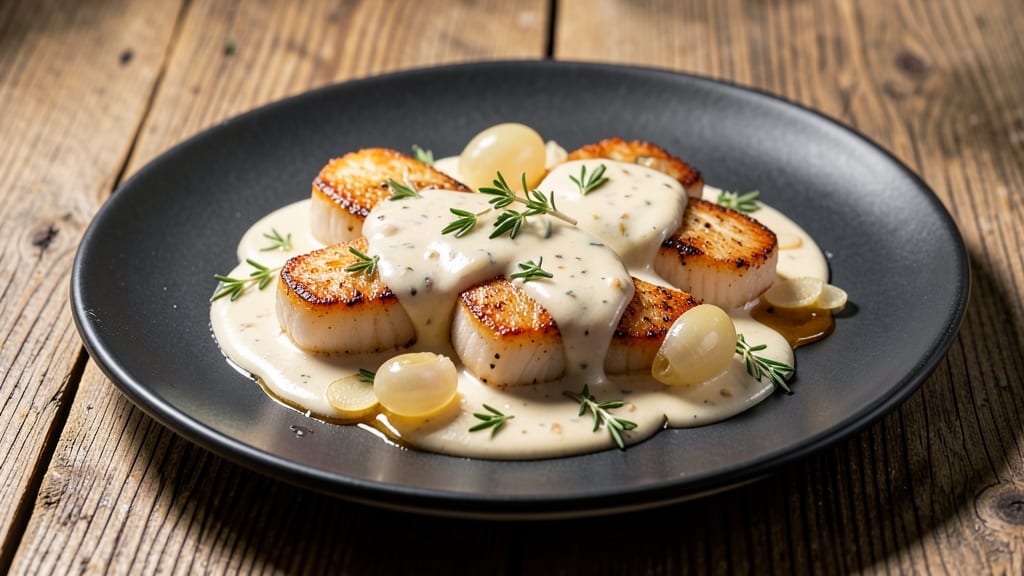
Baked scallops in cream sauce deliver restaurant-quality results with minimal effort—golden crisp edges and silky centers that melt in your mouth. 💛 This pescatarian dish transforms simple seafood into an elegant meal, perfect for weeknight dinners or special occasions.
The secret lies in baking the scallops just until tender, then finishing them in a velvety cream sauce that coats every bite.
The technique is straightforward but yields professional results: scallops sear in the oven for a crisp exterior while staying tender inside, then simmer in a rich cream sauce infused with garlic and herbs.
No complicated steps—just a 30-minute process that transforms fresh scallops into a dish worthy of any table. The sauce clings perfectly, creating a luxurious finish that balances the delicate seafood.
What you’ll achieve is a plate that’s visually stunning and deeply satisfying—crispy scallops nestled in a glossy, aromatic sauce, ready to be paired with crusty bread or fresh greens.
The method ensures even cooking every time, so you’ll never overcook or underseason again. This recipe proves that seafood doesn’t have to be intimidating to be impressive.
Serve with a sprinkle of fresh herbs or lemon zest for brightness, and you’ve got a dish that’s elegant yet approachable, perfect for pescatarians or anyone craving a creamy, comforting meal. Let’s get started—your taste buds will thank you.
Ingredients for baked scallops in cream sauce
These 13 ingredients create restaurant-worthy scallops with crisp edges and silky centers.
| Ingredient | Amount | Notes |
|---|---|---|
| Large Dry-Packed Scallops 🦪 | 1 ½ lb | Pat dry and room temperature |
| Heavy Cream 🥛 | 1 cup | Full-fat for velvety texture |
| Garlic Cloves 🧄 | 4 cloves | Minced, not powdered |
| Shallots 🧅 | 2 whole | Finely chopped, or sub onion |
| Unsalted Butter 🧈 | 4 tbsp | Cold, cut into small pieces |
| Fresh Thyme Leaves 🌿 | ½ tsp | Or 0.25 tsp dried thyme |
| Fresh Parsley 🌿 | ¼ cup | Chopped, for garnish |
| Lemon Zest 🍋 | 1 tbsp | Brightens the sauce |
| Salt 🧂 | 1 ½ tsp | Diamond Crystal kosher |
| Ground Black Pepper 🌶️ | ½ tsp | Freshly cracked |
| All-Purpose Flour 🌾 | 1 tbsp | For sauce thickening |
| Dry White Wine 🍷 | ½ cup | Sub with seafood stock |
| Panko Breadcrumbs 🍞 | ¼ cup | For crispy coating |
The scallops are the star—look for dry-packed ones (not wet-packed) at your fishmonger. Whole Foods or Trader Joe's usually carry high-quality, sustainably sourced options. Pat them thoroughly dry before baking; any moisture will steam instead of crisp. If they're frozen, thaw in the fridge overnight—never at room temperature. The butter should be cold when you add it to the sauce for those glossy, golden flecks that make the sauce sing. Fresh herbs make all the difference here, but if you're using dried, halve the amount—it's concentrated. For the wine, Sauvignon Blanc or Chardonnay work beautifully, but a good seafood stock in a pinch won't disappoint.
No white wine? Seafood stock plus a splash of lemon juice mimics the acidity perfectly. The flour is just for thickening—don't skip it, but if you're gluten-free, cornstarch does the job just as well. Shallots add depth, but red onion works in a squeeze if that's what you've got. The Panko gives the scallops that crunchy crust—don't substitute regular breadcrumbs, or you'll get a soggy mess. For extra richness, add a splash of heavy cream to the sauce at the end. And if you're feeling fancy, toast the breadcrumbs in a dry pan for 2 minutes before coating the scallops for even more flavor. Trust me on this one—it's worth the extra minute.
The scallops are best served immediately after baking, but the sauce reheats beautifully—just warm it gently on the stove. Store leftovers in an airtight container for up to 2 days in the fridge, though the sauce may thicken slightly. To reheat, add a splash of cream or water and warm through. The sauce freezes well for up to 3 months, but the scallops? Eat fresh—they lose their crispness when reheated. For meal prep, bake extra scallops and freeze them unbaked (pat dry first!)—just add them straight from frozen to the hot oven for 2-3 extra minutes. Pair with crusty sourdough or roasted asparagus for the full experience.
Why You'll Love This Recipe
- Same recipe, different vibes: serve it over pasta for a quick weeknight dinner or plate it with crusty bread and a crisp white wine for guests. The sauce clings to everything, so it’s effortlessly impressive.
- No-Fuss Prep: I swear by this method—just sear the scallops in butter for 2 minutes, toss them in cream and garlic, and bake. The only chopping is shallots, and honestly, I use pre-minced garlic half the time.
- Creamy-Garlicky Magic: That moment when the sauce thickens just right, coating the scallops in a velvety blanket? The butter and heavy cream turn simple ingredients into something that tastes like a fancy bistro dish—no one will guess it’s a weeknight meal.
- Weeknight to Dinner Party: Same recipe, different vibes: serve it over pasta for a quick weeknight dinner or plate it with crusty bread and a crisp white wine for guests. The sauce clings to everything, so it’s effortlessly impressive.
Step-by-step instructions for baked scallops in cream sauce
Here's how to achieve those golden crisp edges and velvety centers every time.
👨🍳 Step 1: Prepare the Scallops and Panko Coating
Pat the 1.5 lb large dry-packed scallops completely dry with paper towels—this is critical for that perfect crust. I like to work in batches to avoid crowding the pan. Place them on a plate and season both sides generously with 1.5 tsp salt and 0.5 tsp ground black pepper. Then, carefully coat each scallop with the 0.25 cup panko breadcrumbs, pressing gently so they adhere evenly.
Here's the thing—don't skip the pressing step. The breadcrumbs need to stick firmly to create that satisfying crunch. If they feel loose, give them another light press. Set the coated scallops aside on a wire rack while you prepare the aromatics.
🍳 Step 2: Sauté Aromatics in Cold Butter
In a large oven-safe skillet, combine the 4 tbsp unsalted butter (cut into small pieces) with the 2 whole finely chopped shallots and 4 cloves minced garlic. Place the skillet over medium-low heat and let it melt slowly, stirring occasionally. The butter should foam gently but not brown—this prevents bitterness in your sauce.
Cook for about 5 minutes until the shallots soften and become translucent. You'll see them start to caramelize slightly at the edges—that's your signal they're ready. Add the 0.5 tsp fresh thyme leaves and 1 tbsp lemon zest, stirring for another 30 seconds to infuse their flavors. This aromatic base is the flavor foundation for your entire dish.
🥘 Step 3: Create the Cream Sauce Base
Pour in the 0.5 cup dry white wine and let it simmer for 2-3 minutes until reduced by half. This step concentrates the flavors and removes the alcohol. Sprinkle the 1 tbsp all-purpose flour over the mixture and whisk vigorously for 1 minute until completely dissolved. Then, slowly pour in the 1 cup heavy cream while continuing to whisk to prevent lumps.
Bring the mixture to a gentle simmer over medium heat and cook for 3-4 minutes until it thickens enough to coat the back of a spoon. Here's where it gets fun—taste and adjust seasoning. You might need a pinch more salt or a crack of pepper to balance the acidity from the lemon zest. Remove the skillet from heat and set it aside for now.
🔥 Step 4: Bake to Golden Perfection
Preheat your oven to 400°F. Working in batches if needed, carefully place the scallops in the skillet with the butter-sauce mixture, spooning sauce over the top. The scallops should be snug but not overlapping—this ensures even browning. Transfer the skillet to the preheated oven and bake for 8-10 minutes until the edges are deep golden brown and the centers remain just opaque.
Watch closely after 7 minutes—the scallops cook quickly and can go from perfect to overdone in seconds. They're done when they release easily from the breadcrumb crust and the centers still show a slight translucency. The sauce should be bubbling gently around the edges, creating that beautiful caramelized finish.
🍽️ Step 5: Garnish and Serve Immediately
Remove the scallops from the oven and let them rest for 1-2 minutes before carefully transferring to serving plates. Spoon the creamy sauce over the top and garnish with the 0.25 cup chopped fresh parsley. The contrast of the crispy panko crust with the silky sauce and tender scallops is what makes this dish so special.
Serve immediately while the scallops are still warm and the sauce is at its peak consistency. Each bite should deliver that perfect combination of textures—crispy, creamy, and tender all at once. For extra brightness, squeeze a little fresh lemon juice over the top just before serving.
Pro Tips For Making Baked Scallops In Cream Sauce
- Pat the scallops dry: The single biggest mistake I see is leaving scallops damp—they’ll steam instead of sear. Use paper towels and press firmly; you want them bone-dry so they develop that golden crust in the cream sauce. (Yes, even if you’re impatient like me.)
- Sweat shallots first: Don’t just toss raw shallots into the butter—they’ll burn before they soften. Cook them low and slow for 3-4 minutes until translucent, then add garlic. This keeps the sauce silky instead of bitter. (I learned this the hard way after one very sad batch.)
- Bake at 400°F: Too low, and the scallops turn rubbery; too high, and the cream sauce curdles. 400°F is the sweet spot—hot enough for a quick sear, but gentle enough to keep the sauce smooth. Cover with foil for the first 10 minutes if you’re worried about browning.
- Use cold cream: Pouring cold heavy cream over hot scallops shocks the sauce and keeps it from breaking. Let it sit for 2-3 minutes before stirring, and resist the urge to rush—this is the thing that makes the sauce actually creamy, not grainy. (Your future self will thank you.)
Essential equipment for this recipe
Oven-Safe Skillet
An oven-safe skillet is your secret weapon for achieving that perfect crust on the scallops while keeping the sauce creamy. I recommend a 10-inch cast iron skillet like the Lodge Pre-Seasoned—it retains heat beautifully and develops a natural non-stick surface over time.
If cast iron isn't your thing, a stainless steel skillet (like All-Clad) works too, but avoid non-stick coatings above 500°F as they can degrade.
For smaller batches, a 6-inch oven-safe sauté pan works perfectly. Just make sure it has short, sturdy handles so it doesn't get too hot to handle after coming out of the oven.
I always preheat my skillet in the oven alongside my baking sheet—this ensures even cooking from the moment the scallops hit the pan. 🔥
High-Quality Butter
Don't skimp on the butter—this is where the sauce gets its richness and those golden flecks. I use Plugrá European-style butter because it has a higher fat content (86% milkfat) and melts beautifully without separating.
If you're using regular unsalted butter, make sure it's cold when you add it to the sauce—this prevents the sauce from breaking and creates those luscious, glossy flecks.
For an extra touch, I sometimes add 1 tbsp of cultured butter (like Miyoko's) to the sauce at the end—it adds a subtle tang that balances the creaminess. If you're making this ahead, store the butter separately and add it fresh when reheating to maintain that restaurant-quality finish. 🧈
Whisk for Smooth Sauce
A balloon whisk is essential for creating that silky, lump-free sauce. I use a OXO Good Grips whisk because it's lightweight and gets into those tight corners of my skillet.
When you're adding the flour to the wine mixture, whisk vigorously for 1 full minute—this ensures no lumps remain before you add the cream. A French whisk works too, but I find the balloon whisk moves faster through the sauce.
Pro tip: If you accidentally get a few lumps, don't panic. Just press them against the side of the skillet with the back of your spoon and whisk them out as the sauce heats up. The motion of the simmering sauce will eventually break them down. 💡
Precision Thermometer
While you don't need a thermometer for this recipe, having one—like the Thermoworks Thermapen—gives you confidence when checking the scallops' internal temperature. The perfect doneness is 125-130°F at the center. Scallops cook so quickly that even a 30-second difference can mean the difference between perfect and overcooked.
If you're nervous about timing, this little tool takes all the guesswork out of it.
For the oven, a thermometer probe (like the Meater) helps maintain that 400°F temperature without fluctuations. Some ovens run hot or cold, and this ensures your scallops bake evenly every time. It's an investment, but it's one that pays off in perfectly cooked seafood. 🌡️
Wire Rack for Drying
A wire cooling rack is your best friend for drying the scallops thoroughly before baking. I use a stainless steel rack that fits directly on my baking sheet.
The key is to pat them dry with paper towels first, then let them air-dry on the rack for 5-10 minutes. This step is non-negotiable—any moisture will steam the scallops instead of crisping them.
If you don't have a rack, a clean kitchen towel spread out on a plate works in a pinch. Just make sure the scallops aren't sitting in a pool of their own juices.
Pro tip: Place the rack over a baking sheet to catch any drips—this keeps your workspace clean and makes cleanup easier. ✨
Nutrition facts
Frequently asked questions
Can I substitute heavy cream with a lighter option?
For a lighter version, use half-and-half or whole milk—just simmer the sauce longer (5-6 minutes) to achieve the same thickness. For a dairy-free option, try coconut cream (full-fat) or a mix of cashew cream and vegetable broth. The sauce will be slightly thinner but still delicious.
How do I prevent the scallops from sticking to the skillet?
Pat the scallops thoroughly dry before coating them with panko, and use cold butter in the skillet—it creates a natural non-stick barrier. For extra insurance, add 1 tbsp olive oil to the skillet before melting the butter. Never overcrowd the pan, and ensure the oven is fully preheated to 400°F for even cooking.
Can I make this recipe ahead of time?
Bake the scallops fresh for the best texture, but you can prep the sauce 1 day ahead. Store it in an airtight container in the fridge and reheat gently on the stove, adding a splash of cream or water to restore thickness. For the scallops, freeze them unbaked (pat dry first!) on a tray, then transfer to a bag. Bake straight from frozen, adding 2-3 extra minutes to the oven time.
What’s the best way to reheat leftovers?
Reheat only the sauce—scallops lose their crispiness when warmed. Place the sauce in a saucepan over low heat and stir occasionally, adding 1 tbsp cream or water if it thickens too much. For the scallops, pan-sear fresh ones in butter for 1-2 minutes per side until golden, then spoon warm sauce over them.
How do I adjust the recipe for fewer servings?
For 2 servings, use 0.75 lb scallops, 0.5 cup heavy cream, 2 tbsp butter, and 0.25 cup wine. Reduce all other ingredients proportionally. Keep the same oven temperature and baking time (8-10 minutes), but watch closely—smaller batches cook faster.