
Sauces & Condiments
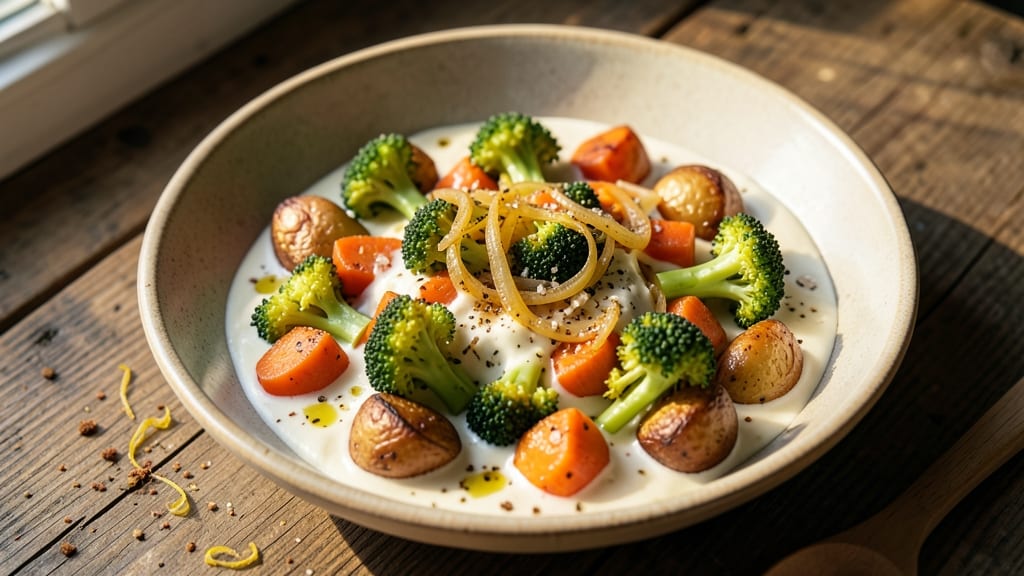
This baked vegetables in white sauce recipe transforms simple veggies into a restaurant-quality one-pan meal with golden, crispy edges and velvety sauce. The secret lies in roasting vegetables until tender-crisp before blanketing them in a creamy, cheesy white sauce that caramelizes into a delicious crust.
I developed this dish after years of testing—it’s the kind of comfort food that feels indulgent yet balanced, perfect for weeknights or dinner parties.
The beauty of this recipe is its foolproof simplicity: just toss your favorite vegetables (carrots, potatoes, broccoli, or cauliflower) with olive oil, salt, and pepper, then roast until caramelized.
While they bake, you’ll whip up a rich white sauce using butter, flour, milk, and a blend of cheeses—Gruyère for nutty depth, cheddar for tang, and cream cheese for silkiness. The sauce clings perfectly to the vegetables, creating a dish that’s both hearty and elegant.
By the time it emerges from the oven, you’ll have a golden, bubbling casserole with vegetables so tender they melt in your mouth and a sauce that’s crispy on top, creamy underneath.
The aroma alone will have everyone gathering at the table—it’s the kind of dish that feels like a hug in food form. Serve it as a main course with crusty bread or as a side to complement grilled meats or fish.
This recipe scales effortlessly, so whether you’re feeding a family of four or a crowd of six, the proportions work perfectly. The leftovers reheat beautifully, making it ideal for meal prep. Let’s get started—your taste buds (and dinner guests) will thank you.
Ingredients for baked vegetables in white sauce
Pantry staples meet restaurant-quality technique for this golden, bubbling one-pan masterpiece.
| Ingredient | Amount | Notes |
|---|---|---|
| Yellow Onion 🧅 | 1 whole | Diced into even pieces |
| Carrots 🥕 | 1 ½ lb | Baby carrots or whole, cut into chunks |
| Russet Potatoes 🥔 | 2 lb | Cut into 1-inch cubes |
| Broccoli Crowns 🥦 | 1 ½ lb | Cut into florets, stems peeled |
| Extra-Virgin Olive Oil 🫒 | ½ cup | For roasting vegetables |
| Kosher Salt 🧂 | 1 ½ tsp | Diamond Crystal preferred |
| Freshly Ground Black Pepper 🌶️ | ½ tsp | Cracked peppercorns preferred |
| Unsalted Butter 🧈 | ½ cup | Cold, cubed for sauce |
| All-Purpose Flour 🌾 | ½ cup | Sifted for smooth sauce |
| Whole Milk 🥛 | 2 cups | Full-fat for creaminess |
| Gruyère Cheese 🧀 | 1 cup | Freshly grated, nutty flavor |
| Sharp Cheddar Cheese 🧀 | ½ cup | Shredded, tangy profile |
| Cream Cheese 🧈 | 4 oz | Room temperature for smoothness |
| Fresh Thyme Leaves 🌿 | 2 tbsp | Chopped, aromatic touch |
| Garlic Cloves 🧄 | 3 cloves | Minced for sauce depth |
The vegetables are where the magic starts. Russet potatoes hold up best to roasting, but sweet potatoes or butternut squash work too. Whole Foods or Trader Joe's carry pre-cut veggies if you're short on time, but cutting them yourself ensures even cooking. Look for carrots with vibrant orange color—they're sweeter. Broccoli should have tight florets and bright green stems. If using frozen veggies, thaw and pat completely dry to prevent soggy sauce. The key is even-sized pieces so everything cooks at the same rate—1-inch cubes is perfect.
No Gruyère? Parmesan at half the amount gives a similar nutty punch. The cream cheese is non-negotiable for that velvety texture, but Neufchâtel cheese works if you're avoiding dairy. Short on fresh thyme? Dried thyme at one-third the amount gets you close. The flour matters here—King Arthur or Bob's Red Mill brands are ideal for smooth sauces. For a lighter version, swap half the milk for unsweetened almond milk, though the sauce will be slightly thinner. And if you're watching calories, use 2% milk instead of whole—you won't taste the difference.
This dish reheats like a dream—5 minutes at 350°F with a splash of milk revives it perfectly. Store leftovers covered in the fridge for 4 days or freeze for 2 months. I always double the sauce recipe and freeze it separately—just reheat and pour over fresh veggies when needed. The sauce thickens as it cools, so add a splash of milk when reheating if it's too stiff. For extra crispy edges, broil for 2-3 minutes at the end—just watch it like a hawk to avoid burning.
Why You'll Love This Recipe
- One-Pan Magic: I swear by this—toss everything on a sheet pan, drizzle with olive oil, and let the oven do the work. No pots, no pans, just golden, caramelized veggies with that creamy white sauce clinging to every bite.
- Creamy Crisp Contrast: That crispy edge on the potatoes and carrots? Chef’s kiss. But the real star is the white sauce—rich, tangy, and just thick enough to coat the broccoli without drowning it. Honestly, it’s the kind of balance that makes you go back for seconds.
- Meal Prep MVP: Between us, this is my go-to for busy weeks. Bake a big batch on Sunday, portion it out, and reheat it all week—whether it’s lunch at work or a quick dinner. The sauce stays creamy, the veggies hold their texture, and no one complains.
- Budget-Friendly Feast: Russets, carrots, and onions are pantry staples, and broccoli crowns stretch further than you’d think. I’ve fed four people for under $10, and the leftovers? Even better the next day. Not the prettiest, but the taste makes up for it every time.
Step-by-step instructions for baked vegetables in white sauce
Here's how to create tender roasted vegetables with a velvety white sauce that's rich and comforting.
Prep and Roast the Vegetables
Preheat your oven to 425°F and line a large baking sheet with parchment paper. In a large bowl, toss together the diced yellow onion, 1.5 lb carrots cut into chunks, 2 lb russet potatoes cut into 1-inch cubes, and 1.5 lb broccoli crowns cut into florets with the 0.5 cup extra-virgin olive oil, 1.5 tsp kosher salt, and 0.5 tsp freshly ground black pepper.
Spread the vegetables evenly on the baking sheet, leaving space between each piece for proper air circulation. Roast for 25-30 minutes, stirring halfway through, until the edges are deep golden brown and the potatoes begin to soften slightly. You want that perfect balance of tender vegetables with crispy edges—this is where the comfort begins.
Make the Creamy White Sauce
While the vegetables roast, melt the 0.5 cup unsalted butter in a medium saucepan over medium heat. Add the 0.5 cup all-purpose flour and whisk continuously for 1-2 minutes until the mixture forms a smooth, pale roux. This step is crucial for building flavor and thickening the sauce properly.
Gradually whisk in the 2 cups whole milk, about ¼ cup at a time, allowing each addition to fully incorporate before adding more. Once all the milk is added, stir in the 1 cup gruyère cheese, 0.5 cup sharp cheddar cheese, 4 oz cream cheese, 2 tbsp chopped fresh thyme leaves, and 3 minced garlic cloves. Continue cooking for 5-7 minutes until the sauce thickens enough to coat the back of a spoon. The sauce should be smooth and creamy, with no lumps remaining.
Combine and Finish
Once the vegetables are tender and crispy, transfer them to a large serving dish. Pour the creamy white sauce over the vegetables, making sure each piece is well-coated. The sauce should cling beautifully to the roasted vegetables, creating a rich, velvety blanket that enhances their natural flavors.
Return the dish to the oven and bake for an additional 10-15 minutes at 375°F until the sauce is bubbly and the vegetables are heated through. The top should be golden and slightly crispy in spots, while the vegetables remain tender underneath. This final step ensures everything is perfectly harmonized in both texture and temperature.
Serve with Confidence
Remove the dish from the oven and let it rest for 5 minutes before serving. This brief resting period allows the flavors to meld together, creating a truly comforting dish. Garnish with additional chopped fresh thyme leaves if desired, and serve immediately while the vegetables are still warm and the sauce is at its creamiest.
The result is a one-pan wonder that delivers on all the promises: tender, flavorful vegetables with crispy edges, enveloped in a rich, velvety white sauce. Each bite is a perfect balance of textures and flavors, making this dish ideal for any comforting meal.
Pro Tips For Making Baked Vegetables In White Sauce
- CUT POTATOES UNEVENLY: I learned this the hard way—slicing potatoes too thin means they turn to mush, too thick and they stay raw inside. Aim for 1-inch chunks with some uneven edges; they’ll crisp better and cook faster in the sauce.
- SWEAT ONIONS FIRST: Skip the raw onion in the sauce—it’ll just sit there like a sad, watery guest. Sauté it in olive oil until translucent (about 5 minutes) before adding anything else. This builds flavor and keeps your white sauce from turning grainy.
- DON’T OVERMIX THE SAUCE: The moment you add cream or milk, stir just enough to combine. Overworking it turns the sauce into glue. A few gentle swirls with a wooden spoon is all it takes—your future self will thank you when the sauce stays silky.
- BAKE POTATOES SEPARATELY: Potatoes take forever to soften while broccoli and carrots burn. Roast them at 400°F (200°C) for 20 minutes before tossing everything in the sauce. They’ll be tender and golden, not a sad, undercooked mess. (Yes, even if you’re impatient like me.)
Essential equipment for this recipe
Oven Essentials
You’ll need a heavy-duty baking sheet (like the All-Clad Stainless Steel Half Sheet Pan) to ensure even heat distribution—lightweight pans can create hot spots. I love using parchment paper (like Reynolds Non-Stick Parchment) to prevent sticking and make cleanup effortless.
For the sauce, a medium saucepan with sloped sides (such as All-Clad Stainless Steel Saucepan) helps prevent splatters when whisking the roux. 🔥
Whisk & Tools
A balloon whisk (like the OXO Good Grips) is your best friend for creating a smooth roux and incorporating milk without lumps. For precise measurements, a stainless steel measuring spoons set (such as Farberware) ensures accuracy with your flour and spices.
A microplane (like Borg Design) comes in handy for freshly grating the Gruyère and cheddar—pre-shredded cheese often contains anti-caking agents that can make your sauce grainy.
Cheese & Prep Gear
Invest in a fine-mesh cheese grater (such as Microplane 4-in-1) to get the perfect texture for your cheeses. For the cream cheese, a small offset spatula (like Mercer Culinary) helps incorporate it smoothly into the sauce.
A kitchen scale (such as OXO Good Grips) ensures you measure the 4 oz cream cheese precisely—this makes all the difference in achieving that velvety texture. 🧀
Optional Upgrades
If you’re serious about crispy edges, a pizza stone (like Lodge Cast Iron Pizza Stone) can elevate your dish by adding extra caramelization. For reheating leftovers, a glass baking dish (such as Pyrex Simply Store) distributes heat evenly and prevents drying out.
And if you’re making this often, a high-quality immersion blender (like Ninja Foodi) can help smooth out any lumps in the sauce if needed.
Nutrition facts
Frequently asked questions
Can I use frozen vegetables in this recipe?
Yes, but with one critical step: thaw and pat them completely dry first. Frozen veggies release moisture that can make your sauce watery. Spread them on paper towels for 10-15 minutes before roasting. For best results, use high-quality frozen vegetables without added sauces or seasonings.
What's the secret to getting crispy edges on the vegetables?
Three things: high heat (425°F), even spacing on the pan, and proper prep. Cut veggies to 1-inch pieces, toss with plenty of oil, and arrange them in a single layer with space between each piece. Roast for 25-30 minutes, stirring once halfway, until golden brown.
Can I make this dish ahead of time?
Assemble the dish (veggies + sauce) up to 24 hours ahead and refrigerate uncovered. Before baking, cover with foil and bake at 375°F for 25-30 minutes to revive it. For leftovers, reheat covered at 350°F for 10 minutes with a splash of milk to restore creaminess.
What can I substitute for Gruyère cheese?
Try Parmesan (½ cup) for nutty depth or Swiss cheese (1 cup) for a milder flavor. For a dairy-free option, use nutritional yeast (¼ cup) mixed with cashew cream**>. The sauce will be lighter but still delicious. Always grate fresh for best texture.
Why did my sauce turn out lumpy?
Most likely from adding cheese too quickly or not whisking enough. To fix it, blend with an immersion blender or strain through a fine-mesh sieve. For prevention: melt butter first, whisk flour into a smooth paste, add milk gradually, and let the sauce simmer until thick before adding cheeses.