
Sauces & Condiments
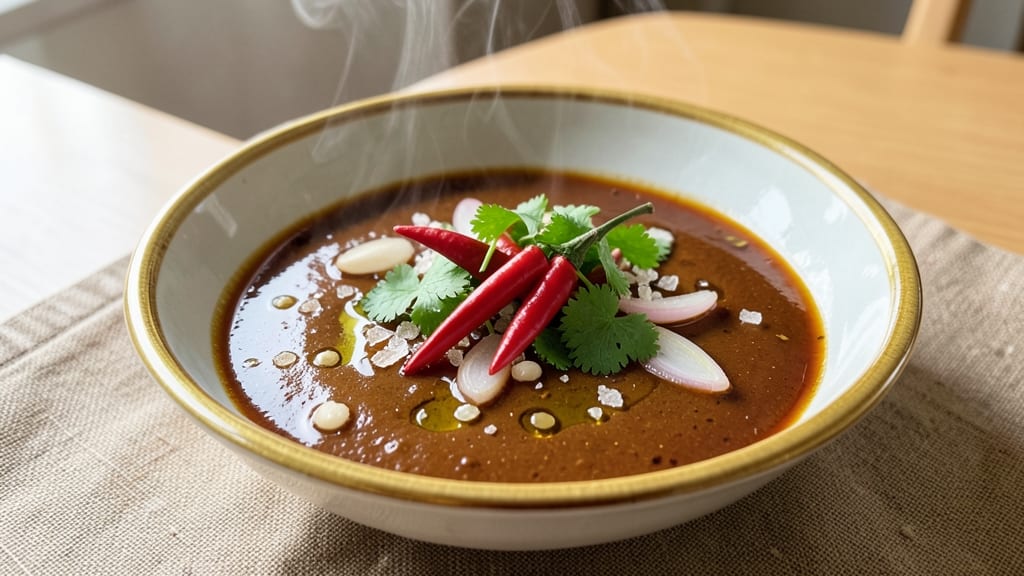
This Bangkok sauce recipe unlocks the bold, balanced flavors of Thai street food in minutes—where sweet palm sugar meets fiery chili and salty fish sauce. 🌟 The secret lies in slow reduction, where all those complex flavors meld into a glossy, versatile dip that elevates everything from grilled meats to fresh spring rolls.
I've perfected this version to strike the exact harmony of sweet, spicy, and umami that makes it irresistible.
The beauty of Bangkok sauce is its adaptability—it's the backbone of Thai cuisine but works just as well in modern dishes. With just seven ingredients and 20 minutes of active time, you'll create a sauce that's rich enough to stand alone or bright enough to complement any dish.
The key is balancing each element: let the garlic and shallots bloom in the oil before adding heat, and reduce the sauce until it's thick enough to cling but still glossy enough to drizzle.
What you'll end up with is a vibrant, aromatic sauce that's perfect for dipping, marinating, or drizzling. The palm sugar caramelizes slightly during reduction, adding depth, while the lime juice cuts through the richness for a bright finish.
This sauce keeps well in the refrigerator for up to two weeks, making it perfect for meal prep or gifting to fellow food lovers.
Whether you're serving up classic Thai dishes or experimenting with fusion flavors, this Bangkok sauce will elevate your cooking. Let's get started—your taste buds will thank you.
Ingredients for bangkok sauce
Seven ingredients, bold flavors—this Bangkok sauce is your Thai street food secret weapon.
| Ingredient | Amount | Notes |
|---|---|---|
| Extra-Virgin Olive Oil 🫒 | ½ cup | High-quality for aromatic base |
| Palm Sugar 🍯 | ½ cup | Or light brown sugar in pinch |
| Fish Sauce 🐟 | ¼ cup | Red Boat preferred for quality |
| Fresh Garlic Cloves 🧄 | 6 cloves | Minced, for deep aromatic base |
| Fresh Shallots 🧅 | ¼ cup | Finely chopped, for subtle sweetness |
| Thai Bird's Eye Chilies 🌶️ | 2 whole | Adjust for heat preference |
| Fresh Lime Juice 🍋 | ¼ cup | Brightens the finished sauce |
The fish sauce makes or breaks this. Red Boat is my go-to—it's clean, salty, and packed with umami. If you can't find it, Three Crabs is a solid backup. Palm sugar is non-negotiable for that caramelized depth, but if you're in a pinch, light brown sugar works (though it won't caramelize the same way). For the chilies, Thai Bird's Eye is ideal, but if they're too spicy, swap for serrano peppers. The shallots? Freshly chopped makes all the difference—pre-minced gets bitter. I always grab extra lime juice because it's the final bright note that ties everything together.
No palm sugar? Honey or maple syrup at half the amount gets you close, though the flavor won't be identical. Running low on fish sauce? Soy sauce plus a pinch of sugar mimics the saltiness, but you'll lose some depth. The garlic and shallots need to bloom in the oil—don't skip this step! If you're sensitive to heat, remove the chili seeds before blending. For a smoother sauce, strain it through a fine-mesh sieve after cooking. And if you're making this ahead, add the lime juice just before serving to keep it bright.
This sauce keeps beautifully—2 weeks in the fridge sealed tight. The flavors actually improve over time as everything melds. For longer storage, freeze in ice cube trays—just thaw and stir. I like to portion mine into small jars for easy drizzling. If it thickens too much, just add a splash of water or lime juice to loosen it up. The sauce is incredibly versatile—drizzle it over noodles, use it as a marinade, or serve it with spring rolls. It's the kind of sauce that makes you want to make extra.
Why You'll Love This Recipe
- Here’s what sold me: it keeps for weeks in the fridge, and the cost? Ridiculously low. A little goes a long way, so you’re not stuck with gallons of unused sauce gathering dust. Plus, if you’re prepping meals, this is your secret weapon—just toss it in a jar and grab it whenever.
- Five-Ingredient Magic: I swear, this sauce is the kind of recipe that makes you question why you ever cooked anything else. Just olive oil, sugar, fish sauce, garlic, and shallots—no fancy techniques, no last-minute grocery runs. Honestly, I’ve made it while waiting for takeout to arrive.
- Umami Bomb: That fish sauce and palm sugar combo? It’s like a flavor explosion in your mouth. The garlic and shallots caramelize just enough to give it depth, but it’s still bright and tangy—not heavy, not sweet, just right. Between us, it’s the only sauce I’ll use on grilled shrimp or noodles anymore.
- Weeknight Superhero: This stuff doesn’t just work—it elevates everything. Drizzle it over rice and veggies for a quick dinner, toss it with tofu for a restaurant-worthy bowl, or even slather it on roasted chicken. I’ve even used it in place of soy sauce in stir-fries, and no one’s ever asked for the recipe.
Step-by-step instructions for sweet and spicy Bangkok sauce
This sauce comes together in minutes but packs layers of flavor—here's how to balance sweet, spicy, and umami perfectly.
🍳 Step 1: Sauté Aromatics Until Golden and Fragrant
Heat the 0.5 cup extra-virgin olive oil in a medium saucepan over medium heat. Add the 6 cloves minced fresh garlic cloves and 0.25 cup finely chopped fresh shallots, stirring constantly. Cook for 3-4 minutes until the garlic turns a pale golden color and the shallots soften—this is your aromatic foundation.
Watch for that moment when the garlic stops sizzling and starts to smell sweet and nutty. That's when you're ready for the next step. If the oil starts to smoke, reduce the heat slightly—you want the aromatics to cook gently, not burn. This step builds the sauce's depth, so don't rush it.
🔥 Step 2: Add Heat and Sugar for Perfect Balance
Add the 2 whole Thai Bird's Eye Chilies (adjust for heat preference) and cook for 1 minute until they darken slightly. Then stir in the 0.5 cup palm sugar and cook for another 2-3 minutes until the sugar melts completely and the mixture turns a rich amber color.
Here's where the magic happens: the sugar caramelizes slightly while the chilies infuse their heat. You'll see tiny bubbles form around the edges of the pan—that's your signal the sugar is working. If the mixture starts to stick, add a splash of water to deglaze, but keep stirring constantly to prevent burning.
🥘 Step 3: Build the Sauce with Fish Sauce and Lime
Remove the pan from heat and let it cool for 1 minute. Then stir in the 0.25 cup fish sauce and 0.25 cup fresh lime juice. The mixture will bubble vigorously—this is normal as the acidity reacts with the hot oil and sugar. Let it simmer gently for 2-3 minutes until slightly thickened.
Taste and adjust the balance: need more sweetness? Add a pinch of sugar. Too salty? A splash of lime juice helps. Too spicy? A tiny bit of sugar mellows the heat. The sauce should sing with all three flavors—sweet, spicy, and umami—without any one dominating. This is where you fine-tune the perfect harmony.
⏰ Step 4: Cool and Thicken for Perfect Texture
Transfer the sauce to a heatproof bowl and let it cool to room temperature. As it cools, it will thicken naturally—this resting period is crucial. If you're in a hurry, refrigerate for 30 minutes to accelerate the process. The sauce should reach a consistency where it coats the back of a spoon but still pours smoothly.
This cooling step transforms the sauce from a loose liquid to a perfect dipping consistency. If it's too thick, whisk in a teaspoon of water. Too thin? Simmer gently for another minute to reduce. The ideal texture clings beautifully to spring rolls, grilled meats, or fresh vegetables without being gloppy.
Pro Tips For Making Bangkok Sauce
- LOW AND SLOW: Bangkok sauce needs patience—don’t rush the simmer. After adding fish sauce and palm sugar, reduce heat to the lowest setting and let it bubble gently for at least 10 minutes. I used to crank it up, and the sauce would turn bitter; now I just walk away and let it work.
- MINCE THOSE SHALLOTS: No food processor here—finely chop shallots by hand until they’re almost paste-like. The smaller the pieces, the faster they dissolve into the sauce, and that’s when the flavor really integrates. I learned this the hard way after a chunky, uneven sauce ruined a whole batch of pad thai.
- SALT THE GARLIC: Toss minced garlic in a pinch of salt before adding it to the oil. This draws out moisture and prevents splattering, which means less smoke and more even cooking. Trust me, your kitchen will smell cleaner, and the garlic won’t burn as easily.
- SWAP SUGAR SMARTLY: If palm sugar isn’t available, use dark brown sugar—but adjust the fish sauce. Dark brown has more moisture, so reduce the fish sauce by 10% to avoid an overly salty sauce. I was skeptical until I tried it; the flavor stays balanced, and the sauce caramelizes just as well.
Wine and beer pairings for these flavors
Thai White Wine Pairings
For Bangkok sauce's bright acidity and spicy-sweet balance, I reach for crisp Thai white wines like Riesling or Pinot Grigio from Thailand's Chang or Oak Valley brands.
The Chang Riesling (from Thailand's vineyards) has a honeyed sweetness that mirrors the palm sugar while its citrus notes cut through the heat. Serve it slightly chilled—50-52°F—to enhance the sauce's vibrant flavors. 🍷
Light Lager Complements
A Thai lager like Singha or Leo is my go-to beer pairing—its subtle malt sweetness and clean finish won't overpower the sauce's complexity. The Singha Premium (with its hint of citrus) is especially refreshing, while Leo's crisp, light body lets the sauce's flavors shine.
For a craft twist, try a Thai-style pale ale like Bangkok Beer Company's Brewpub Pale Ale—its caramel notes complement the palm sugar beautifully. 🍺
Spicy-Sweet Cocktail Pairings
For a fun twist, mix a Thai-inspired cocktail like a Tom Yum Martini (vodka, lime, lemongrass, chili) or a Bangkok Mule (gin, lime, ginger beer, Thai basil). The chili and citrus in these drinks echo the sauce's heat and brightness, while the effervescence cleanses your palate.
I love adding a dash of fish sauce to my gin for an umami kick that ties back to the sauce. ✨
Red Wine for Bolder Dishes
If serving Bangkok sauce with grilled meats or spicy curries, a Thai red wine like Cabernet Sauvignon from Thailand's vineyards (such as Chang Red) works surprisingly well. Its dark fruit notes and soft tannins stand up to the sauce's bold flavors without clashing.
For a bold, modern twist, try a Syrah—its peppery finish complements the chili beautifully. 🍇
Non-Alcoholic Options
For a refreshing non-alcoholic pairing, serve Thai iced tea (sweetened with palm sugar) or a sparkling lime soda like Thai 7-Up. The citrusy sweetness balances the sauce's heat, while the carbonation adds a lively contrast.
I also love coconut water—its natural sweetness and hydrating properties make it a perfect match for spicy dishes. 🥤
Nutrition facts
Frequently asked questions
Can I substitute palm sugar in this Bangkok sauce?
Yes, but expect slight flavor differences. Use light brown sugar or honey at half the amount—both will add sweetness, though honey adds floral notes while brown sugar caramelizes less dramatically. For a closer match, try coconut sugar, which has a similar molasses depth to palm sugar.
How do I adjust the heat level in this sauce?
For milder heat, remove the seeds from the Thai Bird's Eye Chilies before cooking, or reduce to just 1 chili. If you love spice, add 1 extra chili or a pinch of chili flakes at the end. Always taste as you go—you can mellow heat with more palm sugar or lime juice.
Can I make this sauce without fish sauce?
Yes, but the umami depth will change. Replace with soy sauce (same amount) or a mix of 1 tbsp soy sauce + 1 tsp sugar. For a vegetarian version, use coconut aminos (though it has a slightly different profile). The sauce will still work, but it won't have that classic Thai savory punch.
Why does my Bangkok sauce look too thin?
Sauces thicken as they cool—if it's still runny after resting, simmer uncovered for 2-3 more minutes to reduce. For instant thickening, whisk in 1 tsp cornstarch mixed with 1 tbsp water until glossy. If it's too thick, loosen with a splash of lime juice or water. The ideal texture coats the back of a spoon but drizzles smoothly.
What are the best dishes to serve with this sauce?
This versatile sauce shines with grilled meats (pork, chicken, or beef), spring rolls, fried rice, or as a dip for fresh vegetables. It also makes an amazing marinade for skewers or a glaze for roasted tofu. The sweet-spicy balance works surprisingly well with seafood too—try it with grilled shrimp or squid.