
Sauces & Condiments
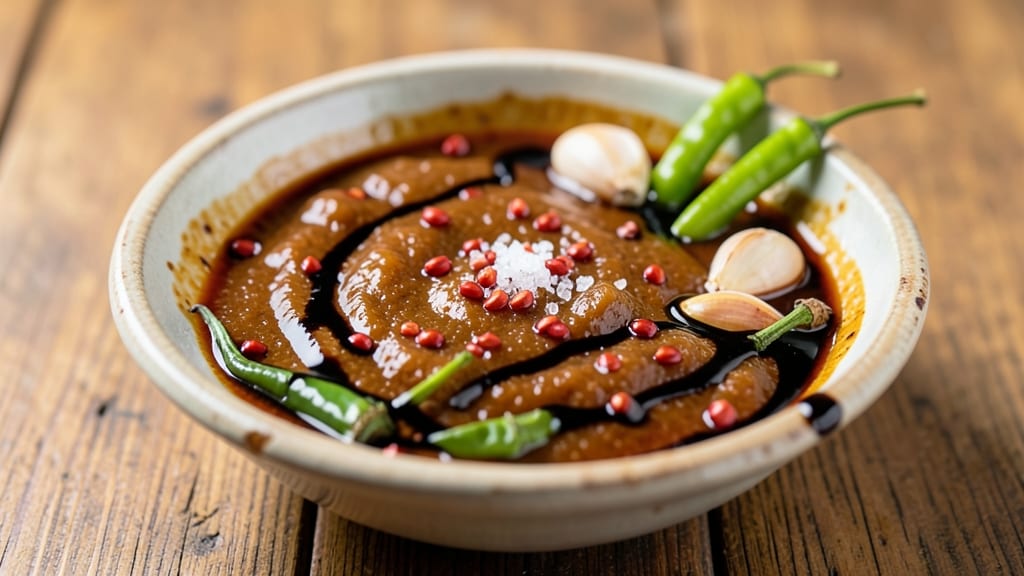
This Pinoy-style barbeque sauce recipe delivers the perfect balance of sweet, tangy, and spicy flavors that make every dish unforgettable. 🌶️ The secret lies in the combination of vinegar, sugar, and a touch of heat from siling labuyo (Filipino chili), creating a sauce that's as versatile as it is delicious.
Unlike traditional American barbecue sauces, this version relies on soy sauce and annatto for that signature umami depth and golden hue.
What sets this sauce apart is its simplicity—just a handful of pantry staples come together in a single pot to create a smooth, storable condiment. The vinegar adds a bright tang that cuts through the richness, while the sugar caramelizes slightly during cooking, deepening the flavor.
The result is a sauce that's perfect for grilling, marinating, or dipping, with just the right amount of heat to keep things interesting.
By the time you're done, you'll have a batch of sauce that's rich, slightly sticky, and packed with layers of flavor. It's the kind of condiment that elevates simple grilled meats into something extraordinary, whether you're cooking for a family gathering or just craving that classic Filipino taste.
The best part? It keeps well in the fridge for up to a month, so you can make a big batch and enjoy it all season long.
Use it to glaze grilled pork, chicken, or fish, or as a dipping sauce for spring rolls and dumplings. The possibilities are endless, and the flavor is always spot-on. Let's get started on this sauce that's sure to become a staple in your kitchen.
Ingredients for barbeque sauce recipe pinoy style
Just ten ingredients transform into the ultimate Filipino barbecue sauce—sweet, tangy, and packed with umami.
| Ingredient | Amount | Notes |
|---|---|---|
| Cane Sugar 🍯 | ¾ cup | Light brown preferred for caramel depth |
| White Vinegar 🍶 | ½ cup | Distilled or apple cider vinegar |
| Soy Sauce 🍶 | ½ cup | Light or regular, not low-sodium |
| Siling Labuyo (Filipino Chili) 🌶️ | 4 whole | Adjust for heat preference (seeds removed) |
| Annatto Seeds 🌿 | 1 tsp | For vibrant golden color (or achuete paste) |
| Garlic Cloves 🧄 | 4 cloves | Minced for aromatic depth |
| Black Peppercorns 🌶️ | ½ tsp | Crushed for subtle heat |
| Ground Black Pepper 🌶️ | ¼ tsp | Freshly ground for best flavor |
| Salt 🧂 | 1 tsp | Diamond Crystal preferred |
| Water 💧 | ½ cup | For thinning if needed |
The siling labuyo is non-negotiable for that signature Filipino heat—find it at Asian markets or order online if your local store doesn't carry it. Trader Joe's sometimes stocks it, but I always grab extra since it keeps for months in a sealed bag. For annatto, Penzeys sells whole seeds that you toast and grind, or you can use achuete paste from Latin markets. The soy sauce should be the light kind—Kikkoman works perfectly. If you're making a big batch, consider doubling the garlic and chili for maximum flavor punch.
No siling labuyo? Substitute with Thai bird's eye chilies (use half the amount) or cayenne pepper (one-third the amount). For a deeper umami hit, add 1 tbsp fish sauce—it's a common Filipino trick. The sugar can be swapped for coconut sugar for a caramel note, or honey if you're not strict about vegan preferences. If your sauce turns out too thick, add water 1 tbsp at a time—it should coat the back of a spoon but still be pourable. For extra richness, stir in 1 tbsp toasted sesame oil at the end.
This sauce tastes even better the next day as flavors meld. Store in a glass jar in the fridge for up to 4 weeks, or freeze for 6 months. I like to portion it into small jars—perfect for grilling trips or last-minute marinades. If you make a big batch, freeze half right away. The color will deepen over time, and the heat will mellow slightly, making it even more versatile for different dishes.
Why You'll Love This Recipe
- No-Fuss Simmer: Between us, this sauce takes less effort than waiting for a delivery. Just toss the cane sugar, vinegar, and soy sauce into one pot, let it bubble for 20 minutes, then crush in those siling labuyo peppers and annatto—no chopping, no straining, just simmer and go.
- Sweet Heat Magic: That balance of cane sugar’s caramel depth and siling labuyo’s fiery kick? It’s the kind of flavor that makes you pause mid-bite. Honestly, I’ve tried store-bought versions, but nothing beats the smoky-sweet tang when made fresh with these exact ingredients.
- Weeknight Workhorse: Slather it on grilled pork skewers, toss it with rice, or drizzle it over adobo leftovers—this sauce works just as hard as you do. I keep a jar in the fridge because it turns even the simplest meal into something special, like magic.
- Budget Bulk: A single batch stretches to feed a family of four (or two very hungry adults) and costs pennies per serving. The annatto seeds give it that gorgeous golden hue without fancy additives, and the vinegar keeps it shelf-stable for weeks—so you’re always ready, never overpaying.
Step-by-step instructions for Filipino-style barbecue sauce
Here's how to craft that perfect sweet-savory-sour balance that makes Pinoy barbecue unforgettable.
🍳 Step 1: Toast the Aromatics and Spices
Heat a medium saucepan over medium heat and add the 4 cloves garlic cloves and 0.5 tsp black peppercorns. Toast them for 1-2 minutes until you smell that irresistible garlic aroma and see the peppercorns darken slightly. This step builds deep flavor—don't skip it!
Add the 1 tsp annatto seeds (or achuete paste) and 4 whole siling labuyo (with seeds removed if you prefer less heat). Stir for another 30 seconds until the annatto releases its vibrant color. You'll see the mixture turn a beautiful golden hue—this is your visual cue that the spices are ready to infuse the sauce.
🍳 Step 2: Caramelize the Sugar
Increase heat to medium-high and add the 0.75 cup cane sugar. Stir constantly for 3-4 minutes until the sugar melts and turns into a thick, amber-colored syrup. This caramelization creates that signature sweet depth in Filipino barbecue sauce.
Here's the thing—if the sugar starts to darken too quickly or stick to the pan, reduce the heat slightly. You want a rich amber color, not burnt bits. The sauce should coat the back of a spoon smoothly at this stage—this is your perfect caramel base.
🍳 Step 3: Build the Sauce Foundation
Pour in the 0.5 cup white vinegar and 0.5 cup soy sauce all at once. Stir vigorously as the mixture will bubble vigorously—this is normal! Let it simmer for 5-6 minutes until the sauce thickens slightly and the raw vinegar smell disappears, replaced by a tangy aroma.
Add the 1 tsp salt and 0.25 tsp ground black pepper now. Taste the sauce—you should notice the sweetness from the caramel, the tang from the vinegar, and the umami from the soy sauce. This is where the magic happens, so don't rush this step. The flavors need time to meld together.
⏰ Step 4: Simmer and Adjust Consistency
Reduce heat to low and let the sauce simmer uncovered for 10-12 minutes, stirring occasionally. This slow simmer allows all the flavors to develop fully and the sauce to thicken properly. You're looking for a consistency that's thick enough to coat the back of a spoon but still pourable.
If the sauce is too thick after simmering, add the 0.5 cup water 1 tablespoon at a time until you reach your desired consistency. If it's too thin, continue simmering uncovered until it thickens. The sauce should be glossy and coat the meat beautifully when you use it.
🍽️ Step 5: Cool and Store
Remove the sauce from heat and let it cool completely. I know it's tempting to use it immediately, but cooling allows the flavors to settle and the sauce to thicken further. Transfer to a clean jar and store in the refrigerator for up to 2 weeks.
This sauce is incredibly versatile—use it as a marinade, glaze, or dipping sauce for your favorite grilled meats. The perfect balance of sweet, sour, and savory flavors will make your Filipino barbecue shine. And don't forget to taste as you go—adjust the sweetness, tang, or saltiness to suit your preference!
Pro Tips For Making Barbeque Sauce Recipe Pinoy Style
- TOAST THE ANNATTO SEEDS: Toss them dry in a hot pan for 30 seconds first—this cracks the seeds open and releases their color and flavor. I used to just crush them raw, and the sauce always tasted flat. (Yes, even if you’re impatient like me.)
- SIMMER LOW AND SLOW: Reduce heat to a gentle bubble after the first 10 minutes. I learned this the hard way—boiling too hard burns the sugar and turns the sauce bitter. Think "barely there" heat, not a rolling boil.
- STRAIN THE CHILI PASTE: After blending siling labuyo, strain out the seeds and fibrous bits through a fine-mesh sieve. The heat stays, but the sauce won’t be grainy—trust me, your future self will notice.
- USE DARK SOY SAUCE: Skip the light soy unless you want a pale, watery sauce. Dark soy adds depth and a caramelized edge. I was skeptical until I tried it—now it’s non-negotiable for that authentic Pinoy tang.
Make-ahead tips for this recipe
Batch Prep Strategy
Make a double batch right away—this sauce tastes even better after flavors meld for 24 hours. I divide mine into two 16-ounce glass jars (like Ball mason jars) and store one in the fridge while freezing the other.
The frozen portion keeps for 6 months without losing quality, perfect for future grill sessions. 💫
Freezing Techniques
For long-term storage, freeze the sauce in ice cube trays if you only need small portions. Once frozen, transfer the cubes to a ziplock bag—this makes it easy to grab just what you need for a quick marinade or glaze.
Label with the date since the color deepens over time, and the heat mellows slightly. 🥶
Thawing and Reheating
Thaw frozen sauce in the fridge overnight for best results. If you're in a hurry, microwave it on 50% power for 30-second intervals, stirring between each, until it reaches 165°F.
Never reheat directly from frozen—this can make the sauce grainy. Stir in 1 tsp water if it thickens too much after reheating. 🔥
Portioning for Convenience
Portion the sauce into small 4-ounce jars (like Weck glass jars) for easy grab-and-go use. These fit perfectly in a cooler bag for picnics or BBQ outings. I keep one jar in my fridge for daily use and freeze the rest.
The small size also prevents waste from opening a large jar for just a little sauce. ✨
Sauce Stability Tips
This sauce stays fresh in the fridge for up to 4 weeks, but I've had it last 6 weeks if I keep it tightly sealed. The vinegar acts as a natural preservative, but always check for any off smells before using.
If the color fades or the texture separates, it's time to make a fresh batch—trust me, it's worth it! 💛
Marinade Prep
For grilling, mix 1 cup of this sauce with 2 tbsp soy sauce and 1 tbsp honey to create an instant marinade. Let it sit with your meat for at least 2 hours (or overnight for deeper flavor).
I like to use it on pork belly or chicken thighs—the sauce caramelizes beautifully on the grill. 🍗
Nutrition facts
Frequently asked questions
What makes this Filipino barbecue sauce different from American BBQ sauce?
The key differences are the balance of flavors and ingredients. This Pinoy-style sauce uses white vinegar and soy sauce for tangy umami, while American BBQ often relies on tomato-based sweetness. The annatto seeds give it that signature golden color, and siling labuyo adds a bright, peppery heat instead of smoky paprika. The sugar caramelizes for depth rather than just sweetness.
Can I make this sauce without siling labuyo?
Yes! If you can't find siling labuyo, substitute with Thai bird's eye chilies (use half the amount) or cayenne pepper (one-third the amount). For a milder heat, omit the chili entirely and add an extra 0.25 tsp ground black pepper for depth. The sauce will still taste delicious—just with less spice.
How long should I marinate meat in this sauce?
For best results, marinate for at least 2 hours to let the flavors penetrate. For deeper flavor, marinate overnight in the fridge. I recommend using it on pork belly or chicken thighs—the sauce caramelizes beautifully on the grill. For quick grilling, brush the sauce on just before cooking to avoid soggy meat.
Why does my sauce turn out too thick or too thin?
If your sauce is too thick, add water 1 tablespoon at a time while simmering. For a thinner sauce, continue simmering uncovered until it reduces. The ideal consistency should coat the back of a spoon but still be pourable. If you're making a big batch, use the 0.5 cup water as a guide—adjust based on your preference.
Can I use this sauce for non-meat dishes?
This versatile sauce works great as a dipping sauce for spring rolls, lumpia, or dumplings. It also adds a delicious glaze to grilled vegetables like eggplant or bell peppers. For a twist, mix it with mayonnaise to make a spicy dipping sauce for fries or mochi. The sweet-savory balance makes it perfect for any dish that needs a flavor boost.