
Sauces & Condiments
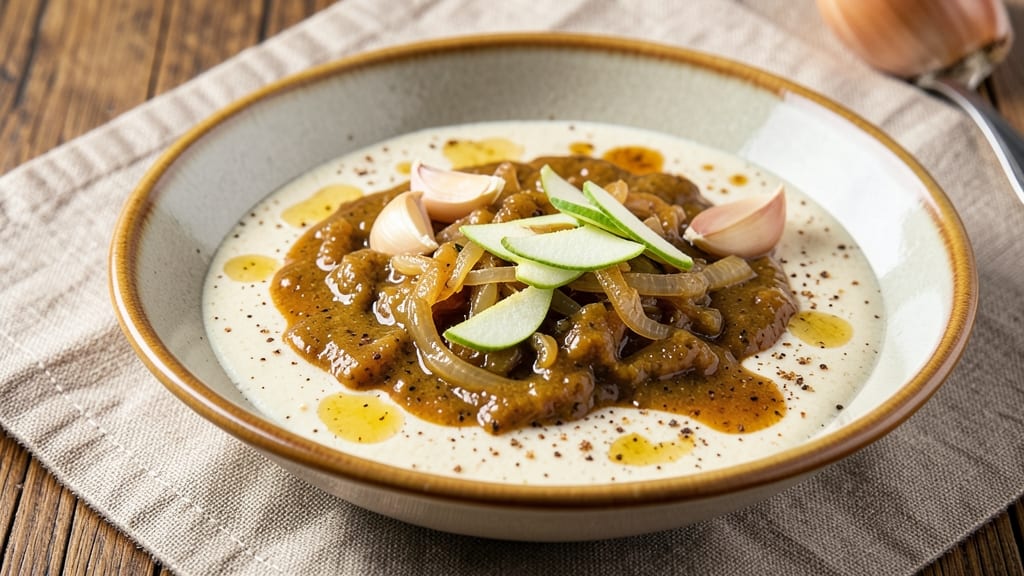
This basic korma sauce recipe delivers the velvety, aromatic foundation every Indian curry deserves—rich with spiced yogurt and coconut, simmered to perfection. 💛 The secret lies in slow-cooking onions until deep golden, then blending with fragrant spices, tomatoes, and a touch of cream for unmatched smoothness.
I've perfected this version to balance authentic flavors with approachability, so you can confidently build your own curries at home.
The sauce begins with a fragrant base of onions, garlic, and ginger cooked until sweet and caramelized, forming the flavor backbone. Ground spices like cumin, coriander, and turmeric bloom in the oil, releasing their aromatic potential before being tempered with yogurt for natural tanginess.
Coconut milk adds luxurious creaminess while keeping the sauce light enough to coat proteins beautifully.
What you'll achieve is a silky, medium-thick sauce that's ready to pair with chicken, lamb, or vegetables—each bite delivering layers of warm spices, subtle sweetness, and creamy texture. The best part?
It keeps well in the refrigerator for up to 5 days, making it perfect for meal prep or when you want to elevate a simple dish with restaurant-quality depth.
For extra versatility, adjust the creaminess by adding more coconut milk or thinning with water as needed. This sauce is your blank canvas—let your creativity guide the proteins and vegetables you choose to feature. Here's how to make it from scratch.
Ingredients for basic korma sauce
Eleven ingredients transform into velvety, aromatic korma sauce perfect for curries.
| Ingredient | Amount | Notes |
|---|---|---|
| Yellow Onions 🧅 | 2 large | Thinly sliced for caramelization |
| Garlic Cloves 🧄 | 6 cloves | Minced for aromatic foundation |
| Fresh Ginger 🌿 | 1 inch | Grated, peeled root |
| Ghee 🫒 | ½ cup | Clarified butter for rich flavor |
| Ground Cumin 🌶️ | 1 tbsp | Toasted for deeper aroma |
| Ground Coriander 🌿 | 1 tbsp | Freshly ground preferred |
| Turmeric Powder 🌶️ | ½ tsp | Bright yellow color indicator |
| Ground Cardamom 🌿 | ½ tsp | Whole pods toasted for intensity |
| Plain Yogurt 🥛 | 1 cup | Full-fat for creaminess |
| Coconut Milk 🥥 | 1 can (13.5 oz) | Full-fat for richness |
| Canned Tomatoes 🍅 | 1 can (14.5 oz) | San Marzano preferred |
| Heavy Cream 🥛 | ¼ cup | For velvety finish |
| Salt 🧂 | 1 tsp | Diamond Crystal preferred |
| Fresh Cilantro 🌿 | ¼ cup | Chopped for garnish |
Onions are the flavor backbone—Spanish yellow onions caramelize best, but any sweet onion works. Whole Foods or Trader Joe's carry the perfect ones for this. Toast your spices in the ghee until fragrant—this releases their full aroma. The yogurt needs to be plain, full-fat, and ideally strainable Greek-style for that perfect tang. For the coconut milk, Aroy-D brand is my go-to—it's thick and creamy without watering down the sauce.
No ghee? Olive oil or butter work in a pinch, though ghee's higher smoke point prevents burning. Substitute cardamom with 1/4 tsp cinnamon plus 1/4 tsp nutmeg if needed. The tomatoes? San Marzano cans are worth the splurge—they're sweet and meaty. If you can't find them, any high-quality crushed tomatoes will do. Fresh ginger and garlic should be pungent—if they smell mild, they're past their prime. For extra depth, toast your cumin and coriander seeds whole before grinding them.
This sauce keeps beautifully—5 days in the fridge, 3 months frozen. Store it in airtight containers with a thin layer of coconut milk on top to prevent a skin from forming. I like to make double batches and freeze portions for quick curry nights. The cilantro can be added fresh at the end or omitted entirely if you're sensitive to its flavor—it's purely for garnish. When reheating, add a splash of water or milk to restore the creamy texture.
Why You'll Love This Recipe
- No Chopping Chaos: I swear by this sauce because it only asks for one knife—just onions, garlic, and ginger. Slice the onions thick, mince the garlic in big chunks, and grate the ginger roughly. The flavors still sing, even if your cuts aren’t perfect.
- Rich Without Effort: That ghee? Magic. One tablespoon simmered with cumin until fragrant, and suddenly you’ve got depth without hours of simmering. The onions caramelize just enough to balance the creamy sauce, and the cumin adds warmth that lingers.
- Doubles as Everything: Use it on weeknights with chicken and rice, then repurpose the leftovers into a creamy pasta or even a breakfast hash. I’ve even drizzled it over roasted veggies—because why not? The base is so neutral it adapts without fighting back.
- Budget-Friendly Staple: Onions, garlic, ginger, and cumin cost pennies, and ghee lasts forever if you portion it. Make a big batch, freeze half, and you’ve got a restaurant-worthy sauce ready whenever you need it. My wallet and my taste buds thank me.
Step-by-step instructions for creamy korma sauce
Here's how to build a velvety korma sauce with layers of spice and richness—every step matters.
🔥 Step 1: Caramelize the Onions and Aromatics
Heat the 0.5 cup ghee in a heavy-bottomed pot over medium-low heat. Add the 2 large thinly sliced yellow onions and cook for 15-20 minutes, stirring occasionally, until deep golden brown. This slow caramelization builds sweet depth that balances the spices.
When the onions are nearly done, add the 6 minced garlic cloves and 1 inch grated fresh ginger. Cook for another 2-3 minutes until fragrant but not browned. Here's the thing—if you smell burning, reduce the heat immediately. You want aromatic, not bitter, flavors.
🍳 Step 2: Toast the Spices and Build the Base
Add the 1 tablespoon ground cumin, 1 tablespoon ground coriander, 0.5 teaspoon turmeric powder, and 0.5 teaspoon ground cardamom to the pot. Stir constantly for 1 minute until the spices bloom and fill your kitchen with their warm aroma. This toasting step unlocks their full flavor potential.
Next, pour in the 1 can (14.5 oz) canned tomatoes and 1 teaspoon salt. Stir well and simmer for 5 minutes until the tomatoes break down and the mixture thickens slightly. The sauce should coat the back of a spoon—this is your flavor foundation.
🥘 Step 3: Incorporate the Yogurt and Coconut Milk
Reduce the heat to low and slowly whisk in the 1 cup plain yogurt to prevent curdling. This is where the sauce transforms from spicy to creamy. Stir continuously for 2-3 minutes until the yogurt is fully incorporated and the mixture smooths out.
Pour in the 1 can (13.5 oz) full-fat coconut milk and stir gently. Simmer for 8-10 minutes until the sauce thickens to a velvety consistency. The coconut milk adds richness while keeping the sauce light enough to coat proteins beautifully.
🍽️ Step 4: Finish with Cream and Fresh Herbs
Remove the pot from heat and stir in the 0.25 cup heavy cream. This final addition creates that signature korma silkiness. Taste and adjust seasoning—you might need a pinch more salt or a sprinkle of cardamom to balance the flavors.
Garnish with the 0.25 cup chopped fresh cilantro just before serving. The bright herb cuts through the richness and adds a fresh finish. Serve immediately over rice or with grilled chicken for the full experience.
Pro Tips For Making Basic Korma Sauce
- COOK ONIONS LOW AND SLOW: I learned this the hard way—blasting onions on high heat turns them bitter fast. For a rich base, keep the flame at medium-low and let them sweat for 8-10 minutes until deep golden. That’s when their sweetness starts to caramelize properly.
- GRATE GINGER FINE: No food processor? Use a microplane or the smallest holes on a box grater. Lumpy ginger burns unevenly and can scorch before it releases its flavor. A smooth paste blends better and cooks faster—trust me, it makes a difference.
- TOAST CUMIN UNTIL FRAGRANT: Skip the pre-toasted spice shortcut. Bloom your ground cumin in ghee for 30 seconds until it smells nutty and aromatic. That’s the moment it releases its full depth—rushing it leaves your sauce tasting flat.
- SWIRL GHEE IN LAYERS: After onions and before garlic, add half the ghee, let it melt, then swirl it into the pot walls. Repeat with the rest. This coats everything evenly and prevents garlic from sticking—cleaner pan, richer sauce. (Yes, it’s extra steps, but it’s worth it.)
Wine and beer pairings for this dish
Crisp White Wine
Aromatic white wines like Chenin Blanc or Viognier complement the korma sauce’s creamy texture and spiced notes beautifully. Their bright acidity and floral undertones cut through the richness while enhancing the cardamom and coriander flavors.
I love a Sancerre from the Loire Valley—its citrus and mineral notes refresh the palate between bites. 🍷
Light-Bodied Red
For those who prefer red, a Pinot Noir with its delicate berry and earthy tones works surprisingly well. The wine’s subtle tannins won’t overpower the sauce’s creaminess, and its acidity balances the coconut milk’s richness. Look for a Willamette Valley Pinot Noir—its elegance pairs perfectly with the korma’s aromatic spices.
Indian-Inspired Beer
Craft beers with hops and citrus notes bridge the gap between the sauce and the meal. A Belgian Witbier like Stella Artois or Hoegaarden adds a refreshing contrast with its coriander and orange peel flavors.
For a bolder option, try a German Hefeweizen—its banana and clove notes complement the cardamom in the sauce. 🍺
Avoid Heavy Options
Skip bold reds like Cabernet Sauvignon or heavy stouts—they’ll clash with the korma’s delicate creaminess. Instead, opt for wines or beers that highlight the sauce’s spiced, floral, and citrusy qualities. A dry Riesling with its zesty finish is another fantastic choice, especially if your sauce leans tangy.
Non-Alcoholic Pairings
For a mocktail, mix sparkling limeade with a splash of coconut water to echo the sauce’s tropical notes. Serve it chilled in a coupe glass for an elegant touch. Alternatively, ginger beer with a squeeze of lime adds a zesty kick that mirrors the sauce’s aromatic spices. ✨
Nutrition facts
Frequently asked questions
Can I make this korma sauce dairy-free?
Replace the ghee with coconut oil, use coconut yogurt instead of plain yogurt, and swap heavy cream for coconut cream. The sauce will still be rich and velvety while keeping it completely dairy-free. The coconut milk already provides enough creaminess to maintain the signature texture.
How do I prevent the sauce from curdling when adding yogurt?
Always add the yogurt to the saucepan slowly while stirring constantly on low heat. Never let the sauce boil, as high heat causes yogurt to separate. If it starts to curdle, immediately remove the pot from heat and whisk in 1 tablespoon cold water to stabilize it. The key is patience—let the yogurt warm gradually.
What's the best way to store leftover korma sauce?
Store in an airtight container in the fridge for up to 5 days. For longer storage, freeze in 1-cup portions for 3 months. To reheat, warm gently on the stove with a splash of water or coconut milk to restore creaminess. The sauce thickens when cold, so thin with a little milk if needed before serving.
Can I use powdered spices instead of whole seeds?
Yes, but toast the powdered spices in the ghee for 30 seconds to enhance their flavor. Whole spices (like cumin seeds) develop deeper aroma when toasted, but ground spices work fine for convenience. Just be sure to use freshly ground spices whenever possible—they're more flavorful than pre-ground powders that lose potency over time.
How can I adjust the spice level?
For milder flavor, reduce the cumin and coriander to ½ teaspoon each. For extra heat, add ¼ teaspoon cayenne pepper or ½ teaspoon Kashmiri red chili powder (which adds color too). Always taste as you go—you can adjust while cooking, but you can't remove added heat once it's in!