
Sauces & Condiments
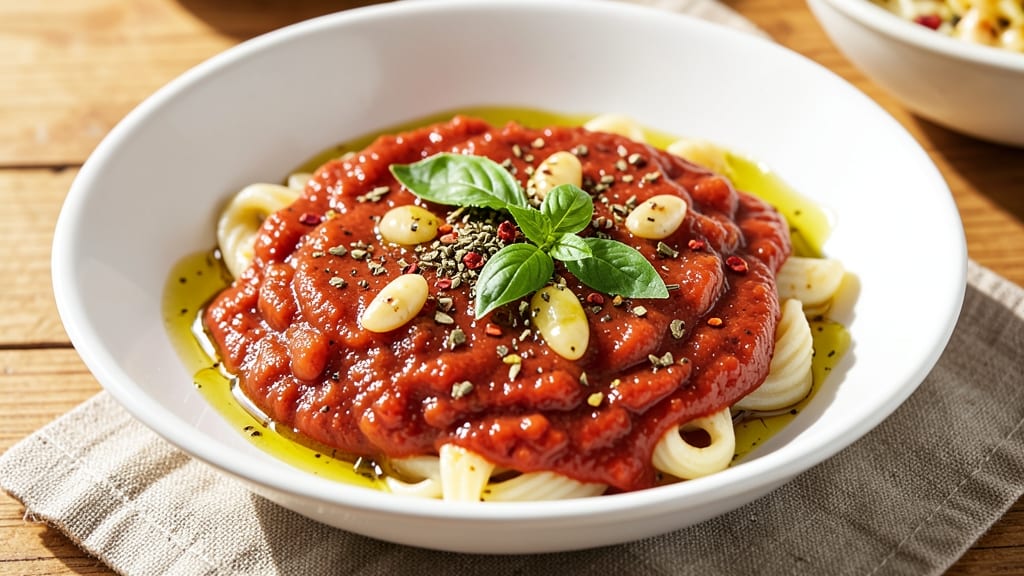
This Calabrese pasta sauce recipe delivers the rich, velvety texture and bold tomato flavor that elevates every plate of spaghetti. The secret lies in a slow simmer that reduces the sauce naturally, intensifying its depth without added thickeners.
I developed this version after years of testing—it’s the one that finally convinced even my pickiest family members to request seconds.
The foundation is simple: high-quality canned tomatoes (never paste), fresh garlic, and a blend of herbs that include basil, oregano, and a touch of red pepper flakes. The sauce thickens as it simmers, creating that signature silky consistency that clings perfectly to pasta.
No roux or cornstarch needed—just time and patience, which is what makes it truly special.
What you’ll end up with is a sauce that’s aromatic, balanced, and deeply flavorful—the kind that transforms simple pasta into a restaurant-worthy meal. The tomatoes caramelize slightly, the garlic mellows into sweetness, and the herbs infuse every spoonful with bright, fresh notes.
It’s versatile enough for any Italian dish but feels like a labor of love.
Store it in the fridge for up to 5 days or freeze for months—this sauce only gets better with time as the flavors meld. Perfect for meal prep or gifting in jars. Let’s get started on creating the perfect Calabrese sauce.
Ingredients for calabrese pasta sauce
High-quality tomatoes, fresh herbs, and a slow simmer create this velvety Calabrese sauce that thickens naturally.
| Ingredient | Amount | Notes |
|---|---|---|
| High-Quality Canned San Marzano Tomatoes 🍅 | 28 oz | Whole peeled tomatoes, crushed by hand |
| Fresh Garlic Cloves 🧄 | 6 cloves | Peeled, lightly smashed for even infusion |
| Extra-Virgin Olive Oil 🫒 | ½ cup | Fruity, peppery variety preferred |
| Fresh Basil Leaves 🌿 | ½ cup | Packed, stems removed, torn by hand |
| Dried Oregano 🍃 | 1 tsp | Mediterranean variety for authentic flavor |
| Red Pepper Flakes 🌶️ | ½ tsp | Adjust for desired heat level |
| Salt 🧂 | 1 ½ tsp | Diamond Crystal kosher salt preferred |
| Black Pepper 🌶️ | ½ tsp | Freshly cracked for maximum aroma |
| White Wine 🍷 | ¼ cup | Dry, crisp variety like Pinot Grigio |
| Granulated Sugar 🍚 | 1 tsp | Balances acidity naturally |
The tomatoes are everything. San Marzano is non-negotiable here—look for cans labeled 'whole peeled' at Whole Foods or Trader Joe's for the best flavor. The garlic should be fresh, with a vibrant purple hue and no green sprouts. For the olive oil, California extra-virgin brands like Corto or Lucini elevate the sauce's richness. I always buy extra basil—half goes in the pot, half gets torn over the top at the end for that restaurant-quality finish. The red pepper flakes can be adjusted based on your heat tolerance, but start with the half teaspoon and add more if you crave it spicier.
No San Marzano tomatoes? High-quality crushed tomatoes work in a pinch, but you'll notice the difference in sweetness and acid balance. Fresh basil wilt fast, so dried basil at one-third the amount is a decent substitute if you're in a bind. For the white wine, dry vermouth or even apple cider vinegar can mimic the acidity profile. The sugar seems counterintuitive, but it's crucial for balancing the natural acidity of the tomatoes—don't skip it. If you're making this ahead, reduce the sugar slightly since the flavors will mellow over time. The oregano should be Mediterranean if available—Penzeys Spices carries it if your local store doesn't stock it.
This sauce only gets better with time. Store it in a glass jar with a tight seal in the fridge for up to 5 days, or freeze for 3 months in portion-sized containers. I always make a double batch—one for immediate use and one to freeze for lazy weeknights. The sauce thickens as it cools, so it's perfect for meal prep. When reheating, add a splash of water or pasta water to loosen it up if needed. The flavors develop beautifully over time, making this the ultimate make-ahead sauce for any Italian meal.
Why You'll Love This Recipe
- No Chopping Required: I swear by this sauce because it’s one of those rare recipes where you actually don’t need to dice anything. Just crush a few garlic cloves—no measuring, no peeling stress—and let the San Marzanos do all the heavy lifting. That’s 10 minutes saved right there.
- Garlic-Basil Magic: Between us, the secret’s in the ratio: two crushed garlic cloves to a handful of fresh basil, simmered just until the oil shimmers. It’s not just flavor—it’s that je ne sais quoi that makes you reach for seconds. The oregano ties it all together, but honestly? The basil makes it sing.
- Weeknight to Potluck: This sauce is my go-to for everything from Tuesday takeout to Sunday dinner. Toss it with spaghetti for a quick meal, or let it sit overnight for deeper flavor. My college roommate still asks for it at family gatherings—proof it works for both lazy nights and impressing guests.
- Budget-Friendly Pantry Gold: San Marzano tomatoes are a splurge worth making, but they stretch like crazy. A single can feeds four meals, and the rest of the ingredients? Olive oil, garlic, basil—stuff you already have. I’ve made this for years, and the cost per serving is laughable. Plus, leftovers taste better the next day.
Step-by-step instructions for tomato-basil simmer that thickens naturally
Here's how to craft a rich, naturally thickened Calabrese sauce with balanced acidity and vibrant flavor.
Build the Flavor Base with Olive Oil and Garlic
Heat the 0.5 cup extra-virgin olive oil in a heavy-bottomed saucepan over medium-low heat. Add the 6 cloves fresh garlic cloves that you've peeled and lightly smashed—they should sizzle gently without browning. Cook for 3-4 minutes until the garlic becomes fragrant but maintains a pale golden color.
This gentle cooking releases the garlic's sweetness without bitterness, creating the aromatic foundation for your sauce. I always use a heavy pan here—it distributes heat evenly and prevents scorching. Watch the garlic carefully; it burns quickly and turns bitter, which will overpower your sauce.
Add Tomatoes, Wine, and Initial Seasonings
Pour in the 28 oz high-quality canned San Marzano tomatoes (crushed by hand) and the 0.25 cup white wine. Stir well to combine, then add the 1.5 tsp salt, 0.5 tsp black pepper, 1 tsp dried oregano, 0.5 tsp red pepper flakes, and 1 tsp granulated sugar. Bring the mixture to a gentle simmer over medium heat.
The sugar balances the tomatoes' natural acidity while the wine adds depth. Let it simmer uncovered for 15 minutes, stirring occasionally. You'll notice the sauce begins to thicken naturally as the tomatoes break down and release their juices. This is where the magic happens—patience at this stage ensures a properly balanced sauce.
Simmer Until Thickened and Flavor-Intense
Reduce the heat to low and continue simmering for another 20-25 minutes. The sauce should thicken noticeably, coating the back of a spoon. Stir occasionally to prevent sticking—this is especially important in the early stages when the sauce is more liquid.
Here's the thing—this sauce thickens through natural reduction, not cornstarch or flour. The longer it simmers, the more concentrated the flavors become. You'll know it's ready when the sauce clings to the spoon and has a velvety consistency. If it thickens too quickly, simply add 1-2 tablespoons of water to adjust the texture.
Finish with Fresh Basil and Final Adjustments
Remove the saucepan from heat and stir in the 0.5 cup fresh basil leaves (torn by hand). Let it steep for 5 minutes to infuse the basil's bright flavor. Taste and make any final adjustments—perhaps a pinch more salt or a touch more red pepper flakes for heat.
For the best results, I recommend using a fine-mesh strainer to remove the basil leaves after they've infused. This keeps the sauce smooth while preserving the basil's aromatic essence. The sauce should have a deep red color, rich tomato flavor, and a perfect balance of sweetness, acidity, and herbal notes.
Pro Tips For Making Calabrese Pasta Sauce
- CRUSH THE GARLIC: Smash those cloves with the flat side of your knife before mincing—this releases more flavor without burning. I used to just chop them, and the sauce never had that deep, sweet punch it should. A quick 30-second job that makes a real difference.
- SIMMER LOW AND LONG: After adding tomatoes, reduce heat to a bare simmer and let it bubble gently for at least 20 minutes. Rushing this step turns the sauce into mush instead of a rich, concentrated flavor bomb. Think "whispering heat," not "loud and proud."
- SALT THE TOMATOES FIRST: Before crushing or blending, sprinkle a generous pinch of salt directly into the canned San Marzanos and let it sit for 10 minutes. This breaks down the flesh for smoother texture and balances acidity—something I only learned after tasting bland sauce twice in a row.
- SAVE THE BASIL WATER: After washing your basil, drain it in a colander, then rinse the leaves under cold water in the sink—save that fragrant water and stir it into the finished sauce. It’s the easiest way to add another layer of herb brightness without overpowering the dish. (Yes, even if you’re skeptical.)
Troubleshooting your calabrese pasta sauce
Sauce Too Thin?
If your sauce isn't thickening enough during simmering, resist the urge to add cornstarch or flour—this breaks the sauce's natural integrity. Instead, extend the simmering time by 10-15 minutes on low heat while stirring occasionally.
The tomatoes will continue reducing naturally. For immediate results, simmer uncovered to evaporate excess liquid faster. If it's still too thin after 45 minutes total, add 1-2 tablespoons of water and continue simmering. 🌡️
Sauce Too Thick?
Over-thickened sauce happens when the tomatoes reduce too quickly. If this occurs, simply add 1-2 tablespoons of water or pasta water (for a flavor boost) and stir well. Return to a gentle simmer for 2-3 minutes until the texture adjusts.
Avoid adding too much liquid at once—this can dilute the flavor. For future batches, reduce the simmering time slightly or keep the saucepan partially covered during the final 10 minutes of cooking. ✨
Garlic Burns Too Fast
Burnt garlic ruins the sauce's delicate balance. To prevent this, use medium-low heat and keep the pan moving. If your garlic starts browning too quickly, remove the pan from heat for 1-2 minutes while you prepare the next ingredients.
A heavy-bottomed saucepan (like All-Clad) distributes heat evenly and gives you more control. I've even used a double boiler for stubborn batches—it keeps the garlic perfectly infused without burning. 🧄
Sauce Tastes Too Acidic
The natural acidity of tomatoes can overpower if not balanced. If your sauce tastes too sharp, add ½ teaspoon granulated sugar or 1 teaspoon tomato paste to mellow the acidity. Alternatively, stir in 1 tablespoon of heavy cream or 1 teaspoon of balsamic vinegar for depth.
The sugar in the original recipe is key—never skip it, but you can adjust slightly if needed. Taste as you go! 🍚
Basil Loses Flavor
Fresh basil wilts quickly and can make the sauce taste bitter if overcooked. Always add it off the heat and let it steep for only 5 minutes. For a smoother sauce, strain out the leaves after infusion.
If using dried basil, reduce to ⅓ teaspoon (it's more concentrated). For extra brightness, add a few fresh leaves after the sauce is served. 🌿
Sauce Separates or Splits
This happens when the sauce's fat (from olive oil) and water separate. To fix it, whisk vigorously while reheating on low heat for 3-5 minutes. For prevention, keep the sauce moving during simmering and avoid rapid temperature changes.
A handheld immersion blender can help re-emulsify separated sauce if needed. The key is gentle, consistent heat—never boil vigorously. 💫
Nutrition facts
Frequently asked questions
Why does this Calabrese sauce thicken on its own?
The sauce thickens naturally through slow simmering—the tomatoes break down and release their juices, which evaporate over time. The 30-40 minute simmer at low heat concentrates the flavors while reducing the liquid. Unlike traditional thickeners like flour or cornstarch, this method preserves the sauce's authentic texture and depth.
Can I make this sauce without white wine?
Replace the 0.25 cup white wine with an equal amount of dry vermouth, apple cider vinegar, or even extra broth for depth. The key is acidity—this balances the tomatoes' sweetness. If using vinegar, add it gradually to avoid overpowering the flavor.
How do I know when the sauce is done?
Your sauce is ready when it coats the back of a spoon with a velvety consistency and has a deep red color. It should take about 30-40 minutes of simmering total. Taste for balance—sweetness from the tomatoes, garlic's mellow notes, and bright basil should all shine through. If it's still too thin, simmer uncovered for 5-10 more minutes.
Is this sauce gluten-free?
Yes, this recipe is naturally gluten-free! All ingredients—San Marzano tomatoes, olive oil, garlic, herbs, and wine—are gluten-free. Just ensure your wine is certified gluten-free if you're highly sensitive. The sauce thickens without flour or cornstarch, making it safe for gluten-free diets.
Can I use fresh tomatoes instead of canned?
Fresh tomatoes work but require extra prep. Use 3-4 large ripe tomatoes (peeled, seeded, and chopped) for every 28 oz can. Simmer them longer (45-60 minutes) to break down their fibers and achieve the same thickness. For best results, add a splash of water or broth to compensate for their higher water content.