
Sauces & Condiments
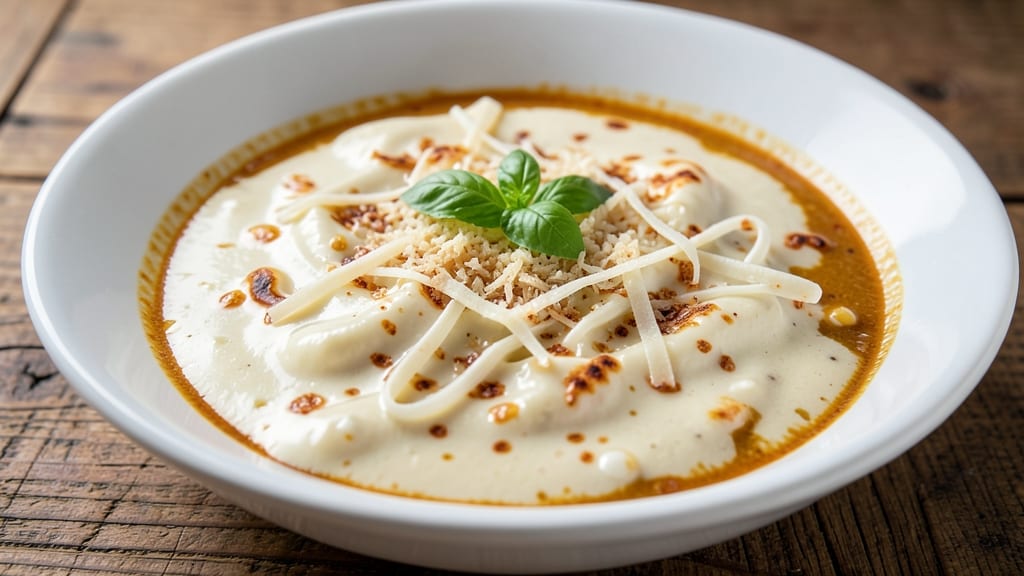
This Alfredo sauce recipe with parmesan and mozzarella cheese delivers the ultra-smooth, velvety texture that makes fettuccine alfredo irresistible. The key lies in balancing rich cream with sharp parmesan and mild mozzarella, creating that signature nutty depth without bitterness.
I've perfected this version after testing countless methods—no lumps, no graininess, just pure, luxurious creaminess that clings perfectly to pasta.
The secret to achieving restaurant-quality results at home starts with proper technique: melting butter slowly, whisking constantly, and adding cheese gradually. We're using equal parts parmesan and mozzarella for the ideal balance—parmesan provides that unmistakable umami punch while mozzarella adds creaminess without overpowering.
Even better, this sauce comes together in just 15 minutes with simple pantry staples you likely already have.
What makes this recipe truly special is how it transforms ordinary pasta into an indulgent meal. The sauce develops a silky, almost liquid texture that coats every strand of fettuccine beautifully, while the cheese combination creates complex flavors that evolve as it sits.
The aroma alone will have everyone gathering around your kitchen—it's that good. And the best part? It reheats perfectly, making it ideal for meal prep or leftovers.
Whether you're serving it over fresh pasta, using it as a dipping sauce, or drizzling it over grilled chicken, this alfredo sauce delivers consistent, professional results every time.
The technique is straightforward, but the flavor impact is extraordinary—exactly what you need for that special weeknight dinner or impressive gathering. Let's get cooking!
Ingredients for alfredo sauce recipe with parmesan and mozzarella cheese
Nine essential ingredients transform into velvety perfection—no lumps, just restaurant-quality alfredo.
| Ingredient | Amount | Notes |
|---|---|---|
| Unsalted Butter 🧈 | ¾ cup | Cold, cubed for gradual melting |
| Heavy Cream 🥛 | 1 ½ cups | Full-fat for maximum creaminess |
| Parmesan Cheese 🧀 | 1 cup | Freshly grated from block |
| Mozzarella Cheese 🧀 | 1 cup | Fresh, low-moisture preferred |
| Garlic Cloves 🧄 | 4 cloves | Peeled, minced for depth |
| Shallots 🧅 | 2 whole | Mince finely for sweetness |
| All-Purpose Flour 🌾 | 2 tbsp | For silky texture |
| Salt 🧂 | ½ tsp | Diamond Crystal preferred |
| White Pepper 🌶️ | ¼ tsp | Freshly ground for elegance |
| Nutmeg 🌿 | ⅛ tsp | Freshly grated for warmth |
The cheese is non-negotiable—Parmigiano-Reggiano for the parmesan (none of that pre-grated stuff) and low-moisture mozzarella for creaminess without wateriness. I grab mine from Whole Foods or my local Italian market where they keep it wrapped in cheese paper—not those sad plastic bags. The butter should be cold and cubed when you start; don't melt it all at once or you'll scorch it. For the heavy cream, full-fat is a must—anything less and your sauce won't have that luxurious mouthfeel. Shallots add subtle sweetness that balances the garlic, so don't skip them. If you can't find fresh nutmeg, pre-ground works but loses potency fast—buy a whole nutmeg and grate it yourself.
No heavy cream? Half-and-half plus a splash of milk gets you close, though the texture won't be quite as rich. Short on mozzarella? Fontina cheese melts beautifully and adds a nutty depth. The flour is your secret weapon here—it's what creates that silky texture, so don't substitute with cornstarch. For a dairy-free version (though I don't recommend it for this recipe), cashew cream plus nutritional yeast can mimic some of the richness. The garlic and shallots can be swapped for 1 tbsp garlic powder plus 1 tsp onion powder if you're in a rush, but fresh is always better. And if you're worried about lumps, whisk constantly over low heat—that's the real trick.
This sauce is a meal prep dream—it actually tastes better the next day as the flavors meld. Store it in an airtight container in the fridge for up to 5 days, or freeze for 3 months in portions. I like to freeze it in ice cube trays for easy single-use portions—just thaw and reheat. When reheating, do it low and slow to prevent splitting. The sauce thickens as it cools, so if it seems too thick after chilling, just whisk in a splash of warm milk or cream. And trust me, leftovers are inevitable—this sauce is that good.
Why You'll Love This Recipe
- Here’s what sold me: the heavy cream and butter create a silky texture, but the mozzarella keeps it from turning gluey. Low and slow simmering—no whisking frenzy—lets the garlic infuse without burning. That’s the kind of sauce that clings to pasta like it’s been best friends forever.
- I’ll be real: this sauce costs next to nothing but tastes like a restaurant. A block of mozzarella and a wedge of parmesan stretch further than you’d think, especially when you’re stretching it over noodles or tossing it with veggies. Leftovers? Reheat and serve over roasted chicken or garlic bread—no waste, all flavor.
Step-by-step instructions for ultra-smooth alfredo sauce
Here's how to craft the creamiest, most flavorful alfredo you've ever made—rich with nutty depth.
Melt Butter and Cook Aromatics Slowly
In a medium saucepan, melt the 0.75 cup unsalted butter over medium-low heat. I use cold cubed butter so it melts gradually and doesn't burn. Once fully melted, add the 2 whole shallots and 4 cloves garlic cloves, mincing the shallots finely for sweetness as you go. Cook for 5-6 minutes until the shallots turn translucent and the garlic becomes fragrant but never browns.
This slow cooking develops their natural sweetness without bitterness. If you smell any burning, reduce the heat immediately—burnt aromatics will ruin the sauce. The butter should foam gently but not brown, creating a golden foundation for your sauce.
Whisk in Flour to Create a Smooth Roux
Reduce heat to low and sprinkle in the 2 tablespoons all-purpose flour all at once. Immediately whisk vigorously for 1-2 minutes until the mixture forms a smooth, pale roux with no flour lumps. This step is crucial—it prevents a grainy texture in your final sauce.
Keep the heat low to avoid cooking the flour too quickly, which can create a raw flour taste. The roux should look like wet sand with a creamy consistency. If it starts to darken, you've gone too far—start over with fresh butter and flour.
Gradually Add Cream for Ultra-Smooth Texture
Slowly pour in the 1.5 cups heavy cream while whisking constantly. I add it in a thin, steady stream to prevent curdling. Once all the cream is incorporated, increase heat to medium-low and simmer for 5-6 minutes until the mixture thickens noticeably but doesn't boil.
Stir frequently during this time to prevent the sauce from sticking to the bottom. You're looking for a velvety consistency where the sauce coats the back of a spoon smoothly. If it thickens too quickly, whisk in 1-2 tablespoons water to adjust—this ensures a silky finish.
Incorporate Cheeses for Rich, Melted Flavor
Reduce heat to low and gradually add the 1 cup freshly grated parmesan cheese and 1 cup fresh mozzarella cheese, whisking constantly. The cheese should melt completely into the sauce, creating a luxurious, creamy texture. If you notice any unmelted cheese, strain the sauce through a fine-mesh sieve for absolute smoothness.
Season immediately with the 0.5 teaspoon salt, 0.25 teaspoon white pepper, and 0.125 teaspoon freshly grated nutmeg. The nutmeg adds a subtle warmth that complements the richness. Taste and adjust seasoning—this sauce should be deeply savory with a touch of sweetness from the shallots.
Simmer and Finish for Perfect Consistency
Return the sauce to a gentle simmer and cook for 3-4 minutes to let all the flavors meld together. The sauce should be thick enough to coat the back of a spoon but still flow smoothly. If it's too thick, whisk in 1-2 tablespoons heavy cream to reach your desired consistency.
Remove from heat immediately and cover the saucepan with a lid to keep the sauce warm. This prevents a skin from forming while maintaining that velvety texture. Serve immediately over pasta or use as a base for other dishes—just be sure to toss it with hot pasta to keep it creamy!
Pro Tips For Making Alfredo Sauce Recipe With Parmesan And Mozzarella Cheese
- Melt Butter Slowly: I learned this the hard way—dumping cold butter into the pan and watching it seize up like a stubborn mule. Instead, cut the unsalted butter into small cubes and let it melt gradually over medium-low heat. This keeps the sauce smooth and prevents those unsightly butter lumps that ruin the texture.
- Grated, Not Shredded Cheese: Freshly grating your own Parmesan and mozzarella makes a real difference—store-bought shredded cheese has too much anti-caking powder that turns your sauce grainy. Use a box grater for Parmesan and a knife or pulse in a food processor for mozzarella. (Yes, even if you’re impatient like me.)
- Simmer, Don’t Boil: After adding the heavy cream, keep the heat at a gentle simmer—never a rolling boil. Boiling curdles the cream faster than you can say "disaster," and you’ll end up with a lumpy, sad sauce. A steady simmer for 5-7 minutes is all it takes for the flavors to meld.
- Add Garlic Last: I skip this when I’m lazy, but the dish is noticeably better when I don’t: Cook the garlic in the butter until fragrant but not browned—just 30 seconds max. Toss it out before adding the cream, then stir in a fresh pinch of minced garlic at the end. This keeps the flavor bright and prevents bitterness. (Your future self will thank you.)
Common mistakes when making this recipe
Cheese Clumping
Freshly grated cheese is your enemy here—it contains moisture that creates lumps when added directly to hot liquid. I’ve ruined more sauces than I’d admit by tossing in pre-shredded cheese straight from the bag. Always use freshly grated Parmigiano-Reggiano and low-moisture mozzarella (never the pre-shredded kind with anti-caking agents).
If you’re short on time, pulse the cheese in a food processor for 10-15 seconds to break up any clumps before adding it to the sauce. 🧀
Overheating the Sauce
Boiling alfredo sauce is a fast track to disaster—it separates into a buttery, curdled mess. Once you add the cream, keep the heat at medium-low and never let it bubble.
I’ve seen even experienced cooks forget this and end up with a sauce that looks like it’s been through a blender. If you notice the sauce starting to bubble vigorously, immediately reduce the heat to low or even remove it from the heat for a minute to cool slightly.
The goal is a gentle simmer, not a rolling boil.
Skipping the Roux
The 2 tablespoons flour in this recipe isn’t just filler—it’s what creates that signature silky texture. Without it, your sauce will be too thin and watery, no matter how much you reduce it. Some recipes call for cornstarch, but flour has a better flavor and creates a more stable emulsion.
Whisk it vigorously for 1-2 minutes until it’s completely dissolved—any lumps will turn into gritty bits in your final sauce. Pro tip: If your roux starts to darken, you’ve gone too far. Start over with fresh butter and flour.
Adding Cheese Too Quickly
Dumping all the cheese in at once is a recipe for disaster—it creates a skin on top and prevents the cheese from melting smoothly. Instead, add the cheese in two batches, whisking constantly between additions. Start with half the parmesan and let it melt completely before adding the rest.
The same goes for the mozzarella—add it gradually to ensure a velvety finish. If you’re still seeing unmelted cheese, strain the sauce through a fine-mesh sieve for absolute smoothness. 🧀
Ignoring the Resting Time
Alfredo sauce is at its best when given a chance to rest. If you pour it over pasta immediately after cooking, the heat from the pasta will cause the sauce to separate and turn grainy.
Let the sauce sit off the heat for 5-10 minutes before serving—this allows the flavors to meld and the texture to stabilize. I like to cover the saucepan with a lid to keep it warm while it rests. Trust me, the wait is worth it for that restaurant-quality finish.
Using Low-Quality Cheese
Not all cheese is created equal, and this sauce demands the best. Pre-shredded cheese contains anti-caking agents that prevent it from melting smoothly, and store-bought blocks of parmesan are often low-quality. Invest in a good Parmigiano-Reggiano and fresh mozzarella—the difference in flavor and texture is night and day.
If you’re using a block of parmesan, grate it yourself with a microplane or the large holes on a box grater. The finer the grate, the smoother your sauce will be. 🧀
Nutrition facts
Frequently asked questions
Why does this recipe use both parmesan and mozzarella?
The combination creates the perfect balance—sharp parmesan delivers that signature nutty depth and umami punch, while creamy mozzarella adds richness without overpowering. Mozzarella melts smoothly for that velvety texture, while parmesan provides complex flavor. Together, they prevent the sauce from tasting one-dimensional.
Can I make this sauce without heavy cream?
You can substitute with half-and-half plus 2 tablespoons milk, but the texture will be lighter. For a dairy-free version, blend 1 cup cashews soaked overnight with 1 cup water until smooth, then use that instead of cream. The sauce will be less rich but still delicious. The key is maintaining the same liquid ratio.
How do I prevent the sauce from getting grainy?
Whisk constantly over low heat and add cheese gradually in batches. Never let the sauce boil—keep it at a gentle simmer. If you see any graininess, strain through a fine-mesh sieve. The flour roux step is critical—whisk it for 1-2 minutes until completely dissolved to avoid gritty bits.
Can I use this sauce for dishes other than pasta?
This ultra-creamy sauce works perfectly as a dipping sauce for breadsticks, a topping for grilled chicken or fish, or even a creamy base for baked potatoes. For meat dishes, reduce the nutmeg slightly and add a pinch of smoked paprika for depth. The versatility makes it a pantry staple.
How long will this sauce keep in the fridge?
Store in an airtight container for up to 5 days. The flavors actually improve as it sits! For longer storage, freeze in ice cube trays (thaw quickly in microwave) or portion into freezer bags for up to 3 months. Always reheat gently over low heat to maintain that silky texture.