
Sauces & Condiments
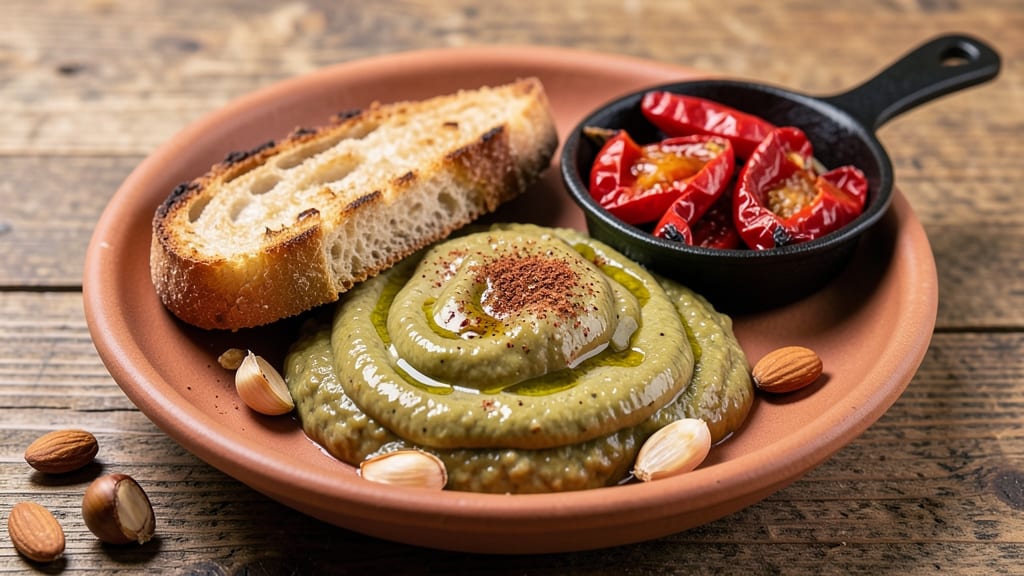
This authentic romesco sauce recipe brings the bold, smoky flavors of Catalonia straight to your kitchen table. Roasted red peppers, toasted almonds, and garlic blend into a velvety sauce with just the right tang from sherry vinegar—perfect for drizzling over grilled meats, seafood, or crusty bread.
The key to authenticity lies in slow-roasting the peppers until charred and caramelized, which unlocks their deep, smoky sweetness that defines traditional romesco.
What sets this sauce apart is the balance of textures: the nutty crunch of toasted almonds and hazelnuts contrasts beautifully with the silky smoothness of the roasted pepper base.
A touch of smoked paprika adds warmth, while stale bread (or a baguette) helps emulsify the sauce for that signature creamy consistency. The process is straightforward but requires patience—roasting the peppers properly is where the magic happens, transforming simple ingredients into something extraordinary.
The result is a sauce that's rich, complex, and deeply flavorful, with a perfect harmony of smoky, nutty, and slightly tangy notes. It keeps well in the refrigerator for up to a week, allowing the flavors to deepen over time, making it ideal for meal prep.
Whether you're serving it with grilled lamb chops, paella, or even as a dip for fresh vegetables, this romesco sauce will elevate any dish with its authentic Catalan character.
For best results, use high-quality extra virgin olive oil and fresh garlic—these are the foundations of a truly authentic romesco. The sauce can also be frozen for up to three months, though it's best enjoyed fresh when its vibrant flavors are at their peak.
Let's get started on creating this versatile, restaurant-quality sauce at home.
Ingredients for authentic romesco sauce
Nine ingredients transform into smoky, nutty Catalan magic—perfect for drizzling or dipping.
| Ingredient | Amount | Notes |
|---|---|---|
| Roasted Red Peppers 🍅 | 2 cups | Jarred or homemade, charred |
| Toasted Almonds 🥜 | ½ cup | Skinless, lightly toasted |
| Toasted Hazelnuts 🌰 | ¼ cup | Skinless, lightly toasted |
| Extra-Virgin Olive Oil 🫒 | 1 cup | High quality, fruity |
| Garlic Cloves 🧄 | 6 whole | Fresh, roasted with peppers |
| Smoked Paprika 🌶️ | 2 tbsp | For authentic smoky depth |
| Sherry Vinegar 🍋 | 2 tbsp | For tangy brightness |
| Stale Baguette 🍞 | ½ cup | Torn into chunks |
| Salt 🧂 | 1 tsp | Diamond Crystal preferred |
| Ground Black Pepper 🌶️ | ½ tsp | Freshly ground |
The roasted red peppers are the heart of this sauce, so they can't be skipped. Trader Joe's has great jarred ones, but if you're feeling ambitious, roast your own—wrap whole peppers in foil, char over an open flame or under a broiler until blackened, then peel and seed. The almonds and hazelnuts need toasting too—5 minutes in a dry pan until golden and fragrant. Fresh garlic should be roasted with the peppers for mellow, sweet flavor. For smoked paprika, Penzeys or the bulk bins at Whole Foods have the best quality—avoid the generic grocery store brands, which often taste dull.
No jarred roasted peppers? Sun-dried tomatoes packed in oil work in a pinch, but they'll change the texture slightly. Toasted pine nuts can replace hazelnuts if that's what you have, though they'll add a slightly different earthiness. Short on sherry vinegar? Balsamic vinegar at half the amount gives a similar tang. The stale bread is crucial for emulsifying—any crusty bread works, even a day-old baguette from the bakery section. If you're worried about texture, blend the bread with the sauce longer until silky. The olive oil must be extra-virgin—California or Spanish varieties have the best flavor for this sauce.
This sauce tastes even better the next day as the flavors meld. Store it in an airtight jar in the fridge for up to 1 week, or freeze for 3 months in ice cube trays for single-serving portions. The texture will separate slightly when refrigerated—just give it a quick whisk before using. I always make a double batch because it disappears fast—drizzle it over grilled veggies, use it as a dip, or slather it on sandwiches. The leftovers? Even more flavorful the second day.
Why You'll Love This Recipe
- No-Fuss Blender Magic: I swear, this sauce comes together in one go—just toss the roasted peppers, toasted nuts, and garlic into the blender with olive oil, hit pulse, and boom. No peeling, no chopping, no stress. The almonds and hazelnuts do the textural heavy lifting while you sip your coffee.
- Smoky Nutty Obsession: That first bite? Crispy toasted nuts meet sweet, smoky roasted peppers, all balanced by the punch of fresh garlic and rich olive oil. It’s the kind of flavor that lingers—like a hug from a Catalan grandma, but better because it’s your kitchen.
- Weeknight to Dinner Party: Slather it on grilled chicken for a Tuesday supper or drizzle it over slow-cooked lamb for a Sunday showstopper. The same jar works for tapas, pasta, or even toasted bread—no last-minute panic, just effortless elevation.
- Budget-Friendly Pantry Hero: Honestly, the ingredients cost next to nothing, and the sauce keeps for weeks in the fridge. A little goes a long way, so you’re not scrambling to use it up before it spoils. Plus, toasted nuts in bulk? Cheaper than takeout, hands down.
Step-by-step instructions for authentic romesco sauce
Here's how to craft this Spanish classic with deep smoky flavor and velvety texture.
Roast the Peppers and Garlic
Preheat your oven to 425°F. Place the 2 cups roasted red peppers and 6 whole garlic cloves (peeled) on a baking sheet lined with parchment paper. Roast for 15-20 minutes until the peppers are blistered and the garlic is golden. This step intensifies their natural sweetness and smoky depth.
For best results, I like to char the peppers directly over a gas flame for 2-3 minutes before roasting—this adds extra smokiness. If using jarred peppers, pat them dry thoroughly to prevent a watery sauce. The garlic should soften but not burn; you'll taste it in every spoonful later.
Toast the Nuts and Bread
In a dry skillet over medium heat, toast the 0.5 cup toasted almonds and 0.25 cup toasted hazelnuts for 3-4 minutes until fragrant and lightly golden. Remove immediately and let cool slightly—they'll continue to crisp up as they cool. This toasting step is crucial for developing their nutty flavors and preventing bitterness in the sauce.
In the same skillet (no need to clean it), toast the 0.5 cup stale baguette chunks for 2-3 minutes until golden brown. The stale bread adds wonderful texture and helps thicken the sauce naturally. Watch carefully—it burns quickly once it starts browning.
Blend the Base Ingredients
Transfer the roasted peppers, garlic, toasted nuts, and toasted bread to a food processor or blender. Add the 1 cup extra-virgin olive oil and 2 tbsp smoked paprika. Pulse until everything is finely chopped but not completely smooth—you want some texture. This base should have a thick, paste-like consistency with visible nut pieces.
I always add the olive oil gradually at first to prevent the mixture from becoming oily. The smoked paprika here is non-negotiable—it's what gives romesco its signature smoky character. If you don't have smoked paprika, you can substitute with a mix of regular paprika and a pinch of liquid smoke, but it won't be the same.
Finish with Acid and Season
With the food processor running, slowly drizzle in the 2 tbsp sherry vinegar while scraping down the sides. This acid brightens all the flavors and balances the richness. Add the 1 tsp salt and 0.5 tsp ground black pepper, then process until completely smooth. The sauce should be thick enough to coat the back of a spoon but still pourable.
Taste and adjust seasoning—romesco should be complex with layers of smokiness, nuttiness, and acidity. If it needs more depth, add a pinch of cayenne or a splash more vinegar. For serving, I like to drizzle it over grilled meats or serve it with crusty bread. The sauce keeps well in the refrigerator for up to 1 week, though it tastes best fresh.
Pro Tips For Making Authentic Romesco Sauce
- Toast Nuts Low: Dry your almonds and hazelnuts at 300°F (150°C) for 8–10 minutes, stirring every 2 minutes—any hotter, and they’ll burn before they crisp. I learned this the hard way when my first batch turned into bitter, greasy bits instead of nutty gold.
- Blister Garlic Slowly: Cook your garlic in olive oil over low heat until it’s deep golden, not brown—this takes 8–10 minutes, not 2. Rushed garlic turns bitter, and that’s the last thing you want in a delicate sauce like romesco.
- Skin Peppers Roughly: Peel the roasted peppers by scoring an X, then plunging them in ice water for 30 seconds—this makes the skins slide off easier than scraping them raw. (Yes, even if you’re impatient like me.)
- Pulse, Don’t Blend: Use a food processor to pulse the nuts and peppers into rough chunks, not a smooth paste—authentic romesco has texture. Over-blending turns it into a sad, greasy slurry. Stop when it looks like wet sand.
Wine and beer pairings for this recipe
Spanish White Wine
Romesco's smoky, nutty depth pairs beautifully with crisp Albariño from Rías Baixas—its bright acidity and citrus notes cut through the sauce's richness perfectly. I reach for Pazo de Señorans or Martín Códax, both of which have the perfect balance of minerality and freshness.
For a budget-friendly option, Rueda Verdejo offers similar vibrancy at half the price. 🍷
Spanish Red Wine
If you prefer red, Garnacha (Grenache) from Catalonia is ideal—its red fruit flavors and subtle earthiness complement the sauce's smokiness. Look for Borsao Garnacha or Terras Gauda from Priorat.
These wines have enough body to stand up to romesco while maintaining their natural fruitiness. Avoid heavy, tannic wines that would overpower the delicate nutty flavors.
Craft Beer Pairings
A Spanish-style lager like Estrella Galicia or Alhambra Reserva provides a clean, crisp contrast that refreshes your palate between bites. For something more adventurous, try a sour wheat beer with notes of lemon and coriander—Rodina Sour from Belgium works wonderfully.
The effervescence helps cleanse the palate after each rich spoonful of romesco. 🍺
Non-Alcoholic Options
For a refreshing non-alcoholic match, sparkling water with a splash of sherry vinegar mimics the sauce's tangy brightness. I also love cucumber-mint infused water—the cool, crisp flavors provide a perfect palate cleanser.
For something warmer, Spanish horchata (made with tiger nuts) offers a sweet contrast that balances the sauce's smokiness beautifully.
Serving Temperature
Serve your romesco sauce at room temperature—this allows all the flavors to shine without competing with cold drinks. For wine pairings, chill whites to 45-50°F and reds to 60-65°F to enhance their refreshing qualities.
Beer should be served at 40-45°F for optimal crispness. The contrast between the warm sauce and chilled beverages creates a truly satisfying dining experience. ✨
Nutrition facts
Frequently asked questions
Can I make romesco sauce without a food processor?
Yes, but you'll need to get creative! First, toast and blend the nuts and bread in a mortar and pestle until finely ground. Then, chop the roasted peppers and garlic by hand into a fine paste. Mix everything with olive oil and vinegar, then let it sit for 10 minutes before stirring again. The texture won't be as silky, but it'll still be delicious and full of authentic flavor.
What's the best way to store homemade romesco sauce?
Store it in an airtight container in the fridge for up to 1 week. The flavors actually improve over time! For longer storage, freeze it in ice cube trays for 3 months. When refrigerated, the sauce may separate—just stir or whisk before using. The texture will return to creamy within minutes.
Can I substitute hazelnuts for almonds in this recipe?
Hazelnuts and almonds are both traditional in romesco, and either works beautifully. For best results, use equal amounts by volume. Hazelnuts add a slightly earthier flavor, while almonds bring a sweeter, creamier note. Toast them separately to prevent burning—hazelnuts have thinner skins that burn faster.
Why does my romesco sauce taste bitter?
Bitter flavor usually comes from over-toasted nuts or underripe peppers. Check if your nuts were toasted too long (they should be golden, not brown). Also, ensure your peppers were fully roasted until charred—this removes bitterness. If needed, balance with a splash more sherry vinegar or a pinch of sugar to mellow the bitterness.
How can I use romesco sauce in cooking?
This versatile sauce works beautifully in so many ways! Drizzle it over grilled meats like lamb chops or chicken, use it as a marinade for seafood, or spread it on toasted baguette slices. It also makes an excellent dip for roasted vegetables or a flavorful base for paella. For extra richness, stir it into soups or stews in the last 5 minutes of cooking.