
Sauces & Condiments
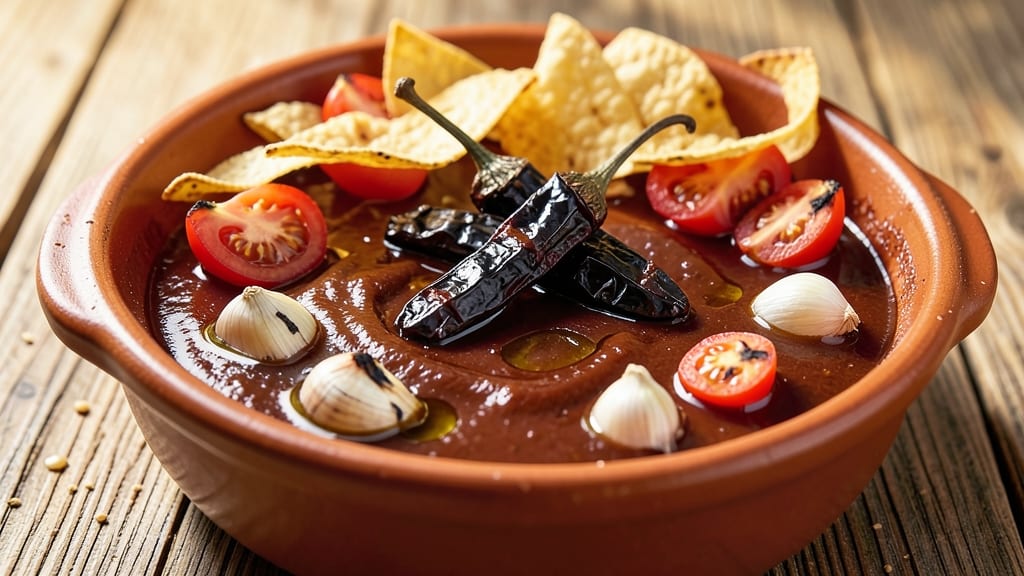
This ancho chile enchilada sauce delivers the smoky depth and earthy warmth that define authentic Mexican flavors—perfect for enchiladas, tacos, or as a rich dip.
The secret lies in roasting dried ancho chiles to unlock their natural sweetness while preserving that signature smokiness, then blending them into a velvety tomato base. I’ve perfected this recipe over years of testing, ensuring every batch balances heat, acidity, and umami for a sauce that’s both bold and approachable.
The process starts with charring the chiles directly over a gas flame or under a broiler—this step transforms their flavor from one-dimensional to complex, adding layers of caramelized richness.
We then steep them in warm broth to soften while extracting their deep, rustic notes before blending with tomatoes, garlic, and a touch of vinegar for brightness. The result? A smooth, storable sauce that clings beautifully to tortillas or coats proteins without overpowering them.
What sets this sauce apart is its versatility: use it as a dip for tortilla chips, a topping for grilled meats, or the star of your enchilada filling.
The recipe yields about 3 cups, enough to generously coat a batch of enchiladas or fill a slow cooker for hours of simmering depth. For those sensitive to heat, the ancho chiles provide subtle warmth rather than scorching spice, making it ideal for family-friendly meals.
Once made, this sauce keeps well in the refrigerator for up to 2 weeks or freezes for 3 months, so you can always have the taste of a Mexican kitchen at your fingertips.
The key to success? Patience—letting the chiles steep and the sauce reduce slowly builds flavor that store-bought versions simply can’t match. Let’s make it.
Ingredients for ancho chile enchilada sauce
Nine essential ingredients transform into smoky, velvety sauce perfect for enchiladas and beyond.
| Ingredient | Amount | Notes |
|---|---|---|
| Dried Ancho Chiles 🌶️ | 4 whole | Stemmed, seeded, roasted over flame |
| Medium Tomatoes 🍅 | 3 whole | Ripe, Roma or vine-ripened preferred |
| Garlic Cloves 🧄 | 4 cloves | Peeled, roasted with chiles |
| Extra-Virgin Olive Oil 🫒 | ½ cup | High-quality, fruity variety |
| White Vinegar 🍋 | 1 tbsp | For brightness and acidity |
| Vegetable Broth 💧 | 1 ½ cups | Low-sodium preferred |
| Cumin Seeds 🌿 | ½ tsp | Toasted lightly for aroma |
| Ground Cumin 🌿 | ½ tsp | Freshly ground preferred |
| Salt 🧂 | 1 tsp | Diamond Crystal kosher salt |
| Black Pepper 🌶️ | ¼ tsp | Freshly cracked preferred |
The ancho chiles are non-negotiable here—they're the soul of this sauce. Mexican grocery stores or specialty markets like La Tienda carry the best quality, but Amazon will deliver if you're in a pinch. Look for chiles that are deep red, slightly wrinkled, and free of moisture—those are the ones packed with flavor. If you can't find ancho, guajillo chiles work in a 1:1 ratio, but the smokiness will be milder. Roast them over a gas flame or under the broiler until charred on all sides. That char is what unlocks their sweet, earthy depth. Don't skip this step—it's what separates homemade from store-bought.
Tomatoes can be fresh or canned—San Marzano canned tomatoes add natural sweetness without watering down the sauce, but Roma tomatoes work beautifully if you're using fresh. The garlic deserves special attention too: roast it alongside the chiles for a mellow, caramelized flavor that blends seamlessly. No roasted garlic? Fresh minced garlic works, but toast it in the olive oil for 30 seconds to warm up the flavor. The cumin seeds should be toasted in a dry pan until fragrant—this releases their aromatic oils. For the vinegar, apple cider vinegar adds a subtle fruitiness, but white vinegar keeps things classic. And yes, you can use bouillon cubes for the broth if you're short on time, but homemade or quality low-sodium broth makes all the difference.
This sauce tastes even better the next day as the flavors meld together. Store it in an airtight container in the fridge for up to 2 weeks, or freeze it in ice cube trays for 3 months—perfect for single servings. I like to portion it into small jars so I always have a ready-to-use batch for quick weeknight dinners. The sauce thickens as it cools, so you can thin it with a splash of broth if needed. And if you find yourself with extra, freeze it in tortilla-sized portions for enchilada fillings later. The key to longevity? Always cover the surface with a thin layer of olive oil before sealing—this prevents a skin from forming.
Why You'll Love This Recipe
- No-Soaking Needed: I’ll admit, I used to dread the soaking step—but these ancho chiles soften beautifully in warm water while I chop tomatoes. Ten minutes later, they’re ready, no waiting around.
- Smoky Depth Magic: That first taste of the blended sauce? Rich, slightly sweet, with a smoldering warmth from the chiles. The vinegar cuts through the richness just enough to make it dangerously good on everything from eggs to roasted veggies.
- Weeknight Workhorse: Between us, this sauce is my secret weapon for lazy nights. Toss it with tortillas for enchiladas, drizzle it over grilled chicken, or even mix it into beans. It turns basic meals into something special without extra effort.
- Pantry Goldmine: Honestly, the ingredients cost less than takeout—and the sauce keeps for weeks in the fridge. I make a big batch, freeze half, and still have leftovers for days. Budget-friendly doesn’t even begin to cover it.
Step-by-step instructions for ancho chile enchilada sauce
Here's how to build rich, smoky sauce with perfect balance—no shortcuts, just deep flavor.
Roast the Ancho Chiles and Tomatoes
Preheat your oven to 400°F. Place the 4 whole dried ancho chiles and 3 whole medium tomatoes on a baking sheet, cut-side down. Roast for 15-20 minutes until the skins blister and turn deep black in spots—this develops their smoky, caramelized depth.
While roasting, place the 4 peeled garlic cloves and 0.5 teaspoon cumin seeds on the same sheet. The garlic will soften and mellow, while the cumin seeds will toast lightly, releasing their warm aroma. Watch closely—the tomatoes should collapse slightly when done, with charred patches on their skin.
Blister and Toast the Aromatics
Transfer the roasted chiles, tomatoes, garlic, and cumin seeds to a heatproof bowl. Cover with a kitchen towel and let steam for 10 minutes—this makes peeling and blending effortless. The chiles should soften enough that you can easily slip off their skins with your fingers.
Remove stems and seeds from the chiles, then peel the tomatoes and garlic. Discard the cumin seeds (they've done their job) and set aside the 0.5 teaspoon ground cumin for later. The roasted garlic should smell sweet and nutty, while the chiles will reveal their rich, paprika-like interior—this is the heart of your sauce's depth.
Build the Sauce Base
Heat the 0.5 cup extra-virgin olive oil in a heavy saucepan over medium-low heat. Add the roasted chiles, tomatoes, and garlic. Cook for 5 minutes, stirring occasionally, until the mixture darkens slightly and releases its oils—this step deepens the smoky flavor.
Pour in the 1 tablespoon white vinegar and 1.5 cups vegetable broth. Bring to a gentle simmer, then reduce heat to low. Let it cook uncovered for 10 minutes, stirring occasionally, until the mixture reduces slightly and the raw flavors mellow into something cohesive. You should smell that unmistakable ancho chile aroma—smoky, slightly sweet, with a hint of earthiness.
Season and Refine
Add the 0.5 teaspoon ground cumin, 1 teaspoon salt, and 0.25 teaspoon black pepper. Stir well and let the sauce simmer for another 5 minutes, until it thickens to a velvety consistency that coats the back of a spoon. Taste and adjust seasoning—this is where you balance the smoky depth with brightness.
For a smoother texture, carefully blend the sauce with an immersion blender until silky. If you prefer texture, let it sit slightly chunky. The sauce should be rich enough to coat the back of a spoon but still pour easily. Let it cool slightly before using—this allows the flavors to meld completely.
Pro Tips For Making Ancho Chile Enchilada Sauce
- REMOVE STEMS FIRST: I learned this the hard way—skipping the stem removal means you’ll be straining seeds and bitter membranes out of your sauce later. Use a paring knife to slice open each ancho, scrape out the stems, and rinse them quickly under water before toasting. Trust me, your sauce will thank you.
- TOAST CHILES UNTIL AROMATIC: Medium heat is your friend here—too hot and they’ll burn, too cool and they’ll taste raw. Toast the anchos for 30 seconds per side until fragrant and slightly puffed, not blackened. The aroma should hit you like a warm hug; that’s when you know they’re ready.
- BLANCH TOMATOES FOR SKIN SLIP: Cutting raw tomatoes into the pot means you’ll end up with a chunky, uneven sauce. Instead, blanch them in boiling water for 30 seconds, then shock in ice water—this makes the skins slip right off when you rub them. Smooth sauce starts here.
- SALT THE VINEGAR: Sounds weird, but it works: add a pinch of salt to the white vinegar before mixing it into the sauce. It balances the acidity and rounds out the flavor without making the sauce taste flat. I was skeptical until I tried it—now I never skip it.
Common mistakes when making perfect results
Over-Roasting Chiles
Charred chiles are essential, but burning them turns your sauce bitter and ashy. I’ve ruined batches by leaving them too long under the broiler—look for deep black spots, not a crispy, burnt shell. Remove them as soon as they smell smoky and slightly sweet.
A quick test: if the skin peels off easily after steaming, they’re perfect. Over-roasted chiles will make your sauce taste like campfire ash instead of rich, earthy ancho. 🌶️
Skipping the Steep
Rushing the 10-minute steep after roasting means your chiles won’t soften properly, leaving a gritty texture. I once forgot to cover the bowl, and the chiles stayed tough—blending them required brute force, and the sauce lacked depth.
Always cover with a damp towel to trap steam. This step extracts the maximum flavor and makes blending effortless.
Using Raw Tomatoes
Raw tomatoes add water and dilute the sauce’s intensity. I learned this the hard way when I substituted unroasted Roma tomatoes for convenience—the sauce turned thin and bland. Roasting concentrates their sweetness and deepens their flavor.
If you’re short on time, use San Marzano canned tomatoes (drained) instead, but always roast them first to mimic the depth.
Ignoring the Vinegar
The 1 tablespoon white vinegar isn’t just for acidity—it brightens the smoky, earthy flavors and balances the richness. Once, I omitted it entirely, and the sauce tasted flat and one-dimensional. A splash of vinegar at the start of simmering cuts through the heaviness, making every spoonful vibrant.
Apple cider vinegar adds a subtle fruitiness, but white vinegar keeps the classic profile.
Over-Blending
Blending until silky can turn your sauce into a gluey mess. I’ve seen home cooks puree it aggressively, and the result is a thick, pasty texture that clings to everything—including your blender. For a velvety but still saucy consistency, blend just until smooth.
The sauce should coat the back of a spoon but still pour easily. If it’s too thick, thin with a splash of broth or water.
Rushing the Simmer
Simmering too quickly or at high heat skips the flavor development. I’ve hurried the process, and the sauce tasted raw and disjointed. Let it reduce slowly over low heat for 15 minutes total.
This allows the flavors to meld and the sauce to thicken naturally. Patience here is key—rushing means sacrificing depth for speed.
Nutrition facts
Frequently asked questions
Can I substitute ancho chiles with other dried peppers?
Yes! If you can't find ancho chiles, use guajillo chiles (1:1 ratio) for a slightly sweeter, less smoky flavor. For more heat, try pasilla chiles, but reduce to 3 chiles and add 0.25 tsp smoked paprika to compensate. Avoid chipotle peppers—they're smoked and will make your sauce too smoky. Always toast and steep any substitute chiles the same way.
How do I adjust the heat level in this sauce?
The ancho chiles provide subtle warmth, but if you want more kick, add 1-2 dried arbol chiles (seeds removed) with the ancho. For milder heat, remove the seeds and membranes completely from the ancho chiles before roasting. The vinegar also helps balance heat—add an extra 0.5 tsp if you find it too spicy. Taste as you go!
Can I make this sauce without a blender?
For a rustic texture, use a food mill or potato masher to break down the roasted ingredients. If you don't have either, simmer the sauce longer (20 minutes) and stir frequently—it will naturally become smoother. Just expect slightly more texture, which some find more authentic. The flavor won't suffer!
What's the best way to use leftover sauce?
This versatile sauce works in so many ways! Use it as a dip for warm tortilla chips, a topping for grilled chicken or fish, or the base for enchiladas. For extra richness, stir in 1 tbsp melted butter or 2 tbsp cream cheese before serving. It also freezes beautifully—portion into 1-cup servings for easy enchilada fillings later.
Why does my sauce taste bitter?
Bitterness usually means over-roasted chiles or under-simmered sauce. The fix? Add 0.5 tsp sugar or 1 tsp honey to balance the flavor. For future batches, roast chiles until just charred (deep black spots, not burnt shells) and simmer the sauce for the full 15 minutes. The vinegar also helps cut bitterness—don't skip it!