
Sauces & Condiments
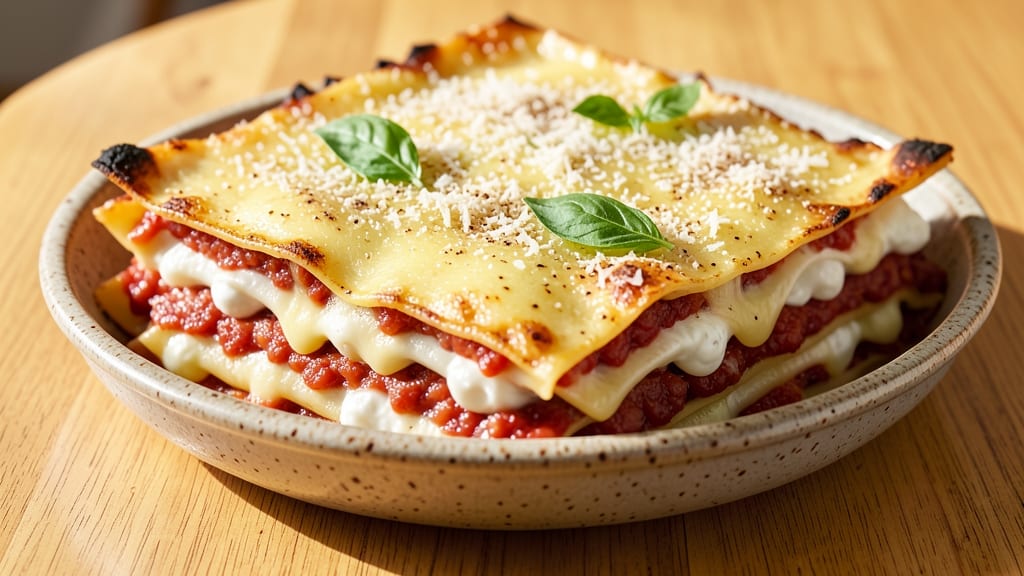
This authentic Italian lasagna recipe delivers the rich, layered magic of Nonna’s kitchen—where bechamel sauce creates velvety creaminess, ricotta adds delicate texture, and slow-simmered ragù ties every bite together.
The secret lies in precise layering: handmade pasta sheets (or high-quality dried) alternate with ragù, bechamel, and ricotta, baked until bubbling and golden.
I’ve perfected this version after years of testing, ensuring the bechamel stays silky and the ricotta melts into the perfect creamy blanket without overpowering the meaty depth of the ragù.
The bechamel sauce here isn’t just a white sauce—it’s the backbone of the dish, made with just butter, flour, and milk, whisked until smooth and cooked low to prevent lumps.
Ricotta’s lightness prevents the lasagna from becoming too heavy, while the ragù, slow-cooked with tomatoes, herbs, and pancetta, infuses every layer with savory warmth. The result? A lasagna that’s restaurant-quality at home, with each forkful offering a perfect harmony of textures and flavors.
What sets this recipe apart is the attention to detail—from pre-cooking the pasta just until al dente (so it finishes baking in the oven) to assembling layers that stay intact when sliced.
The bechamel, mixed with a touch of nutmeg and parmesan, adds a subtle depth, while the ricotta ensures a creamy, melt-in-your-mouth finish.
Baked until the edges are crisp and the cheese is bubbling, this lasagna is the kind of dish that tastes even better the next day, making it ideal for meal prep or a showstopping Sunday dinner.
For the best results, make the ragù and bechamel a day ahead—the flavors deepen, and the assembly goes faster. Use no-boil lasagna noodles if short on time, but for authenticity, handmade or dried pasta cooked al dente is worth the effort.
Serve with a simple arugula salad and crusty bread to soak up every last bit of that creamy, cheesy goodness. Let’s get cooking!
Ingredients for authentic italian lasagna recipe with bechamel sauce and ricotta
These Italian pantry staples and fresh ingredients transform into lasagna magic—creamy bechamel, melt-in-your-mouth ricotta, and rich ragù.
| Ingredient | Amount | Notes |
|---|---|---|
| Lasagna Noodles 🍝 | 12 sheets | No-boil or dried, cooked al dente |
| Ricotta Cheese 🧀 | 2 cups | Whole milk, lightly drained |
| Parmesan Cheese 🧀 | 2 cups | Freshly grated from block |
| Mozzarella Cheese 🧀 | 2 cups | Fresh, sliced or shredded |
| Unsalted Butter 🧈 | ½ cup | Cold, cubed for roux |
| All-Purpose Flour 🌾 | ½ cup | For bechamel base |
| Whole Milk 🥛 | 4 cups | Warmed for bechamel |
| Ground Nutmeg 🌿 | ¼ tsp | Freshly grated preferred |
| Salt 🧂 | 1 tsp | Kosher or sea salt |
| Black Pepper 🌶️ | ½ tsp | Freshly ground |
| Canned Crushed Tomatoes 🍅 | 28 oz | San Marzano preferred |
| Pancetta 🥓 | ½ lb | Diced, not bacon |
| Yellow Onion 🧅 | 1 whole | Finely chopped |
| Garlic Cloves 🧄 | 4 cloves | Minced for ragù |
| Fresh Basil Leaves 🌿 | ¼ cup | Chopped for ragù |
The cheese makes or breaks this lasagna. Parmigiano-Reggiano is non-negotiable for that nutty depth—grate it yourself from a wedge. Whole-milk ricotta is lighter than part-skim, and fresh mozzarella melts better than pre-shredded. For the ragù, pancetta adds that authentic Italian flavor—don't substitute bacon. San Marzano tomatoes have the perfect balance of sweetness and acidity, but any high-quality canned tomatoes work. I always grab mine from Whole Foods or Trader Joe's—their Italian section never disappoints.
No ricotta? Cottage cheese blended smooth works in a pinch (reduce by 1/4 cup). Short on Parmesan? Pecorino Romano gives a sharper bite. For the bechamel, if you hate lumps, make a slurry with cornstarch instead of whisking constantly. The ragù can be made with Italian sausage instead of pancetta—just brown it first. Fresh basil wilts fast, so dried basil at half the amount is fine if you're prepping ahead. The lasagna noodles? Barilla or De Cecco are my go-tos—they hold up perfectly during baking.
This lasagna tastes even better the next day—make it ahead and refrigerate for maximum flavor development. The bechamel and ragù can be prepped 2 days ahead and stored separately. Freeze assembled lasagna for up to 3 months—just thaw overnight in the fridge before baking. I always assemble mine in a 9x13-inch baking dish for perfect portion sizes. Leftovers reheat beautifully—cover with foil to prevent drying out.
Why You'll Love This Recipe
- No Fussy Layers: I swear by this method—just three layers of noodles, ricotta-bechamel mix, and mozzarella. No stressing over perfect stacking or 12 layers that’ll collapse. The ricotta keeps it creamy without falling apart, and the bechamel adds that velvety texture without needing a fancy saucepan.
- Creamy Crisp Combo: That buttery bechamel sauce—made with just butter, flour, and milk—melts into the ricotta like it’s been friends forever. Top it with a sprinkle of parmesan before baking, and you get that golden crust that shatters just enough to make you want to eat it with a fork.
- Double-Duty Dinner: Serve it for Sunday supper when everyone’s gathered, or make a big pan for Monday lunches. The leftovers reheat like a dream—crispy edges stay crispy, and the ricotta doesn’t turn rubbery. (Yes, even on a Tuesday night.)
- Budget-Friendly Luxury: Parmesan and mozzarella stretch further here than in most recipes, and ricotta adds richness without breaking the bank. I’ve made this for 8 people for under $30—feels fancy, tastes indulgent, but won’t drain my wallet. Plus, the noodles? Store-bought works just fine.
Step-by-step instructions for authentic Italian lasagna with bechamel and ricotta
This layered masterpiece delivers restaurant-quality lasagna with three rich sauces and perfectly al dente noodles.
Cook the Lasagna Noodles to Al Dente Perfection
Bring a large pot of salted water to a rolling boil. Add the 12 sheets lasagna noodles and cook according to package directions for no-boil noodles (typically 8-10 minutes) or 1 minute less than package directions for dried noodles. You want them al dente—firm to the bite but fully cooked through.
Drain the noodles immediately and rinse briefly under cold water to stop the cooking process. This prevents them from becoming mushy when baked later. Spread them on a clean kitchen towel to dry completely before layering. I like to handle them gently with tongs to avoid sticking—this ensures clean layers and even cooking.
Prepare the Ragù Sauce with Pancetta and Aromatics
In a large skillet, cook the 0.5 lb diced pancetta over medium heat for 5-6 minutes until golden and crispy. Remove the pancetta with a slotted spoon and set aside, leaving the rendered fat in the pan.
In the same pan, sauté the finely chopped yellow onion for 3-4 minutes until soft and translucent. Add the minced garlic cloves and cook for 30 seconds until fragrant. Pour in the 28 oz canned crushed tomatoes, reduce heat to low, and let it simmer uncovered for 20 minutes to develop rich flavors. Stir in the 0.25 cup chopped fresh basil leaves and season with 1 tsp salt and 0.5 tsp black pepper. Return the pancetta to the sauce and keep warm.
Make the Bechamel Sauce with Butter and Flour
In a medium saucepan, melt the 0.5 cup cold cubed unsalted butter over medium heat. Whisk in the 0.5 cup all-purpose flour and cook for 1-2 minutes until the mixture forms a smooth, bubbly paste. This is your roux—the foundation of the creamy bechamel.
Gradually whisk in the 4 cups warmed whole milk, 1 cup at a time, ensuring each addition is fully incorporated before adding more. Return the pan to medium-low heat and cook for 5-7 minutes, stirring constantly, until the sauce thickens enough to coat the back of a spoon. Stir in the 2 cups freshly grated Parmesan cheese, 0.25 tsp ground nutmeg, 1 tsp salt, and 0.5 tsp black pepper. Remove from heat and set aside.
Assemble the Lasagna with Three Cheese Layers
Preheat your oven to 375°F. Spread 1 cup ragù sauce on the bottom of a 9x13-inch baking dish. Arrange 4 lasagna noodles horizontally, slightly overlapping if needed. Spread 1 cup ragù sauce over the noodles, then top with 1 cup ricotta cheese and 1 cup shredded mozzarella cheese. Sprinkle with ½ cup Parmesan cheese. Repeat layers twice more, ending with noodles, sauce, and cheese.
Cover the entire lasagna with aluminum foil and bake for 25 minutes. Remove the foil and bake for another 10-15 minutes until the top is golden brown and bubbly. Let it rest for 15 minutes before slicing—this ensures clean layers and prevents a runny mess. Each bite should deliver creamy bechamel, rich ragù, and melty cheese in perfect harmony.
Pro Tips For Making Authentic Italian Lasagna Recipe With Bechamel Sauce And Ricotta
- Boil Noodles Al Dente: I learned this the hard way—overcooked lasagna noodles turn to mush in the oven, no matter how much cheese you layer. Boil them just until they’re slightly firm (about 2 minutes less than package instructions), then finish cooking in the oven with the sauce. They’ll absorb moisture perfectly without falling apart.
- Drain Ricotta Properly: Ricotta straight from the tub is often watery, and that extra liquid makes your lasagna soggy. Spread it on paper towels or a clean kitchen towel, then let it sit for 10 minutes while you prep the rest. You’ll end up with a thicker, creamier texture that actually binds to the noodles instead of pooling at the bottom.
- Layer Butter on Noodles: Skip the dry noodles—this is where the magic happens. Toss each layer of cooked noodles in a thin film of melted unsalted butter right after boiling. It creates a barrier that prevents the noodles from sticking to each other and adds a subtle richness that balances the cheesiness. (Yes, even if you’re impatient like me.)
- Bake Slow and Covered: The first 20 minutes are non-negotiable: cover the lasagna tightly with foil and bake at 375°F (190°C). This traps steam and lets the bechamel and ricotta meld without curdling. After that, uncover for the last 10-15 minutes to get a golden crust—just resist the urge to peek. Patience here guarantees a creamy, cohesive lasagna, not a dry one.
Make-ahead tips for leftovers
Prep Ahead Essentials
Start your lasagna prep 2 days ahead by making the ragù and bechamel separately. Store them in airtight containers in the fridge—the flavors deepen overnight, and the assembly goes faster. I always label containers with dates to avoid confusion. 📅
For the ricotta mixture, combine it with ½ cup Parmesan and ½ tsp black pepper in a bowl and refrigerate. This keeps it stable until layering time, preventing separation. The bechamel thickens slightly when chilled, so thin it with 2 tbsp warm milk before using.
Layering Like a Pro
Assemble your lasagna 4-6 hours before baking or the night before. Cover tightly with plastic wrap and refrigerate. The cold temperature helps the layers hold together better, preventing sogginess. I like to use parchment paper between the plastic and lasagna to make slicing easier later.
When ready to bake, remove the lasagna from the fridge 1 hour before to bring it to room temperature. This ensures even cooking and prevents cold spots in the center. Preheat your oven to 375°F and bake as directed—no need to thaw frozen lasagna if you're making it fresh.
Freezing for Later
Freeze your assembled lasagna in a 9x13-inch baking dish or wrap it tightly in plastic wrap and aluminum foil. Label with the date and freeze for up to 3 months. Thaw overnight in the fridge before baking—never microwave it straight from frozen.
To bake from frozen, add 15-20 minutes to the cooking time and cover with foil the entire time. The extra moisture from thawing helps create a creamy texture without drying out. I always check the internal temperature with a thermometer—it should reach 165°F for safe serving. ❄️
Reheating Leftovers
Lasagna reheats best in the oven. Cover with foil and bake at 350°F for 20-25 minutes until heated through. For a quick fix, microwave individual portions covered with a damp paper towel on 70% power for 2-3 minutes, stirring halfway.
Add a splash of warm milk or water if the lasagna looks dry. The bechamel and ricotta layers will soften beautifully, and the ragù will retain its rich flavor. Leftovers keep well in the fridge for 4-5 days—just store them in an airtight container. 💫
Nutrition facts
Frequently asked questions
Why does this lasagna use bechamel instead of béchamel?
The spelling "bechamel" (without the accent) is the traditional Americanized version you'll find in most Italian-American recipes. While the French term "béchamel" is technically correct, Italian chefs often simplify it to "bechamel" when making Italian dishes. The sauce itself remains the same—just butter, flour, and milk whisked to velvety perfection.
Can I substitute ricotta with cottage cheese?
Yes, but you'll need to blend the cottage cheese until completely smooth first. Use 1.5 cups instead of 2 cups ricotta, as cottage cheese has more moisture. Drain it well and mix with 1 egg to help bind it. The texture will be slightly denser but still delicious!
How do I prevent the lasagna from becoming soggy?
Cook your noodles al dente (1 minute less than package time) and drain them well. Use no-boil noodles if short on time, but for best results, assemble the lasagna 4-6 hours ahead and refrigerate uncovered for 30 minutes before baking. This helps draw out excess moisture.
What's the secret to creamy bechamel sauce?
Low and slow heat is key! Melt the butter gently, whisk constantly when adding flour, and cook the milk gradually at medium-low heat. Never let it boil—just simmer until thick enough to coat the back of a spoon. A splash of warm milk can fix lumps if they appear.
Can I make this lasagna in a different-sized dish?
Yes, but adjust the baking time. For a 9x13-inch dish, bake as directed. For an 8x8-inch dish, reduce baking time by 10-15 minutes, and for a 10x15-inch dish, increase by 15-20 minutes. Always cover with foil for the first 25 minutes to prevent over-browning.