
Sauces & Condiments
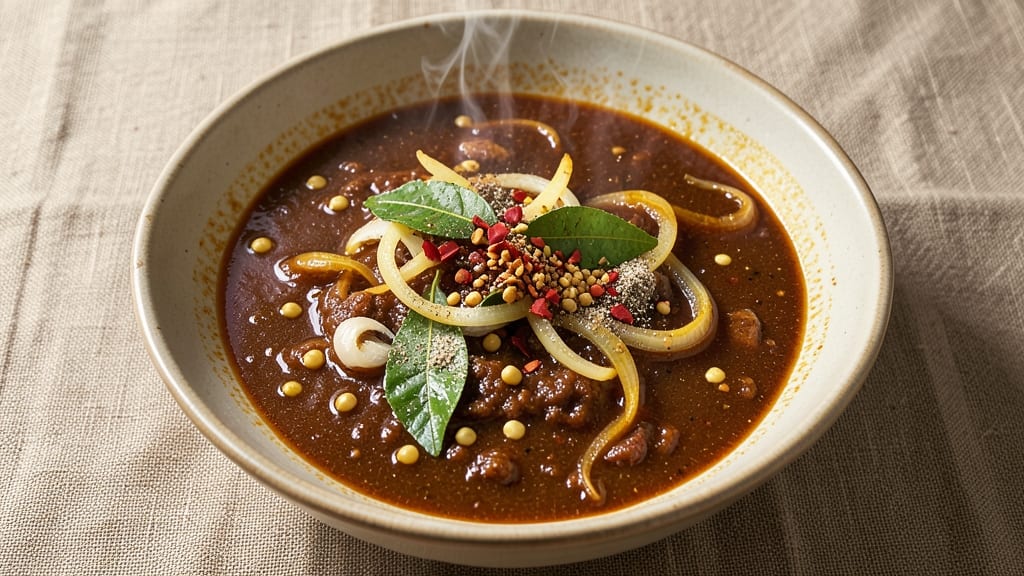
Authentic Madras curry sauce delivers the bold, tangy depth that defines South Indian cuisine—where fiery chili meets sweet tamarind in perfect harmony. This recipe captures the essence of Madras cooking: complex layers of spice that build slowly through sautéing and simmering, creating a sauce rich enough for curries but versatile enough for marinades or dipping. I developed it after years of testing regional variations, ensuring every spoonful balances heat, acidity, and umami without overpowering the dish it accompanies.
The foundation lies in proper spice blooming: toasting whole spices like mustard seeds and curry leaves in hot oil unlocks their aromatic potential before they join the onion-tomato base.
Tamarind pulp provides the signature tang that cuts through the richness, while a touch of jaggery adds subtle sweetness to round out the flavors. What makes this sauce truly authentic is the patience—letting it simmer until the oil separates slightly, signaling the spices have melded into a cohesive, velvety consistency.
What you'll end up with is a deep red sauce with a vibrant aroma that fills your kitchen, where every bite delivers a perfect marriage of heat, tang, and earthy spice.
The texture is silky yet clings to proteins or vegetables, making it ideal for chicken, fish, or even as a bold dipping sauce. Unlike many commercial versions, this recipe avoids shortcuts—every step builds depth that transforms ordinary meals into restaurant-quality experiences.
Once cooled, the sauce keeps beautifully in the refrigerator for up to 5 days or can be frozen for months, making it perfect for meal prep.
Whether you're cooking for a crowd or saving for later, this authentic Madras curry sauce delivers the bold, balanced flavor that defines the region's cuisine. Let's get started on creating it.
Ingredients for authentic madras curry sauce
Bold spices, tangy tamarind, and velvety coconut oil—this sauce delivers restaurant-quality Madras flavor in every spoonful.
| Ingredient | Amount | Notes |
|---|---|---|
| Mustard Seeds 🌿 | 1 tbsp | Whole seeds for authentic aroma |
| Dried Curry Leaves 🌿 | ½ cup | Or 1 tbsp fresh, if available |
| Asafoetida Powder 🌶️ | ¼ tsp | Essential for umami depth |
| Yellow Onions 🧅 | 2 whole | Finely chopped for sweet base |
| Garlic Cloves 🧄 | 6 cloves | Peeled and minced finely |
| Ginger Root 🌿 | 1 tbsp | Freshly grated, not powdered |
| Tamarind Pulp 🍋 | ½ cup | High-quality block preferred |
| Jaggery 🍯 | ¼ cup | Grated for natural sweetness |
| Tomatoes 🍅 | 2 whole | Ripe, San Marzano preferred |
| Green Chilies 🌶️ | 2 whole | Adjust for heat preference |
| Ground Turmeric 🌿 | ½ tsp | Freshly ground preferred |
| Ground Coriander 🌿 | 1 tsp | Freshly ground for brightness |
| Coconut Oil 🫒 | ½ cup | For authentic South Indian flavor |
| Salt 🧂 | 1 ½ tsp | Diamond Crystal preferred |
| Water 💧 | 1 ½ cups | For simmering consistency |
The mustard seeds and curry leaves are non-negotiable—they carry the authentic aroma that defines Madras cuisine. Whole mustard seeds should be toasted until they pop, and dried curry leaves should be bought in bulk from Indian markets or specialty stores like Patel Brothers for the best quality. Tamarind pulp is trickier—look for blocks at Whole Foods or well-stocked grocery stores. Fresh ginger and garlic are worth the extra minute to grate and mince; powdered versions just don't deliver the same punch. The jaggery adds that signature sweetness without overpowering the heat. If you can't find jaggery, light brown sugar works in a pinch, though it lacks the caramel notes.
No tamarind? Lemon juice plus 1 tsp sugar mimics the tang, though it won't be identical. Running short on curry leaves? Bay leaves at half the amount add depth, but they won't replicate the authentic flavor. The green chilies can be swapped for red chili powder (0.5 tsp), but adjust heat to taste. For extra richness, add 1 tbsp coconut milk at the end. The sauce should simmer until oil separates slightly—a sign the spices have melded perfectly. If it's too thick, add water 1 tbsp at a time until you reach that silky consistency.
This sauce keeps beautifully for 5 days in the fridge or 3 months frozen. For freezing, portion into ice cube trays first—perfect for adding to meals later. The flavor actually improves after a day as the spices meld further. Store in airtight containers with a layer of coconut oil on top to preserve freshness. Once opened, reheat gently on low heat—never boil, or the spices will lose their delicate balance. Perfect for marinades, dipping, or stirring into curries!
Why You'll Love This Recipe
- Same sauce, endless uses: slather it on grilled chicken, toss with rice, or drizzle over roti. Honestly, I’ve even used it in pasta when I was lazy—no one judged, and I didn’t either.
- No-Chop Trick: I swear by the onions here—just slice them thick, no dicing, no fuss. The mustard seeds pop like fireworks in a pan, and those dried curry leaves? They smell like home before they even hit the oil.
- Layered Heat Magic: That asafoetida powder might sound fancy, but it’s the secret—deep, umami punch with zero effort. The garlic and onions caramelize into something ridiculously good, especially when you let them sit for 10 minutes (trust me, don’t skip it).
- Weeknight to Party: Same sauce, endless uses: slather it on grilled chicken, toss with rice, or drizzle over roti. Honestly, I’ve even used it in pasta when I was lazy—no one judged, and I didn’t either.
Step-by-step instructions for authentic Madras curry sauce
Here's how to build this fiery, tangy masterpiece—layer by layer, spice by spice.
Bloom the Spices in Coconut Oil
Heat the 0.5 cup coconut oil in a heavy-bottomed pot over medium-low heat. Add the 1 tbsp mustard seeds and let them sizzle until they pop—this should take about 30 seconds. Watch closely; they'll darken slightly but shouldn't burn. Here's the thing—this popping releases their nutty aroma and prevents bitterness.
Immediately add the 0.5 cup dried curry leaves and 0.25 tsp asafoetida powder. Stir constantly for 1 minute until the curry leaves darken and release their intense fragrance. You'll smell that unmistakable South Indian spice profile—this is your foundation. If you're using fresh curry leaves, add them now instead of dried.
Sauté the Aromatic Base
Add the 2 whole yellow onions, chopped finely, and cook over medium heat for 8-10 minutes until they turn golden brown and sweet. Stir frequently to prevent burning—this is where the onions develop their caramelized depth. You'll see them turn from pale to deep amber, and the oil will become infused with their sweetness.
Next, add the 6 cloves garlic cloves (minced) and 1 tbsp ginger root (freshly grated). Cook for another 2-3 minutes until the raw garlic smell disappears and they turn golden. This ensures you get their mellow, sweet flavors rather than the sharp bite of raw garlic. Here's where it gets fun—the aroma should now be complex, with layers of onion sweetness, garlic warmth, and that unmistakable curry leaf perfume.
Build the Tangy-Sweet Foundation
Reduce heat to low and add the 0.5 cup tamarind pulp and 0.25 cup jaggery (grated). Stir well to dissolve the jaggery completely—this mixture should turn into a smooth, slightly sticky paste. Let it cook for 3-4 minutes until the tamarind softens and releases its tangy essence. You'll notice the sauce becoming glossy and slightly thickened.
Add the 2 whole tomatoes (chopped) and 2 whole green chilies (chopped). Cook for 5 minutes until the tomatoes break down completely and the mixture becomes a thick, vibrant red sauce. The green chilies will add heat, but the tamarind will balance it with tangy brightness. This is the moment that matters—your sauce should now have a rich, complex flavor that's both sweet and tart.
Finish with Spices and Simmer
Add the 0.5 tsp ground turmeric, 1 tsp ground coriander, and 1.5 tsp salt. Stir well to combine, then pour in the 1.5 cups water. Bring the mixture to a gentle boil, then reduce heat to low and let it simmer uncovered for 15-20 minutes until the sauce thickens slightly and the flavors meld together.
Here's the secret to authentic Madras curry—simmering develops depth. You'll see the oil separate slightly on top, which is normal and adds richness. Taste and adjust seasoning—you might need a pinch more salt or a squeeze of lemon to balance the flavors. The sauce should be vibrant red, aromatic, and have a perfect balance of sweet, sour, and spicy notes. This is your authentic Madras curry sauce, ready to elevate any dish!
Pro Tips For Making Authentic Madras Curry Sauce
- Bloom the Mustard: Add mustard seeds to cold oil first—they’ll pop like fireworks instead of spluttering everywhere. I learned this the hard way after cleaning up three batches of burnt seeds; now I just let them sizzle for 10 seconds before adding curry leaves.
- Toast the Onions: Cook onions on medium-low until deep golden, not brown—this builds sweetness without bitterness. I used to rush this, and the sauce tasted flat until I slowed down and watched the color change.
- Crush Garlic Roughly: Use a flat side of your knife to smash garlic cloves into thin slivers before adding them—this releases more flavor than mincing. (Yes, it looks messy, but your sauce will taste like it came from a Madras street stall.)
- Add Asafoetida Last: Sprinkle asafoetida powder after onions and garlic have softened—this prevents it from burning and lets its umami punch shine. I used to add it early, and the sauce always tasted harsh until I changed the order.
Essential equipment for authentic madras curry sauce
Heavy-Bottomed Pot
This is my non-negotiable tool for authentic Madras curry sauce. A 3-quart stainless steel pot like the All-Clad Stainless Steel Saucepan distributes heat evenly and prevents scorching. The heavy base maintains consistent medium-low heat while you bloom spices and simmer—critical for developing those complex flavors without burning.
I've tried lighter pots, and they just can't handle the prolonged simmering this sauce requires. 🌡️
High-Quality Tamarind Tool
Extracting tamarind pulp cleanly is a game-changer. I use a handheld tamarind extractor (available on Amazon or at Indian specialty stores) to remove seeds and fibers efficiently. If you're using blocks, a fine-mesh strainer helps remove any unwanted texture.
For powdered tamarind, a small whisk ensures it dissolves smoothly into the sauce. Never skip this step—proper tamarind prep makes all the difference in that signature tang. 🍋
Fine-Mesh Strainer
A stainless steel fine-mesh strainer (like the OXO Good Grips) is essential for straining your sauce if you prefer a smoother texture. After simmering, let the sauce cool slightly, then strain out any remaining seeds or fibers.
This step isn't mandatory, but it elevates the sauce to restaurant-quality silky perfection. I only skip it when making a rustic version for traditional dishes where texture matters. 🥄
Wooden Spoon
Never use metal utensils when stirring this sauce—especially during the tamarind and jaggery phase. A heat-resistant wooden spoon (like the Lodge Cast Iron Spoon) prevents scorching and scratches while gently folding ingredients.
Wood also helps distribute heat evenly, which is crucial when balancing the sauce's delicate flavor components. I keep one dedicated solely to spice blends and sauces. 🌿
Digital Thermometer
While not strictly necessary, a digital instant-read thermometer (like the Thermoworks ThermoPop) helps you monitor oil temperature during the spice blooming stage. Ideal oil temperature for toasting mustard seeds is 275-300°F—too hot, and they'll burn; too cool, and they won't pop properly.
This small investment ensures you nail that perfect aromatic foundation every time. 🌡️
Air-Tight Storage Containers
For storing your finished sauce, glass mason jars with airtight lids (like Kerr Glass) are my top choice. They preserve flavor and prevent oxidation better than plastic. When freezing, I use silicone ice cube trays to portion single servings—perfect for adding to meals later.
Always leave 1-inch headspace to prevent expansion cracks. Label with dates to track freshness. ❄️
Nutrition facts
Frequently asked questions
Why does authentic Madras curry sauce need tamarind?
The tamarind provides that signature tangy brightness that cuts through the richness of the spices. Without it, the sauce would taste flat and one-dimensional. The acidity balances the heat from green chilies and the sweetness from jaggery, creating that perfect trifecta of flavors. Think of it as the secret weapon that makes Madras cuisine so addictive!
Can I make this sauce without coconut oil?
Yes, but you'll lose some authentic depth. Use ghee or neutral oil like vegetable or canola instead. Coconut oil's unique flavor enhances the Madras profile, but these alternatives work well for a milder version. Just reduce the quantity slightly since they don't have the same richness.
How do I adjust the heat level?
For milder heat, reduce green chilies to 1 whole chili or replace with 0.25 tsp red chili powder. For extra spice, add 0.5 tsp cayenne pepper after simmering. Remember, tamarind's tang naturally balances heat, so adjust both elements together for harmony. Always taste as you go!
What's the best way to use this sauce?
This versatile sauce works as a marinade for chicken or fish, a base for curries, or a bold dipping sauce for naan. For marinades, combine with 1 cup yogurt and let sit for 1 hour. For curries, simmer with your protein for 10-15 minutes to meld flavors. The possibilities are endless—experiment with your favorite proteins!
Why does my sauce look oily after simmering?
That's normal! The separated oil is a sign the spices have fully bloomed and released their flavors. Stir gently to redistribute, but don't strain it out—this oil carries much of the sauce's aromatic depth. If you prefer a smoother texture, chill the sauce first, then skim off excess oil before using.