
Sauces & Condiments
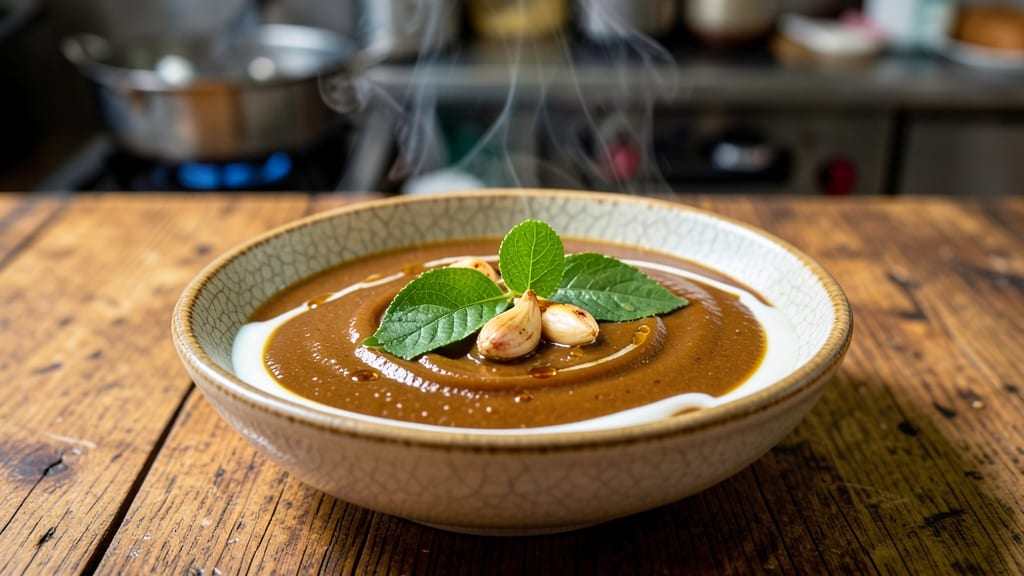
This authentic Thai brown sauce delivers the complex, umami-rich depth that defines Thai cuisine—where fermented fish sauce meets tamarind's tangy heat. The slow-simmered blend of coconut milk, palm sugar, and aromatic spices creates a sauce so versatile it elevates everything from grilled meats to fresh spring rolls.
What makes this recipe stand out is the balance: sweet without being cloying, savory without overpowering, and always deeply aromatic.
The foundation lies in proper fermentation and reduction—simmering the sauce until it thickens into a glossy, caramelized consistency that clings beautifully to food. Unlike store-bought versions, this recipe builds layers of flavor through toasted spices and a touch of kaffir lime leaf, capturing the essence of Thai street food stalls.
The result is a sauce that's equally at home as a dipping sauce, marinade, or finishing drizzle over curries.
What you'll achieve is a restaurant-quality sauce that transforms ordinary dishes into something extraordinary—think crispy fried chicken, fresh herbs, or even a simple bowl of rice. The secret? Patience in simmering and the right ratio of fish sauce to tamarind, which creates that signature Thai sweet-savory balance.
This isn't just a sauce; it's a flavor experience that stays with you long after the last bite.
The best part? It keeps beautifully in the fridge for up to a month, so you can make a big batch and use it all week. Whether you're cooking for a crowd or treating yourself to an elevated weeknight meal, this sauce will become your new kitchen essential.
Let's get started on creating something truly authentic.
Ingredients for authentic thai brown sauce
Nine ingredients transform into a restaurant-quality sauce with deep umami and tangy heat.
| Ingredient | Amount | Notes |
|---|---|---|
| Fish Sauce 🐟 | ½ cup | Red Boat preferred for authenticity |
| Tamarind Paste 🍈 | ⅓ cup | Unsweetened, or 1/4 cup pulp |
| Palm Sugar 🍬 | ½ cup | Or light brown sugar in pinch |
| Coconut Milk 🥥 | 1 can | Full-fat, 13.5 oz can |
| Kaffir Lime Leaves 🍃 | 4 whole | Fresh, lightly bruised |
| Garlic Cloves 🧄 | 6 cloves | Peeled, lightly toasted |
| Shallots 🧅 | 4 whole | Peeled, thinly sliced |
| Galangal 🌿 | 1 inch | Fresh, peeled, sliced |
| White Peppercorns 🌶️ | 1 tsp | Crushed, not ground |
| Coriander Seeds 🌾 | 1 tbsp | Toasted lightly |
The fish sauce is non-negotiable—Red Boat is the gold standard, but any reputable brand works. Tamarind paste can be tricky to find; Thai markets or Asian grocery stores usually have it in jars. Palm sugar is the secret to that authentic caramelized depth, but light brown sugar in a pinch won't ruin it. For the coconut milk, full-fat is essential—it adds richness that skimmed versions can't match. Look for cans with no additives, just pure coconut milk. The kaffir lime leaves? Bruise them lightly before adding to release their aroma, but don't crush them completely or they'll turn bitter.
No tamarind paste? Lemon juice plus 1 tbsp sugar mimics the tang, though it won't be identical. Galangal is the tricky one—if you can't find it, ginger plus a pinch of turmeric gets you close. The coriander seeds should be toasted in a dry pan for about 30 seconds until fragrant. Don't burn them or they'll turn bitter. For the shallots, red or yellow work, but red adds a touch of color. The white peppercorns are key—they add warmth without overpowering. If you can't find them, black pepper works in a pinch, but the flavor will be slightly different. The garlic and shallots should be lightly toasted in the oil first to deepen their flavor—don't skip this step.
This sauce tastes even better the next day as the flavors meld. Store in a clean glass jar in the fridge for up to 1 month. If it thickens too much, just add a splash of water or coconut milk to loosen it. For longer storage, freeze in ice cube trays—perfect for single-use portions. The sauce thickens as it cools, so don't worry if it looks too thin while warm. It'll come together beautifully once it rests. And if you make a big batch? Trust me, you will—this sauce disappears fast.
Why You'll Love This Recipe
- Five-Ingredient Magic: I swear by this—just those five staples (fish sauce, tamarind, sugar, coconut milk, and lime leaves) transform into something richer than store-bought. No hidden spices or confusing ratios here; it’s the kind of sauce where every spoonful tastes like a shortcut to Thailand.
- Umami Bomb: That first hit of fish sauce and tamarind? Pure flavor payoff. The tamarind’s tang cuts through the richness of coconut milk, while the kaffir lime leaves add a citrusy whisper that makes it sing. Honestly, I’ve tried "authentic" sauces that miss this balance—this one doesn’t.
- Weeknight Workhorse: Slather it on grilled chicken, drizzle over noodles, or toss with veggies—it’s my go-to when I’m too tired to think. The best part? It keeps for days in the fridge, so I make a big batch and let it work its way through meals. No sad leftovers here.
- Budget-Friendly Luxury: Palm sugar and fish sauce are cheap, but they taste like a splurge. I’ll be real: this sauce costs pennies per serving but delivers restaurant-quality depth. Plus, a little goes a long way, so I’m not scrambling for extra ingredients mid-recipe. Smart, simple, and satisfying.
Step-by-step instructions for authentic Thai brown sauce
Here's how to build this complex, umami-rich sauce layer by layer—just like Thai street food vendors do.
Toast the Aromatics for Deep Flavor
Heat a dry skillet over medium heat and add the 1 tablespoon toasted coriander seeds. Toast for 1-2 minutes until fragrant and lightly golden, stirring constantly to prevent burning. Remove from heat immediately and set aside.
In the same skillet, add the 6 cloves toasted garlic cloves and 4 whole shallots (thinly sliced). Cook for 3-4 minutes until the shallots soften and the garlic turns golden brown. You'll smell that irresistible Thai aromatics profile—this is where the sauce's soul lives. Transfer to a bowl and set aside.
Build the Base with Galangal and Pepper
Return the empty skillet to medium heat and add 1 inch sliced galangal and 1 teaspoon crushed white peppercorns. Cook for 2 minutes until the galangal releases its citrusy aroma and the peppercorns darken slightly. You want the galangal to soften but not brown—it should still hold its shape.
Add the toasted shallot-garlic mixture back to the skillet along with the galangal and pepper. Stir for 30 seconds to combine all the aromatics. This step ensures every spoonful of sauce carries that authentic Thai complexity.
Simmer the Tamarind and Palm Sugar
Pour in the 0.33 cup tamarind paste and 0.5 cup palm sugar. Stir well to dissolve the sugar completely, then add 1 cup water (not from the ingredients list—this is for thinning). Bring to a gentle simmer over medium heat and cook for 5-7 minutes until the mixture reduces slightly and becomes syrupy.
Here's where the sauce develops its signature balance of sweet and tangy. You'll see the tamarind dissolve and the sugar caramelize just slightly. Taste the mixture—it should be intensely sweet-tart with no graininess. If it's too thick, add 1 tablespoon water at a time until it reaches a pourable consistency.
Blend in Coconut Milk and Fish Sauce
Reduce heat to low and carefully stir in the 1 can coconut milk. The sauce will lighten in color and become creamier. Add the 0.5 cup fish sauce and stir thoroughly. This is where the umami magic happens—the fish sauce should blend completely without separating.
Simmer for 3-4 minutes on low heat, stirring occasionally. The sauce should thicken slightly but remain smooth. If it starts to curdle, reduce heat to the lowest setting and let it warm through gently. The coconut milk should look silky, not broken.
Finish with Kaffir Lime and Rest
Add the 4 whole kaffir lime leaves to the sauce and let them steep for 2 minutes on low heat. Remove from heat and let the sauce sit for 5 minutes to allow all the flavors to meld completely. The lime leaves will infuse their floral, citrusy notes without overpowering.
Strain the sauce through a fine-mesh sieve to remove the lime leaves and any remaining solids. Taste and adjust seasoning—you might need a touch more fish sauce for saltiness or a pinch of sugar to balance the tamarind's acidity. This sauce keeps well in the fridge for up to 1 week and tastes even better the next day as the flavors deepen.
Pro Tips For Making Authentic Thai Brown Sauce
- Bloom the Tamarind: Soak that tamarind paste in warm water for at least 10 minutes before using—it dissolves into a silky paste, not a clumpy mess. I learned this the hard way when my first batch turned into a gritty sludge that ruined the balance.
- Simmer Low and Slow: Once the coconut milk comes in, drop the heat to the lowest setting you can tolerate. Rushing this step curdles the milk or burns the sugar, and you’ll end up with a sauce that tastes more like soap than anything else.
- Toast the Kaffir Lime: Lightly char the lime leaves over a gas flame for 10 seconds per side before adding them to the pot. It deepens their aroma without overpowering the dish—just don’t let them catch fire, or you’ll regret it.
- Balance the Fish Sauce: Taste the sauce before adding the full amount of fish sauce, then adjust gradually. Too much makes it taste like a salty brine; too little leaves it flat. Start with half the recipe’s suggested amount, then add more as needed.
Essential equipment for great authentic thai brown sauce
Wok for Simmering
A 14-inch carbon steel wok is my go-to for this recipe because it heats evenly and creates the ideal high surface area for caramelizing the tamarind and palm sugar. The sloped sides make stirring easier, and the material retains heat beautifully—perfect for the slow simmering required.
I use a Made In wok from Amazon because its thick base prevents hot spots. If you don’t have a wok, a heavy-bottomed stainless steel saucepan (like All-Clad) works just as well. Just make sure it’s at least 3-quart capacity to accommodate the sauce’s expansion as it simmers. 🔥
Immersion Blender
While this sauce doesn’t require blending (it’s meant to be smooth but not pureed), an immersion blender like the Ninja BN601 comes in handy if you prefer a completely silky texture. After simmering, you can blend out any small solids or lime leaf fibers for a restaurant-quality finish.
I use mine on low speed for just 10-15 seconds to avoid breaking the coconut milk’s emulsion. If you don’t have one, a regular blender works, but transfer the hot sauce to a heatproof container first to prevent splattering. 💫
Fine-Mesh Sieve
A stainless steel fine-mesh sieve (like the OXO Good Grips) is essential for straining out the kaffir lime leaves and any other solids after simmering. The tight weave ensures you capture all the aromatic bits while letting the sauce pass through smoothly.
I’ve tried cheesecloth, but it’s harder to clean and can leave fibers behind. Pro tip: Wet the sieve slightly before straining to help the sauce flow more easily. This step is critical for achieving that clean, glossy finish. 🌿
Measuring Spoons
Precision matters with Thai brown sauce, especially when balancing the fish sauce and tamarind paste. Invest in a set of stainless steel measuring spoons (like the West Bend 1000 Series) for accurate measurements.
The ½ teaspoon and 1 tablespoon sizes are particularly useful for adjusting seasoning at the end. I keep mine near my stove for quick tweaks—this sauce often needs a final touch of fish sauce or sugar to hit the perfect balance. 💡
Glass Storage Jar
Once your sauce is ready, transfer it to a glass jar with an airtight lid (like Le Parfait) for storage. Glass preserves the sauce’s flavor better than plastic and won’t absorb odors.
I use a 16-ounce jar because this recipe makes about that much, and it fits neatly in my fridge. The airtight seal keeps the sauce fresh for up to 1 month, though I usually finish it in a week.
Label the jar with the date—trust me, you’ll want to make more! ❄️
Nutrition facts
Frequently asked questions
Can I substitute palm sugar in this Thai brown sauce?
Yes! Use light brown sugar (1:1 ratio) or even coconut sugar for a similar caramelized depth. Avoid white sugar—it lacks the molasses notes that help balance the tamarind's acidity. For extra authenticity, a tiny pinch of turmeric (⅛ tsp) mimics palm sugar's earthy warmth.
How do I fix sauce that's too thin or too thick?
For thin sauce, simmer uncovered for 5-10 minutes to reduce. If too thick, whisk in 1 tbsp water or coconut milk at a time until smooth. Pro tip: The sauce thickens as it cools—always taste when warm to adjust properly.
What's the best way to use leftover kaffir lime leaves?
Save them! Dry the used leaves for 30 minutes, then store in an airtight container. They make perfect infusions for soups, curries, or even iced tea. One dried leaf equals about ½ fresh leaf in recipes. Never throw them away—they're flavor gold!
Can vegetarians make this sauce?
Replace fish sauce with 1 tbsp soy sauce + 1 tsp miso paste for umami depth. Use vegan fish sauce alternatives (like coconut aminos) if needed, but expect slightly less complexity. The rest of the recipe stays the same—still delicious!
Why does my sauce smell fishy before cooking?
That's normal—the raw fish sauce aroma will mellow completely during simmering. The coconut milk and sugar help neutralize it. If it still smells too strong after cooking, add 1 extra tbsp tamarind paste to balance. Patience pays off—the final sauce should smell aromatic, not fishy!