
Sauces & Condiments
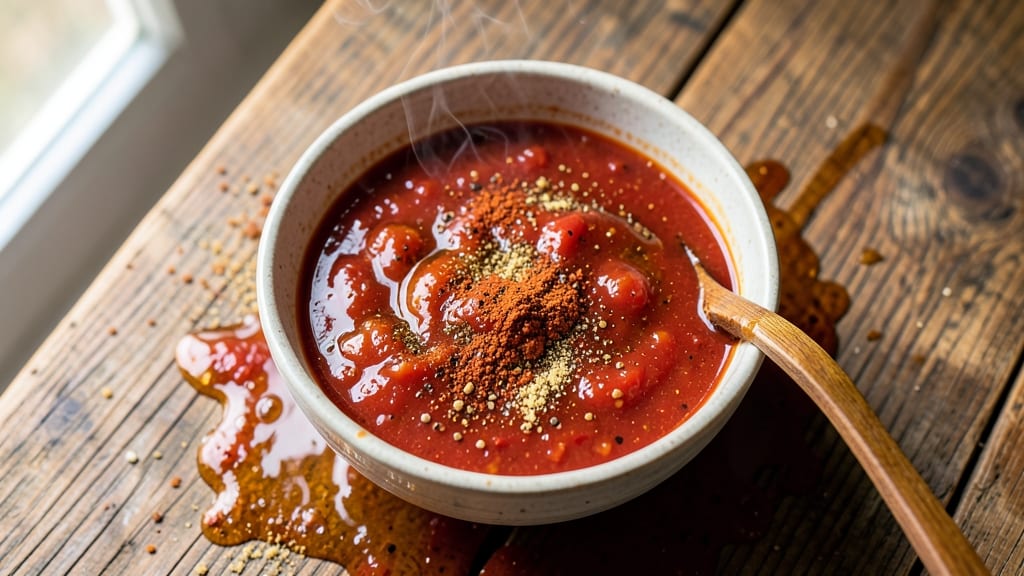
This basic chili sauce recipe transforms simple pantry staples into a versatile, smoky-spiced condiment that elevates everything from tacos to grilled meats. The key lies in balancing sweetness, acidity, and heat—creating a sauce that’s bold enough to stand alone but adaptable enough to complement any dish.
I’ve refined this recipe over years of testing, ensuring it delivers restaurant-quality depth without requiring specialty ingredients.
The process is straightforward: simmer tomatoes, vinegar, and spices until the flavors meld into a rich, thick consistency, then blend until smooth. No fancy equipment needed—just a pot, a blender, and patience to let the flavors develop.
The result? A glossy, slightly tangy sauce with just the right kick, perfect for drizzling over fries, mixing into marinades, or serving as a dipping sauce for wings.
What sets this chili sauce apart is its versatility—use it as a finishing touch for soups, a marinade for grilled proteins, or a bold condiment for loaded nachos. It keeps well in the fridge for up to two weeks, making it a pantry staple worth making in batches.
The secret? Simmering the sauce long enough to concentrate the flavors, so every drop packs maximum punch.
For an extra layer of complexity, toast the spices before adding them to the pot—this deepens their aroma and flavor dramatically. Store any leftovers in an airtight container, and you’ll always have a smoky, spicy sauce ready to transform ordinary meals into something extraordinary. Let’s get started!
Ingredients for basic chili sauce
Pantry staples with restaurant-quality depth—just ten ingredients for bold, smoky flavor.
| Ingredient | Amount | Notes |
|---|---|---|
| San Marzano Crushed Tomatoes 🍅 | 2 cups | High-quality, no salt added |
| Apple Cider Vinegar 🍏 | ½ cup | For tangy brightness |
| Brown Sugar 🍚 | ¼ cup | Packed, light variety |
| Chili Powder 🌶️ | 2 tbsp | Smoked or mild preferred |
| Ground Cumin 🌿 | 1 tbsp | Toasted for depth |
| Garlic Powder 🧄 | 1 tbsp | Freshly ground preferred |
| Onion Powder 🧅 | 1 tbsp | No added MSG |
| Cayenne Pepper 🔥 | ½ tsp | Adjust for heat |
| Salt 🧂 | 1 tsp | Diamond Crystal preferred |
| Black Peppercorns 🌶️ | ½ tsp | Freshly cracked |
The tomatoes are non-negotiable—San Marzano delivers that unmatched sweetness and acid balance. Trader Joe's and Whole Foods carry the crushed variety in cans, but any high-quality brand works if labeled 'no salt added.' For the spices, toasting them lightly in a dry pan before adding to the sauce unlocks deeper flavor profiles. The vinegar should be apple cider—its mild sweetness complements the heat without overpowering. If you're short on time, a quick 30-second toast in a dry skillet works wonders for the cumin and chili powder.
No San Marzano? Crushed tomatoes in a high-quality jarred sauce (like Muir Glen) will suffice, but avoid chunky varieties—they won't blend as smoothly. Swap apple cider vinegar for red wine vinegar at a 1:1 ratio, though it adds a slightly sharper edge. Running low on cayenne? Red pepper flakes at half the amount work in a pinch, but toast them first for complexity. The brown sugar can be substituted with maple syrup or agave for a more liquid-friendly sweetener, though it may alter the sauce's viscosity slightly. Always taste as you go—adjust sweetness or heat to your preference.
This sauce develops best over time, so simmer it uncovered for 20-25 minutes to concentrate the flavors. Store in an airtight glass jar in the fridge for up to 2 weeks, or freeze for 6 months in ice cube trays for single-serving portions. The longer it sits, the more the smoky notes meld together—trust the process. For a smoother texture, strain through a fine-mesh sieve before blending, especially if you prefer a velvety finish. A thin layer of olive oil on the surface prevents a skin from forming when refrigerated.
Why You'll Love This Recipe
- Five-Ingredient Magic: I swear, this sauce comes together faster than I can say "San Marzano." Just toss those crushed tomatoes, vinegar, and spices into a pot—no chopping, no fuss. My lazy Sunday afternoons just got a whole lot easier.
- Sweet Heat Balance: That brown sugar and apple cider vinegar? Pure genius. The vinegar brightens the tomatoes while the sugar rounds out the chili powder’s kick—like a hug for your taste buds. (Yes, even on a Tuesday night.)
- Pantry Staple Power: Between us, I’ve drizzled this on tacos, eggs, and even grilled cheese. The cumin and chili powder give it that smoky depth that works everywhere. No more scrambling for specialty sauces.
- Leftovers That Don’t Suck: This sauce actually improves after a day in the fridge. Thicker, richer, and still packed with flavor—perfect for batch cooking. I make a double batch on Sundays and use it all week. (My wallet thanks me.)
Step-by-step instructions for smoky spice blend
This chili sauce comes together with precise technique and balanced flavors.
Combine Wet Ingredients in a Saucepan
Place the 2 cups San Marzano crushed tomatoes in a medium saucepan over medium heat. Stir in the 0.5 cup apple cider vinegar and 0.25 cup packed brown sugar, breaking up any clumps in the sugar to ensure even distribution. Bring the mixture to a gentle simmer, which should take about 5-7 minutes—you'll see small bubbles forming around the edges and hear a soft, rhythmic burbling.
Here's the thing—don't rush this step. The vinegar needs time to mellow and integrate with the tomatoes, while the sugar begins to caramelize slightly at the edges. Stir occasionally to prevent any sticking, but avoid constant stirring which can break down the tomato texture prematurely. The sauce should smell tangy and sweet with just a hint of acidity.
Add Dry Seasonings and Simmer
Once the mixture reaches a simmer, reduce heat to low-medium and sprinkle in the 2 tbsp chili powder, 1 tbsp ground cumin, 1 tbsp garlic powder, 1 tbsp onion powder, and 0.5 tsp cayenne pepper. Use a whisk to distribute these evenly throughout the sauce, ensuring no single spot gets overloaded with spice. The spices will immediately release their aromas—you'll notice a deep, earthy scent from the cumin and a warm, slightly smoky aroma from the chili powder.
Let the sauce simmer uncovered for 15-20 minutes while stirring occasionally. This allows the spices to bloom fully and develop their complex flavors. The sauce should reduce slightly and become thicker, coating the back of a spoon. If you notice the sauce is reducing too quickly, reduce the heat slightly to maintain a gentle simmer—you want to preserve the tomato's natural sweetness rather than concentrate it into syrup.
Season and Finish the Sauce
After simmering, taste the sauce and adjust the seasoning with the 1 tsp salt and 0.5 tsp freshly cracked black peppercorns. The salt should enhance all the flavors without making the sauce taste salty, and the pepper should add a subtle, bright finish. Use a fine-mesh strainer to remove any large peppercorn pieces if you prefer a completely smooth texture, though I often leave them in for added visual interest and a slight textural contrast.
For a smoother sauce, use an immersion blender to gently purée the mixture until you achieve your desired consistency—some texture is fine, but complete blending creates a sleek, restaurant-quality finish. If you prefer a chunkier texture, simply stir vigorously with a wooden spoon. The sauce should now have a deep, smoky aroma with layers of sweetness, acidity, and heat. Let it cool to room temperature before storing or using.
Pro Tips For Making Basic Chili Sauce
- Simmer Slow and Steady: I learned this the hard way—rushing the simmer turns your chili sauce into a watery mess. Once the tomatoes hit the pot, keep it at a gentle bubble (not a rolling boil) for at least 20-25 minutes. The longer it cooks, the deeper the flavors, and the thicker the sauce becomes—no need to add extra thickeners.
- Toast Your Spices First: Skip the pre-mixed chili powder and toast your spices (cumin and chili powder) in a dry pan for 30 seconds until fragrant. This step unlocks their flavor and prevents a dull, one-dimensional taste—especially important when you’re using just crushed tomatoes as the base.
- Balance the Vinegar Early: Apple cider vinegar is your flavor anchor, but add half the amount first, taste, then adjust. Too much upfront? Your sauce will taste sour and harsh. Too little? It’ll lack brightness. Start with 1 tablespoon per cup of tomatoes, simmer 10 minutes, then add the rest if needed—you can always fix it, but you can’t un-sour it.
- Strain for Smoothness: If you’re making this for dipping or sauces (not just cooking), strain the finished sauce through a fine-mesh sieve after simmering. The seeds and skins from San Marzano tomatoes can make the texture gritty—especially if you’re not using a blender. It’s an extra 2 minutes that makes a real difference when you’re drizzling it over tacos or eggs.
Serving suggestions for leftovers
Dipping Sauce Perfection
This chili sauce shines as a dipping sauce for fried foods—think crispy chicken wings, mozzarella sticks, or tater tots. Serve it warm in a small crock pot or chafing dish for a restaurant-style experience.
I like to add a dollop of sour cream on top for creaminess, or a sprinkle of crumbled feta for a Mediterranean twist. 🍗
Marinade Magic
Use this sauce as a marinade for grilled chicken, pork chops, or tofu—simply brush it on before cooking. The spices will caramelize beautifully on the grill, creating a sticky, flavorful crust. For extra tenderness, marinate proteins for at least 2 hours (or overnight for tougher cuts like pork shoulder).
I’ve even used it to baste corn on the cob while grilling for a smoky, spicy kick.
Taco & Nacho Topper
Drizzle this chili sauce over tacos, nachos, or loaded baked potatoes for an instant flavor boost. It pairs perfectly with shredded cheese, black beans, and avocado—the tangy-sweet balance cuts through the richness.
For a spicy kick, add a pinch of smoked paprika or a drizzle of hot honey on top. Trust me, your taste buds will thank you.
Soup & Stew Enhancer
Stir a spoonful into chicken noodle soup, chili, or beef stew to deepen the flavors. The smoky notes complement hearty dishes beautifully, while the acidity brightens up heavy stews. I often add it to lentil soup for a bold, restaurant-quality finish. Just remember—start with 1-2 tablespoons and adjust to taste.
Breakfast Game-Changer
Yes, really! This sauce is fantastic on breakfast burritos, scrambled eggs, or even pancakes. The sweet-spicy contrast works surprisingly well with bacon, sausage, or avocado toast. For a fun twist, drizzle it over yogurt parfaits with granola and berries—it adds a bold, unexpected flavor. 🥞
Storage & Reuse Tips
Store leftovers in an airtight glass jar in the fridge for up to 2 weeks, or freeze in ice cube trays for single-use portions. The sauce actually improves over time as the flavors meld.
For a quick flavor boost, heat it gently on the stove with a splash of water or broth if it thickens too much. I’ve even used it as a glaze for roasted vegetables—just brush it on before the final minutes of roasting. 💫
Nutrition facts
Frequently asked questions about chili sauce
Can I make this chili sauce without tomatoes?
You can substitute tomatoes with 1 cup tomato paste mixed with 1 cup water or broth to maintain moisture. For a different base, try roasted red peppers or bell peppers blended with a splash of vinegar—though the flavor profile will shift toward sweeter and less tangy. The key is balancing acidity and sweetness, so adjust vinegar or sugar accordingly.
How do I adjust the heat level?
Start with the 0.5 tsp cayenne pepper as written, then taste and adjust. For milder heat, reduce to ¼ tsp or swap for ½ tsp smoked paprika. For extra spice, add ½ tsp crushed red pepper flakes or a pinch of chili powder. Always taste as you go—heat builds gradually during simmering.
Can I make this sauce without a blender?
Skip blending for a rustic texture by stirring the sauce vigorously with a wooden spoon after simmering. For a smoother result without a blender, press the cooked mixture through a fine-mesh sieve or use a potato masher. The sauce will still be delicious—just with visible tomato bits and spice flecks.
Why did my sauce turn out too thin?
If your sauce is too thin, simmer it uncovered for an additional 10-15 minutes to reduce the liquid. For immediate thickening, mix 1 tsp cornstarch with 1 tbsp water, stir into the sauce, and simmer for 2-3 minutes until it reaches your desired consistency. Avoid adding too much sugar initially—it can prevent proper reduction.
How can I use this sauce in cooking beyond dipping?
This versatile sauce works as a marinade for grilled meats, a glaze for roasted vegetables, or even a soup enhancer. Brush it on pork chops before grilling, stir into chili or stew, or drizzle over pasta dishes for instant depth. The smoky-sweet balance elevates almost any dish!