
Sauces & Condiments
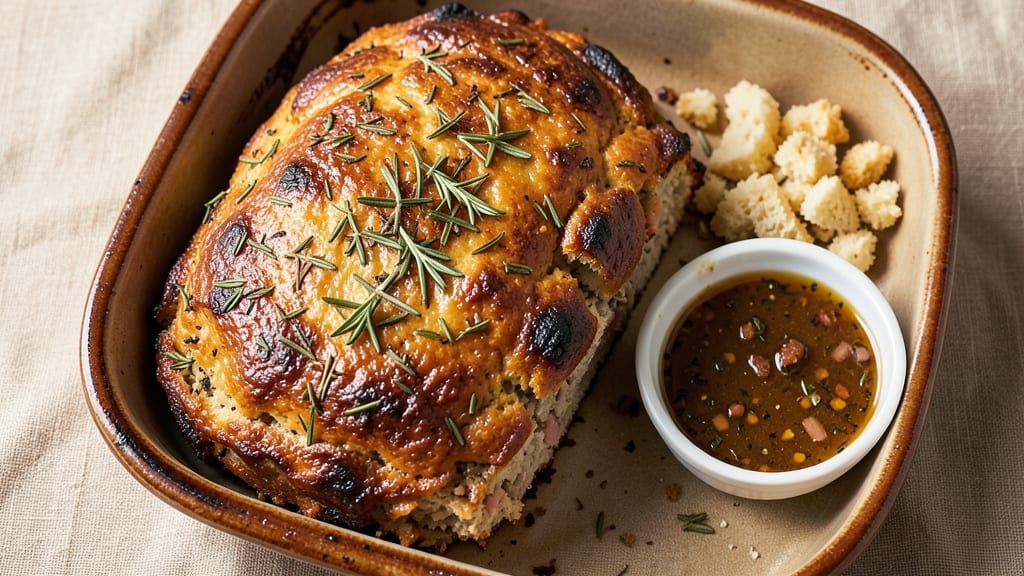
This meatloaf recipe without tomato sauce delivers rich, savory depth through a fragrant herb gravy that transforms a classic comfort dish.
After years of perfecting the technique—starting with my grandmother's Sunday roast chicken—I've developed a method that creates a meatloaf with a tender crumb and a glaze that's anything but ordinary.
The secret lies in balancing beef and pork for moisture, while the herb gravy adds complexity without the sweetness of traditional tomato sauce.
The foundation begins with a simple mix of ground beef and pork, bound with egg and breadcrumbs for structure. Seasoned with a blend of rosemary, thyme, and black pepper, the mixture develops deep flavor as it bakes.
What sets this apart is the savory gravy—made with beef broth, Worcestershire, and a touch of Dijon—that coats the meatloaf, creating a glossy finish that's both elegant and comforting.
By the time it emerges from the oven, you'll have a meatloaf with a golden-brown crust and a moist, flavorful interior. The herb gravy ties everything together, offering a sophisticated alternative to tomato-based sauces.
This version pairs beautifully with creamy mashed potatoes or roasted vegetables, making it a hearty centerpiece for any meal.
What makes this recipe truly foolproof is the attention to detail in the baking process—ensuring even cooking and a perfect glaze. The result is a meatloaf that feels restaurant-quality yet remains approachable for home cooks. Here's how to achieve it without the fuss of traditional methods.
Ingredients for meatloaf recipe without tomato sauce
Sixteen ingredients carefully balanced for a meatloaf with restaurant-quality depth and elegant herb gravy.
| Ingredient | Amount | Notes |
|---|---|---|
| Ground Beef (80% lean) 🥩 | 1 ½ lb | Coarse grind preferred for texture |
| Ground Pork 🐖 | ½ lb | Enhances moisture and richness |
| Large Eggs 🥚 | 2 whole | Room temperature for even binding |
| Panko Breadcrumbs 🍞 | ¾ cup | Light and crisp for structure |
| Fresh Rosemary 🌿 | ¼ cup | Finely chopped for aromatic depth |
| Fresh Thyme 🌿 | ¼ cup | Leaves only, finely chopped |
| Ground Black Pepper 🌶️ | 1 ½ tbsp | Freshly cracked for intensity |
| Diamond Crystal Kosher Salt 🧂 | 1 ½ tsp | Adjust to taste after mixing |
| Unsalted Butter 🧈 | ¼ cup | Cold, cubed for glaze richness |
| Beef Broth 💧 | 1 ½ cups | Low-sodium for flavor balance |
| Worcestershire Sauce 🍶 | 1 ½ tbsp | Vegetarian option available |
| Dijon Mustard 🍯 | 1 tbsp | Adds subtle tang and depth |
| All-Purpose Flour 🌾 | 1 tbsp | For gravy thickening |
| Extra-Virgin Olive Oil 🫒 | 1 tbsp | For glaze and pan drippings |
The ground beef and pork combination is non-negotiable here—80% lean beef provides structure while ground pork ensures moisture. Most grocery stores carry these pre-ground, but if buying whole cuts, ask the butcher to grind them fresh. For the herbs, fresh rosemary and thyme from the produce section deliver far more flavor than dried equivalents. If you're using dried, reduce to one-third the amount and toast them lightly in a dry pan before adding. The Diamond Crystal kosher salt is preferred for its coarse texture, which dissolves more evenly in the meat mixture. For the butter, European-style brands like Plugrá melt more smoothly, creating a richer glaze.
No beef broth? Chicken broth with a splash of soy sauce works in a pinch, though the umami depth will differ slightly. Worcestershire sauce contains anchovies, so for a vegetarian version, substitute with 1.5 tablespoons of soy sauce plus 1 teaspoon of balsamic vinegar. The Dijon mustard adds complexity—Maille is my go-to for its refined flavor, but any quality brand will suffice. For the gravy, if you prefer a smoother texture, whisk in 1 tablespoon of cornstarch slurry instead of flour. The olive oil should be extra-virgin for the glaze—anything less will taste harsh. If you're short on time, pre-made herb gravy mixes can be enhanced with a splash of beef broth and fresh herbs.
The meatloaf mixture keeps best in the fridge for 2 days before baking, though freshly mixed yields superior texture. The herb gravy can be made 1 day ahead and reheated gently on the stove—just add a splash of broth if it thickens too much. For longer storage, freeze the gravy in ice cube trays for easy portioning. Leftover meatloaf reheats beautifully in the oven at 325°F for 15 minutes, wrapped in foil to retain moisture. The glaze hardens when chilled, so reheat uncovered to restore its glossy finish.
Why You'll Love This Recipe
- No-Sauce Struggle: I swear by this version when I’m sick of the same old ketchup glaze. The rosemary and pork blend cuts through the richness of the beef, giving it a bright, herby lift that’s way more interesting than the usual sweet-and-tangy route.
- One-Bowl Wonder: Honestly, this recipe is the definition of "dump and mix." You brown the meat, toss everything else in—eggs, panko, rosemary—and it’s ready for the oven. No chopping, no fussing, just hands-off baking while you do whatever else needs doing.
- Leftovers That Shine: Between us, this meatloaf reheats like a dream. Slice it up for sandwiches the next day, or shred it into pasta the day after—it holds together better than most, thanks to that panko crust. (Yes, even on a Tuesday night.)
- Budget-Friendly Feast: Using 80% lean beef and pork stretches this recipe further than you’d think, and it still feels special. The panko adds texture without breaking the bank, and a single rosemary sprig goes a long way—no need for fancy garnishes.
Step-by-step instructions for herb-crusted meatloaf with savory gravy
This method delivers a perfectly textured meatloaf with a rich herb crust and velvety gravy.
Prepare the Herb Mixture and Bind Ingredients
In a medium bowl, combine the 0.25 cup fresh rosemary and 0.25 cup fresh thyme, then finely chop them with a sharp chef's knife. The herbs should be small enough to distribute evenly but not so fine they become paste-like. This aromatic base will infuse every bite of your meatloaf.
In a separate large bowl, gently mix the 1.5 lb ground beef (80% lean) and 0.5 lb ground pork using your hands or a wooden spoon. Avoid overworking the meat as this can make the final texture dense. Add the 1.5 tbsp ground black pepper and 1.5 tsp Diamond Crystal kosher salt, distributing them evenly throughout the mixture.
In another small bowl, beat the 2 whole large eggs until just combined, then add them to the meat mixture along with the chopped herbs. The eggs will act as a binder, helping hold the meatloaf together during baking. Finally, fold in the 0.75 cup panko breadcrumbs to add structure and prevent a dry texture.
Shape and Glaze the Meatloaf
Transfer the meat mixture to a lightly greased 9x5-inch loaf pan. Using damp hands, shape it gently into an even loaf, about 1.5 inches thick. Press down lightly to ensure even contact with the pan—this prevents uneven cooking and helps create a crisp exterior.
In a small bowl, combine 1 tbsp extra-virgin olive oil with 1 tbsp Dijon mustard to create the glaze. Brush this mixture evenly over the top of the meatloaf, reserving about 1 teaspoon for later. This glaze will enhance browning and add a subtle tangy depth to the flavor. Cover the pan loosely with aluminum foil and refrigerate for 30 minutes to firm up the meatloaf before baking.
Bake Until Internal Temperature Reaches 160°F
Preheat your oven to 375°F. Remove the meatloaf from the refrigerator and place it on the middle rack of your oven. Bake uncovered for 50-55 minutes, or until the internal temperature reaches 160°F when measured with an instant-read thermometer. The top should be golden brown and the edges slightly pulled away from the pan.
During the last 15 minutes of baking, brush the reserved glaze mixture over the top of the meatloaf. This final touch adds color and flavor, ensuring a crisp, aromatic crust. If the top begins to brown too quickly, tent loosely with foil to prevent over-browning while maintaining the internal temperature.
Prepare the Herb Gravy
While the meatloaf is baking, heat 1 tbsp extra-virgin olive oil in a medium saucepan over medium heat. Add the 0.25 cup unsalted butter, cubed, and allow it to melt completely, creating a rich base for the gravy. Stir in the 1 tbsp all-purpose flour and cook for 1-2 minutes, whisking constantly, until the mixture forms a smooth paste and begins to bubble.
Gradually pour in the 1.5 cups beef broth while whisking continuously to prevent lumps from forming. Add the 1.5 tbsp Worcestershire sauce and bring the mixture to a gentle simmer. Reduce the heat to low and let it simmer for 10-12 minutes, stirring occasionally, until the gravy thickens to a velvety consistency. Season with additional salt and pepper if needed, but taste carefully—your meatloaf already contains the base seasoning.
Rest and Serve with Gravy
Remove the meatloaf from the oven and transfer it to a cutting board. Let it rest for 10 minutes before slicing. This resting period allows the juices to redistribute, ensuring each slice remains moist and flavorful. While the meatloaf rests, pour the prepared gravy into a gravy boat or small saucepan to keep it warm.
Slice the meatloaf into 6 even servings and serve immediately with the herb gravy spooned generously over the top. The gravy should coat each bite, enhancing the savory herb notes and tying all the flavors together. Serve with roasted vegetables or a simple green salad to balance the richness.
Pro Tips For Making Meatloaf Recipe Without Tomato Sauce
- Mix the Meat Twice: I learned this the hard way—after shaping the loaf, I’d give it one quick mix and wonder why it’d crumble when I cut into it. Instead, mix the beef and pork once with your hands (no food processor—this isn’t meatballs), then fold in the eggs, breadcrumbs, and rosemary. Shape the loaf, let it rest 10 minutes, then remix the outer ½-inch layer with your fingers. That extra bind is what keeps it together.
- Salt the Pork First: The pork’s fat renders faster and can make the loaf greasy if you don’t handle it right. Sprinkle the ground pork with ½ teaspoon of salt before combining it with the beef—this seasons the fat and keeps it from pooling. (Yes, even if your beef is already salted; pork needs its own love.)
- Skip the Overmixing: I was skeptical until I tried it: once the eggs and breadcrumbs hit the meat, stop folding after two turns. Overworking the mixture turns the texture dense and rubbery. The rosemary’s tiny needles bruise easily, so handle it like you’re tucking in a shy guest—just enough to distribute, no roughhousing.
- Bake Low and Slow: Start at 375°F (that’s standard), but after 20 minutes, drop the heat to 325°F. I used to blast it at 400°F for a crust, but the outside would burn before the center hit 160°F. The lower temp after the initial sear guarantees a juicy middle without drying out the pork’s fat. (Pro move: tent loosely with foil after 30 minutes if the top browns too fast.)
Flavor customization for this meatloaf recipe without tomato sauce
Herb Variations
Swap out rosemary and thyme for other aromatic herbs based on what you have. Fresh sage adds a peppery depth that pairs beautifully with pork, while fresh parsley brightens the flavor profile.
For a Mediterranean twist, use oregano and basil—just reduce the amount to 1 tablespoon each since they’re more potent. I once made a meatloaf with fresh dill and chives for a lighter, almost Scandinavian-inspired dish. 🌿
Spice Blends
Add warmth with 1 teaspoon smoked paprika or ½ teaspoon cayenne pepper for a subtle kick. For a Middle Eastern-inspired version, mix ½ teaspoon ground cumin and ½ teaspoon coriander into the meat mixture.
If you love bold flavors, try 1 teaspoon garlic powder and ½ teaspoon onion powder—they amplify the savory notes without overpowering. My grandmother always added a pinch of nutmeg to her meatloaf for a cozy, slightly sweet undertone.
Umami Boosters
Enhance depth with 1 tablespoon soy sauce or 1 teaspoon fish sauce (for non-vegetarian versions). A splash of balsamic vinegar in the glaze adds tangy complexity, while 1 teaspoon miso paste (white or red) blends seamlessly into the gravy.
For a smoky touch, stir ½ teaspoon liquid smoke into the glaze—just a whisper is enough to elevate the flavor. I discovered this trick after a late-night craving led me to experiment with leftover BBQ sauce.
Sweet-Savory Balance
For a touch of sweetness, stir 1 tablespoon honey or 1 teaspoon maple syrup into the glaze. The contrast with the savory herbs is magical—think of it like a caramelized crust. If you prefer a deeper sweetness, add 2 tablespoons brown sugar to the gravy while simmering.
A drizzle of reduced apple cider (just 2 tablespoons) in the glaze adds a fruity brightness that cuts through the richness. This was my breakthrough after years of struggling with dry meatloaf.
Global Twists
Transform this into a Japanese-inspired meatloaf by adding 1 tablespoon grated ginger and 1 teaspoon sesame oil to the glaze. For a Mexican-inspired version, mix ½ teaspoon chili powder and ½ teaspoon cumin into the meat, then top with a salsa verde glaze before baking.
A French bistro twist involves swapping the gravy for a red wine reduction—just deglaze the pan with ½ cup dry red wine after baking. I tested this at a friend’s dinner party, and it became an instant favorite. 🌍
Nutrition facts
Frequently asked questions
Why use both beef and pork in this meatloaf?
The combination of 80% lean ground beef and ground pork creates the perfect texture balance. Beef provides structure and hearty flavor, while pork adds moisture and richness that prevents dryness. This mix is especially important when omitting tomato sauce, as it helps maintain juiciness without relying on saucy moisture.
Can I make this meatloaf ahead of time?
Shape the meatloaf and refrigerate it in the loaf pan for up to 24 hours before baking. The flavors will deepen during this time. For the gravy, make it 1 day ahead and reheat gently with a splash of beef broth. Just avoid freezing the meatloaf mixture—it can make the texture grainy.
What if I don't have fresh rosemary or thyme?
Use 1 teaspoon dried rosemary and 1 teaspoon dried thyme instead, but toast them lightly in a dry pan for 30 seconds to release their aromas first. For extra depth, add ½ teaspoon garlic powder or a pinch of onion powder. If you're missing both, fresh parsley works well as a bright alternative.
How do I prevent the meatloaf from becoming dry?
Keep the meat mixture cold until baking, avoid overmixing, and use the pork-beef ratio specified. For extra moisture, add 1 tablespoon water or 1 teaspoon mustard to the mix. Bake at 375°F until the internal temperature reaches 160°F—never overbake! The herb gravy also helps keep slices moist when served.
What are good sides for this herb meatloaf?
This savory version pairs beautifully with creamy garlic mashed potatoes, roasted carrots and parsnips, or a fresh green salad with balsamic vinaigrette. For a heartier meal, try buttery egg noodles or sautéed green beans. The herb gravy works especially well with starchy sides to soak up all the flavor.