
Sauces & Condiments
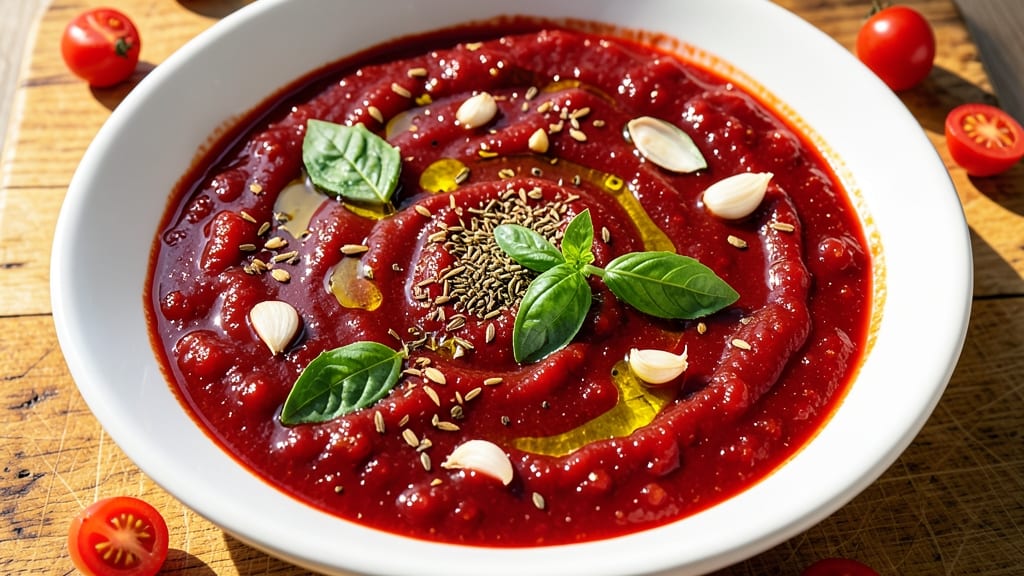
This recipe for pizza sauce from fresh tomatoes transforms vine-ripened summer tomatoes into a vibrant, aromatic sauce that captures summer's essence in every jar. 🌿 I developed this method after years of testing—balancing sweetness, acidity, and umami to create a sauce that's richer than store-bought but simpler than you'd expect.
The secret lies in simmering whole tomatoes until they burst, then blending them with garlic, basil, and a touch of olive oil for depth.
What makes this sauce truly special is its versatility—use it immediately for homemade pizza or freeze it for up to six months. The slow simmering process intensifies the tomato flavor while mellowing their natural acidity, resulting in a smooth, velvety texture with just the right balance of sweetness and tang.
Fresh herbs like basil and oregano add brightness, while garlic provides that essential savory backbone.
The process is straightforward: core and crush tomatoes, simmer until tender, then blend until silky smooth. Season carefully—you can always adjust salt and sugar to taste. This isn't just pizza sauce; it's a blank canvas for any dish that needs a burst of fresh tomato flavor.
Whether you're topping pizza, drizzling over pasta, or using as a marinade, this sauce delivers restaurant-quality results every time.
For those who love to experiment, try adding a pinch of red pepper flakes for heat or a splash of balsamic vinegar for depth. The possibilities are endless, but the foundation remains the same: fresh tomatoes, patience, and a few simple ingredients. Let's get cooking—your taste buds will thank you.
Ingredients for recipe for pizza sauce from fresh tomatoes
Fresh tomatoes, herbs, and a touch of sweetness—this sauce captures summer in every jar.
| Ingredient | Amount | Notes |
|---|---|---|
| Fresh Vine-Ripened Tomatoes 🍅 | 2 ½ lb | Roma or heirloom varieties preferred |
| Extra-Virgin Olive Oil 🫒 | ½ cup | High quality, fruity variety |
| Garlic Cloves 🧄 | 6 cloves | Fresh, peeled and roughly chopped |
| Fresh Basil Leaves 🌿 | 1 cup | Packed, stems removed |
| Dried Oregano 🍃 | 1 tsp | Mexican oregano preferred |
| Salt 🧂 | 1 ½ tsp | Diamond Crystal kosher salt |
| Granulated Sugar 🍚 | 1 tbsp | Adjust to taste |
| Red Wine Vinegar 🍷 | 1 tbsp | For brightness |
| Black Pepper 🌶️ | ¼ tsp | Freshly ground |
The tomatoes make or break this sauce. Roma tomatoes are ideal—they're meaty and consistent, but heirlooms add sweetness if you can find them. Local farmers markets often have the best vine-ripened varieties, especially in summer. Look for tomatoes that smell sweet and feel heavy for their size. If you can't get fresh, San Marzano canned tomatoes are the next best thing—they're sweet, meaty, and perfect for this sauce. Avoid green tomatoes or those with cracks, as they'll make the sauce bitter. The garlic should be fresh—if it smells pungent, it's still good, but if it smells like vinegar, toss it.
No fresh basil? Dried basil at one-third the amount works in a pinch, but the flavor won't be as bright. Short on tomatoes? Add a splash of tomato paste to thicken, but don't overdo it—this sauce is all about freshness. The sugar balances acidity, but honey or maple syrup can substitute if you prefer. For extra depth, a pinch of red pepper flakes adds heat, while a splash of balsamic vinegar swaps out the red wine vinegar. The olive oil matters—use something fruity and high-quality, not the cheap stuff you'd use for cooking. If you're making this ahead, Trader Joe's has great olive oil options at a reasonable price.
This sauce keeps beautifully. Store in airtight jars in the fridge for up to 1 week, or freeze for 6 months—it actually tastes better after a few days as the flavors meld. I like to portion it into ice cube trays for easy use on pizzas or pasta. If it thickens too much after refrigerating, just stir in a splash of water or tomato juice. The sauce reheats well, so it's perfect for meal prep. For best results, let it come to room temperature before using on pizza—it spreads more evenly that way.
Why You'll Love This Recipe
- No Chopping Needed: I swear by this—just halve those tomatoes, roast them whole, and scoop out the flesh. The skin softens into silky perfection, so you’re not stuck peeling or dicing. (Yes, even on a Tuesday night when I’m exhausted.)
- Garlic-Basil Magic: That first taste of the sauce—bright, herby, with a slow-simmered garlic depth—makes me pause mid-bite. Fresh basil thrown in at the end? It’s the difference between "good" and "I’ll make this again tomorrow."
- Pantry Staple Power: I keep this sauce in jars for weeks, slathering it on toast, drizzling it over pasta, or tossing it with grilled chicken. The olive oil keeps it rich without spoiling fast, and the oregano means it works for everything from pizza to bruschetta.
- Budget-Friendly Luxury: Fresh tomatoes and basil feel fancy, but they’re cheaper than jarred sauce—and way tastier. A single batch stretches to four pizzas, plus leftovers for dipping. (Between us, I’ve had it cold with crackers at 10 PM. No judgment.)
Step-by-step instructions for pizza sauce from fresh tomatoes
Here's how to transform fresh tomatoes into rich, flavorful pizza sauce that rivals anything store-bought.
🔥 Step 1: Prep and Roast the Tomatoes for Depth
Preheat your oven to 425°F and line a baking sheet with parchment paper. Cut the 2.5 lb fresh vine-ripened tomatoes into quarters, removing any hard cores. Arrange them cut-side up on the prepared sheet, leaving space between each piece.
Drizzle each tomato quarter with about 1 teaspoon of the extra-virgin olive oil and sprinkle lightly with salt. Roast for 20-25 minutes until the edges are blistered and the tomatoes soften. This step concentrates their natural sweetness and develops complex caramelized flavors—don't skip it! The skin should be slightly wrinkled and the flesh easy to crush between your fingers.
👨🍳 Step 2: Build the Flavor Base with Garlic and Herbs
Transfer the roasted tomatoes to a large mixing bowl. In the same baking dish (no need to clean it—the caramelized bits add flavor), heat 2 tablespoons of the remaining extra-virgin olive oil over medium heat. Add the 6 cloves garlic cloves and sauté for 30-45 seconds until fragrant but not browned—garlic burns fast, so watch closely.
Add the sautéed garlic to the tomatoes, then stir in the 1 cup fresh basil leaves (stems removed), 1 tsp dried oregano, 1 tbsp granulated sugar, and 1 tbsp red wine vinegar. The sugar balances the acidity while the vinegar brightens the sauce. Use a wooden spoon to gently crush the tomatoes against the sides of the bowl, breaking them down into a chunky texture—this releases more juice and builds body.
🍳 Step 3: Simmer Until Thick and Balanced
Pour the tomato mixture into a medium saucepan and bring to a gentle boil over medium heat. Reduce heat to low and let it simmer uncovered for 15-20 minutes, stirring occasionally. You're looking for a sauce that coats the back of a spoon but still has a slight sheen—this indicates the perfect consistency for pizza.
Taste and adjust seasoning: add more salt if needed (I usually need about ½ tsp more), or a pinch of black pepper for depth. If the sauce tastes too acidic, add a tiny pinch of sugar. The sauce should be vibrant red with visible tomato chunks—this texture clings beautifully to pizza dough. If it's too thick, thin with 1-2 tablespoons water; if too thin, simmer uncovered for another 5 minutes.
⏰ Step 4: Cool and Finish with Fresh Herbs
Remove from heat and let the sauce cool to room temperature—this allows flavors to meld. Once cooled, stir in the remaining 0.5 cup - 2 tbsp of extra-virgin olive oil (you used 2 tbsp earlier) and the 0.25 tsp black pepper. The oil adds richness and helps the sauce cling to the crust.
For extra brightness, add a handful of fresh basil leaves (about ¼ cup) and let them steep for 5 minutes before removing. The sauce should now have layers of sweetness from the tomatoes, brightness from the vinegar, and herbal notes from the basil and oregano. This is your signature sauce—rich, balanced, and full of fresh tomato character.
Pro Tips For Making Recipe For Pizza Sauce From Fresh Tomatoes
- COOK TOMATOES LOW AND SLOW: I used to blast them hard, thinking it’d speed things up—wrong move. Simmer your crushed tomatoes over medium-low heat for at least 20 minutes, stirring occasionally. This breaks down the skins and concentrates the flavor without making the sauce taste like it’s been boiled to death. (Yes, even if you’re impatient like me.)
- REMOVE SEEDS AND SKINS FIRST: Dump whole tomatoes into boiling water for 30 seconds, then ice bath them—peeling becomes effortless. Cut them open, scoop out seeds and skins, and crush them by hand. The cleaner the pulp, the smoother your sauce, and no one wants gummy bits in their pizza.
- SALT THE TOMATOES BEFORE COOKING: Sprinkle a generous pinch of salt (½ tsp per pound) over the crushed tomatoes before simmering. It draws out excess water, which means less thinning later and a more intense flavor. I learned this the hard way—watery sauce is a nightmare to fix mid-cook.
- SAVE THE BASIL WATER: After washing basil leaves, shake them dry over the sink, then drop them into the simmering sauce. When you’re ready to remove them, strain the sauce—but don’t toss that basil-infused water. Stir it back in for an extra layer of aroma. (Your sauce will smell like a Neapolitan pizzeria.)
Best sauces and condiments for this recipe
Classic Pizza Sauce
This is the foundation you'll use for your homemade pizza—simple yet packed with flavor. The roasted tomatoes create a deep, caramelized sweetness that balances the bright acidity of the red wine vinegar. I like to use Roma tomatoes for their consistency, but heirlooms add a lovely complexity.
The key is simmering the sauce just until it thickens slightly—this ensures it clings beautifully to your crust without being overly watery. 🌿
Spicy Arrabbiata
For a kick, add 1 teaspoon Calabrian chili paste when you stir in the garlic and herbs. This Southern Italian variation keeps the fresh tomato character but adds a slow-building heat that pairs perfectly with mozzarella.
I also like to finish with a drizzle of hot honey before serving—it adds a touch of sweetness that cuts through the spice. Start with half the amount and adjust to taste.
Herb-Infused Variation
Swap out the oregano for 1 teaspoon each of dried thyme and rosemary to create a Mediterranean twist. These herbs add an earthy depth that works beautifully with charred tomatoes.
For extra freshness, add ¼ cup chopped fresh parsley at the end along with the basil. This version is perfect for white pizzas or as a marinade for grilled chicken.
Sweet and Tangy
For a sauce with a touch of sweetness, increase the sugar to 2 tablespoons and add 1 teaspoon orange zest when simmering. The citrus brightens the tomatoes while adding a subtle floral note.
This variation works wonderfully with prosciutto and fresh figs on a pizza. I also like to add a splash of balsamic glaze after baking for extra depth.
Garlic Lover's Version
Double the garlic to 12 cloves and sauté it until just golden for a more intense flavor. Add ½ teaspoon red pepper flakes with the garlic to create a spicy, garlicky base. This bold version pairs well with spicy salami and extra mozzarella.
For an even stronger kick, infuse the olive oil with garlic before using it in the recipe—simmer 6 cloves garlic in ½ cup olive oil for 5 minutes, then strain.
Storage and Reheating
This sauce keeps beautifully in the fridge for up to 1 week in airtight containers, or freeze for 6 months in ice cube trays for easy portioning. When reheating, warm over low heat with a splash of water to prevent sticking.
I like to portion mine into glass jars with a tight-sealing lid—they're perfect for meal prep and take up less freezer space than plastic containers. 💫
Nutrition facts
Frequently asked questions
Can I use green or unripe tomatoes for this sauce?
I don't recommend it! Green tomatoes contain solanine, which can make the sauce bitter. Use only fully ripe, vine-ripened tomatoes—Roma or heirloom varieties work best. If you must use slightly underripe tomatoes, roast them longer (up to 30 minutes) to mellow their acidity.
How do I adjust the thickness for different uses?
For pizza, aim for a sauce that coats the back of a spoon with slight sheen. Too thin? Simmer uncovered for 5-10 more minutes. Too thick? Thin with 1-2 tablespoons water or tomato juice. For pasta, you can make it slightly thinner—just reduce the simmer time by 5 minutes.
What if I don't have fresh basil?
No problem! Use 1 teaspoon dried basil (one-third the amount) or swap for ½ teaspoon dried marjoram. For extra depth, add ¼ teaspoon dried thyme. The sauce will still taste amazing—just slightly less bright.
Can I make this sauce without roasting the tomatoes?
Yes, but the flavor will be less developed. Simmer whole tomatoes in water for 20-25 minutes until soft, then blend with the other ingredients. The sauce will be brighter but less sweet and complex. Roasting creates those caramelized notes that make this sauce truly special.
How do I prevent my sauce from separating when frozen?
First, let the sauce cool completely before freezing. Pour into ice cube trays or small jars, leaving ½-inch headspace to prevent cracking. When frozen solid, transfer to freezer bags. Thaw in the fridge overnight—never at room temperature. Stir gently when reheating to restore smoothness.