
Sauces & Condiments
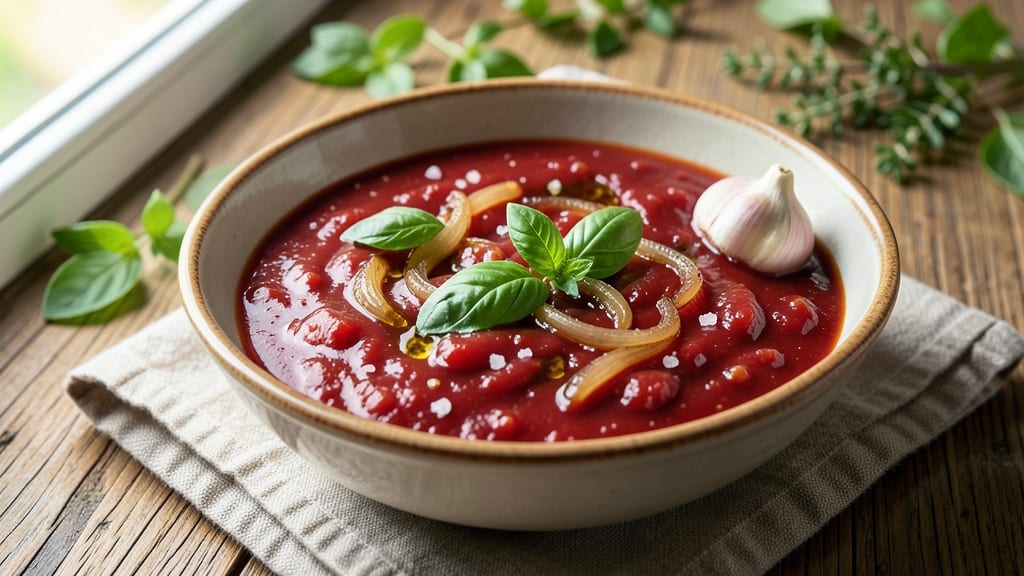
This all natural marinara sauce recipe transforms simple ingredients into a rich, slow-simmered sauce with deep umami flavor and perfect texture. The key lies in caramelizing onions and garlic before adding crushed tomatoes, creating layers of complexity that store-bought versions can't match.
I developed this recipe after years of testing—it's the one that finally earned me compliments from even the most critical Italian food lovers.
The process is straightforward but requires patience: onions and garlic cook until golden, tomatoes simmer until thickened, and fresh basil infuses the sauce at the end. This one-pot method delivers restaurant-quality results without requiring special equipment.
The sauce thickens beautifully on the stovetop, creating that perfect balance between smooth and slightly chunky textures.
What makes this sauce exceptional is its versatility—it elevates pasta dishes to new heights, serves as the perfect pizza base, or doubles as a vibrant dipping sauce. The natural sweetness of the tomatoes pairs beautifully with the savory depth of caramelized aromatics, while the fresh basil adds a bright finish.
Every batch tastes better the next day as flavors meld.
With just 8 simple ingredients and 45 minutes of hands-on time, you'll have a sauce that's far superior to anything from a jar. The best part? It keeps well in the refrigerator for up to a week or can be frozen for months, making it perfect for meal prep.
Let's create this foundational sauce that will become your kitchen staple.
Ingredients for all natural marinara sauce
Eight simple ingredients unlock restaurant-quality marinara magic in one pot.
| Ingredient | Amount | Notes |
|---|---|---|
| Extra-Virgin Olive Oil 🫒 | ½ cup | High-quality, fruity variety preferred |
| Yellow Onions 🧅 | 2 whole | Medium-sized, thinly sliced |
| Garlic Cloves 🧄 | 6 cloves | Fresh, peeled, minced finely |
| San Marzano Crushed Tomatoes 🍅 | 28 oz | Canned, no salt added |
| Fresh Basil Leaves 🌿 | ½ cup | Packed, stems removed |
| Diamond Crystal Kosher Salt 🧂 | 1 ½ tsp | Adjust to taste |
| Freshly Ground Black Pepper 🌶️ | ½ tsp | Coarsely ground |
| Dried Oregano 🌿 | 1 tsp | Italian or Mediterranean blend |
The San Marzano tomatoes are non-negotiable here—their natural sweetness and low acidity create that authentic Italian depth. Grab a can from Whole Foods or Trader Joe's for the best quality, or check the Italian section at your grocery store. Fresh garlic matters too: roasted cloves add a sweet caramelized note, but raw minced works perfectly fine. The extra-virgin olive oil should be fruity and peppery—none of that mild supermarket stuff. I always buy a large bottle of California extra-virgin from the bulk section at Costco for all my cooking.
No fresh basil? Dried works at one-third the amount, but trust me, fresh is worth the splurge. Running low on oregano? Thyme or marjoram can substitute, though the flavor profile shifts slightly. The crushed tomatoes can be swapped for whole peeled tomatoes (simply crush them by hand) if you're avoiding cans. For extra umami depth, add 1 tbsp tomato paste to the pot with the onions—it caramelizes beautifully alongside the garlic. If you're sensitive to acidity, reduce the salt slightly and add a pinch of sugar to balance the tomatoes.
This sauce tastes even better the next day as the flavors meld together. Store it in an airtight container in the fridge for up to 7 days, or freeze it in ice cube trays for easy portioning—just thaw and reheat. For meal prep, double the batch and freeze half; it's perfect for quick pasta nights later. The basil wilts fast, so add it at the very end and stir it in gently—no blending required. This sauce is your new kitchen MVP, so make extra while you're at it!
Why You'll Love This Recipe
- No-Chop Nightmare: I swear by this recipe because you can literally toss in pre-diced onions—no knife skills required. The San Marzano tomatoes handle all the heavy lifting while you sip wine and pretend you’re a chef.
- Garlic-Basil Magic: That first taste of the olive oil, garlic, and fresh basil simmering? It’s the kind of flavor that makes you pause mid-spoonful. Honestly, I’ll take this over store-bought any day—it’s bright, balanced, and actually tastes like summer.
- Pasta Party Starter: This sauce is my secret weapon for game nights, potlucks, or when my roommates suddenly show up unannounced. It freezes like a dream, so I batch it on Sundays and thaw it for weeknight dinners—no stress, just good food.
- Budget-Friendly Luxury: Extra-virgin olive oil and fresh basil might sound fancy, but a jar of San Marzano tomatoes stretches this sauce for weeks. Between us, I’ve fed a family of six for under $15 with this—leftovers? More like leftovers everyone fights over.
Step-by-step instructions for slow-simmered marinara sauce
Here's how to build deep, complex flavor from simple ingredients—no shortcuts, just pure technique.
Sauté Onions Until Translucent and Sweet
Heat the 0.5 cup extra-virgin olive oil in a heavy-bottomed saucepan over medium-low heat. Add the 2 whole yellow onions, sliced into even half-moons, and cook for 8-10 minutes until completely soft and translucent. Stir occasionally to prevent browning—you want them to caramelize gently, not burn.
This slow cooking transforms the onions' natural sugars into sweetness, forming the flavor foundation. If they start to color too quickly, reduce the heat slightly. You'll know they're ready when they're tender enough to pierce easily with a fork but still hold their shape.
Add Garlic and Cook Until Fragrant
Push the onions to one side of the pan and add the 6 cloves minced garlic to the empty space. Cook for 30-45 seconds until the garlic turns golden and releases its aromatic oils—this prevents bitterness. Stir constantly during this time to avoid burning.
Garlic burns faster than you think, so don't walk away. The moment it turns golden, immediately stir it into the onions. This brief cooking step develops the garlic's sweet, nutty notes rather than its harsh, medicinal flavor. If you smell something acrid, you've gone too far.
Incorporate Tomatoes and Seasonings
Pour in the 28 oz San Marzano crushed tomatoes, scraping up any browned bits from the bottom of the pan with a wooden spoon. Add the 1.5 tsp kosher salt, 0.5 tsp black pepper, and 1 tsp dried oregano, then stir to combine thoroughly. Bring the mixture to a gentle simmer over medium heat.
The San Marzano's natural sweetness balances the acidity perfectly, while the salt and pepper create an immediate umami punch. Let it simmer uncovered for 20 minutes, stirring occasionally to prevent skin formation. This initial simmer breaks down the tomatoes' texture, releasing their juices and building depth.
Simmer Low and Slow for Maximum Flavor
Reduce the heat to low and continue simmering for 45-60 minutes, stirring every 10-15 minutes to prevent sticking. The sauce should reduce slightly, becoming thicker and more concentrated. You're looking for a glossy, velvety texture with visible tomato pieces—this indicates proper development.
Patience is key here. The longer it simmers, the more complex the flavors become. If the sauce gets too thick, add 1-2 tablespoons of water to loosen it. Taste occasionally—this is when you'll notice the umami richness developing. The sauce should be balanced: sweet from the tomatoes, savory from the onions, and aromatic from the garlic.
Finish with Fresh Basil and Adjust Seasoning
Remove the pan from heat and stir in the 0.5 cup fresh basil leaves. Let the sauce sit for 5 minutes to allow the basil's oils to infuse. Taste and adjust seasoning if needed—you may need a touch more salt or pepper to balance the flavors after the basil's bright notes.
For the best results, serve immediately while the basil is still vibrant. If storing, let it cool completely before refrigerating in an airtight container for up to 5 days. The flavors continue to meld even after cooking, making this sauce taste even better the next day. This is where simple ingredients become extraordinary through technique.
Pro Tips For Making All Natural Marinara Sauce
- Sweat the Onions Slowly: I learned this the hard way—drowning onions in olive oil at high heat just turns them bitter. Instead, cook them over medium-low with a pinch of salt until they’re translucent and their edges start to caramelize (about 8-10 minutes). That deep, mellow flavor builds the sauce’s foundation.
- Crush Garlic with a Knife: Peeling and mincing garlic cloves is a pain, and pre-minced garlic has preservatives. Instead, smash 4-5 whole cloves with the flat side of your knife, then let them sit in the oil for 30 seconds before cooking. They’ll soften perfectly without burning, and the flavor stays bright—no bitter aftertaste.
- Simmer, Don’t Boil: After adding tomatoes, resist the urge to crank the heat. A gentle simmer (small bubbles, occasional stirs) prevents skin breakdown and keeps the sauce silky. I used to rush it, and the texture always turned grainy—now I let it bubble softly for 30-40 minutes, uncovered.
- Add Basil Late (But Do Add It): Fresh basil wilts and turns bitter if cooked too long. Tear a handful of leaves and stir them in only in the last 5 minutes. For extra depth, save a few leaves to blend in at the end—it’ll brighten the sauce without overpowering it. (Yes, even if you’re impatient like me.)
Perfect pairings for these flavors
Pasta Perfection
This marinara sauce transforms simple pasta dishes into restaurant-quality meals. Toss it with al dente spaghetti or rigatoni and finish with a sprinkle of grated Parmesan for a classic Italian experience.
For extra richness, stir in 2 tbsp butter at the end—it coats the noodles beautifully. I love serving this with freshly grilled chicken or crispy garlic bread on the side. 🍝
Pizza Base
Use this sauce as your pizza foundation for homemade pies that taste like they came from a Neapolitan trattoria. Spread a thin layer on your dough, then top with mozzarella cheese, fresh basil, and a drizzle of olive oil.
For a gourmet twist, add caramelized onions or sliced sun-dried tomatoes. Bake until the crust is golden and the cheese is bubbly. The sauce's natural sweetness balances the savory toppings perfectly.
Dipping Sauce
This marinara doubles as an incredible dipping sauce for garlic knots, mozzarella sticks, or vegetable crudités. Serve it warm in a small bowl with a sprinkle of red pepper flakes for a spicy kick.
It's also perfect for fried calamari or chicken tenders. The sauce's balanced flavors make it versatile enough for any appetizer spread. Trust me, your guests will ask for the recipe!
Meatball Companion
Pair this sauce with homemade beef or turkey meatballs for a comforting weeknight dinner. Simmer the meatballs in the sauce for 15-20 minutes to let them absorb the flavors. Serve over mashed potatoes or with crusty bread for soaking up every last drop.
The sauce's depth enhances the meatballs' savory notes, creating a meal that feels like a hug in a bowl. 💛
Breakfast Twist
Yes, marinara sauce can be breakfast! Use it as a topping for fried eggs or as a base for a tomato and cheese omelet. The bright acidity cuts through the richness of the eggs beautifully.
For a heartier option, spread it on toasted baguette slices with a fried egg on top—it's like an Italian-style bruschetta with extra depth. This unexpected use keeps the sauce exciting all week long.
Freezer-Friendly
The sauce's versatility extends to your freezer. Portion it into ice cube trays for easy single-serving use later. Thaw overnight in the fridge and reheat gently on the stovetop. Frozen marinara keeps its flavor for up to 3 months, making it perfect for meal prep.
Label containers with the date and intended use—whether it's pasta, pizza, or dipping—to keep track of your frozen stash. 🧊
Nutrition facts
Frequently asked questions
Can I make this marinara sauce without San Marzano tomatoes?
Yes, but expect a slightly different flavor profile. Use high-quality crushed tomatoes with low acidity like Muir Glen or Century Brand. For extra depth, add 1 tbsp tomato paste to the onions while cooking. The sauce will still be delicious, though the natural sweetness won't be as pronounced.
How do I adjust the consistency for different uses?
For pasta or pizza, let it simmer longer until thickened. For a smoother sauce, blend half the batch after simmering. If too thick, stir in 1-2 tablespoons of water or broth. For dipping sauce, keep it slightly looser—about 1 cup of sauce should coat 12 oz of pasta.
Can I make this sauce in a slow cooker?
Sauté the onions and garlic first, then transfer everything to the slow cooker. Cook on low for 6-8 hours or high for 3-4 hours. The low-and-slow method enhances the flavors beautifully. Just add the fresh basil at the very end and stir it in before serving.
Why does my homemade marinara taste different from store-bought?
Store-bought versions often contain added sugar, salt, and preservatives to standardize flavor. This recipe relies on natural sweetness from caramelized onions and garlic, plus fresh basil for brightness. The slow simmer develops deeper umami flavors that jarred sauces can't replicate. Patience is key—rushing the process results in a thinner, less complex sauce.
Can I use this sauce for vegetarian dishes only?
This sauce is naturally vegetarian, but its versatility extends beyond plant-based meals. It pairs beautifully with grilled chicken, shrimp, or meatballs. The rich tomato base complements proteins perfectly while keeping the dish light. For extra umami, add a splash of fish sauce or soy sauce when cooking with meat.