
Sauces & Condiments
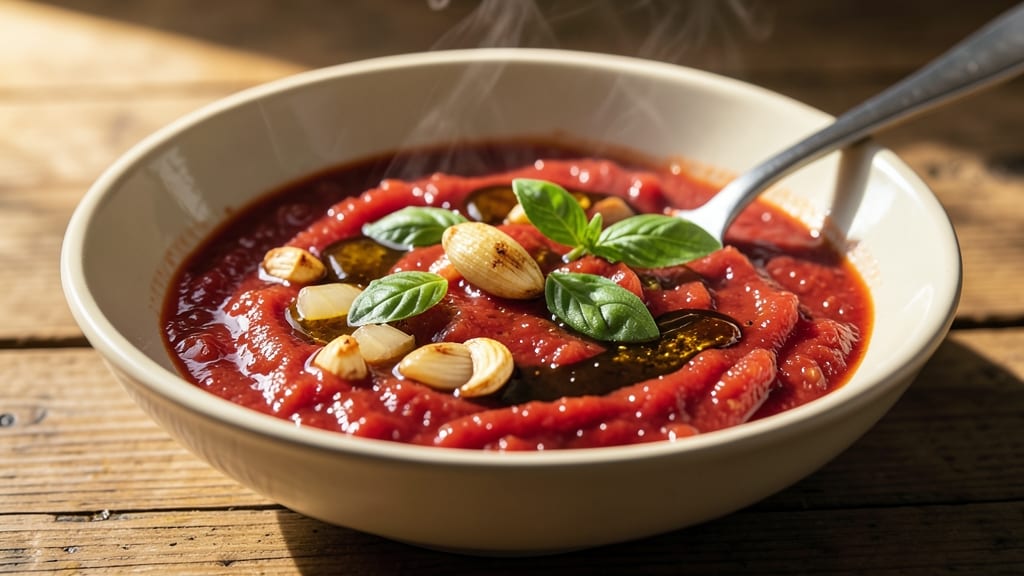
Anne Burrell's marinara sauce recipe transforms simple ingredients into a rich, slow-simmered sauce with deep umami and fresh basil brightness. The secret lies in caramelizing garlic and onions before adding crushed tomatoes, creating layers of flavor that build as it simmers for 45 minutes. This isn't just a sauce—it's the foundation for restaurant-quality pasta, pizza, or dipping that tastes like it came from a bustling Italian kitchen.
What sets this marinara apart is the balance of acidity from red wine vinegar and depth from a touch of anchovy paste—subtle but essential for that professional touch.
The slow simmer allows flavors to meld without breaking down the tomatoes, while fresh basil added at the end keeps the sauce vibrant. No heavy cream or sugar here; just pure, concentrated tomato flavor with a touch of sweetness from natural caramelization.
By the time you're done, you'll have a velvety sauce with just the right consistency—thick enough to coat pasta perfectly but still silky enough to drizzle. The aroma alone will have everyone asking what's for dinner.
This sauce keeps beautifully in the fridge for up to 5 days or freezes for months, making it the ultimate pantry staple for busy weeknights.
The best part? It's incredibly versatile. Use it as a pasta sauce, pizza topping, or even a dipping sauce for crusty bread. The rich umami flavor pairs beautifully with grilled meats, roasted vegetables, or even as a marinade.
Let's get started on creating this crowd-pleasing sauce that will become your new go-to recipe.
Ingredients for anne burrell marinara sauce
Nine simple ingredients transform into a restaurant-quality marinara with deep umami and fresh basil brightness.
| Ingredient | Amount | Notes |
|---|---|---|
| Extra-Virgin Olive Oil 🫒 | ½ cup | High-quality, fruity variety preferred |
| Yellow Onion 🧅 | 1 whole | Medium size, finely diced |
| Garlic Cloves 🧄 | 6 cloves | Fresh, peeled and minced |
| Canned Crushed Tomatoes 🍅 | 28 oz | San Marzano preferred for sweetness |
| Red Wine Vinegar 🍷 | 1 tbsp | For acidity balance |
| Anchovy Paste 🐟 | 1 tbsp | Subtle umami depth |
| Dried Oregano 🌿 | 1 tsp | Italian variety preferred |
| Ground Black Pepper 🌶️ | ½ tsp | Freshly cracked |
| Fresh Basil Leaves 🌿 | ½ cup | Packed, torn by hand |
| Sea Salt 🧂 | 1 ½ tsp | Diamond Crystal preferred |
The tomatoes make or break this sauce. San Marzano is the gold standard—sweeter, meatier, and less acidic than regular canned tomatoes. Look for the whole peeled tomatoes at Italian markets or the 28 oz canned crushed in the regular grocery store. If you can't find San Marzano, Mueller's is a solid backup. Fresh garlic and onions are non-negotiable here—they form the flavor base through caramelization. Whole Food's sells pre-minced garlic in jars, but fresh is always better if you've got the time.
No anchovy paste? Red wine or balsamic vinegar at double the amount adds depth, though you'll lose that subtle umami punch. Substituting dried oregano? Use half the amount of fresh oregano if you can find it. The basil is added at the end—fresh is essential for that vibrant brightness. No fresh basil? Dried oregano at one-third the amount won't replicate it, but it's better than nothing. For the vinegar, red wine vinegar is ideal, but apple cider vinegar works in a pinch—just reduce to 1 teaspoon to avoid over-acidifying.
This sauce develops flavor over time, so make it a day ahead if possible. Store in an airtight container in the fridge for up to 5 days—the flavors meld beautifully overnight. For longer storage, freeze in ice cube trays for perfect portions. Reheat gently on the stove, stirring frequently to prevent scorching. The sauce thickens as it cools, so add a splash of water or broth if it becomes too stiff after reheating.
Why You'll Love This Recipe
- No Chopping Needed: I swear by this—just dice one onion and mince a few garlic cloves. That’s it. The crushed tomatoes handle the rest, so you’re not stuck peeling or seeding anything. Honestly, my lazy Sundays thank me every time.
- Vinegar-Packed Punch: That splash of red wine vinegar? It’s the secret weapon. It brightens the tomatoes without overpowering them, and the olive oil keeps it silky smooth. One taste and you’ll understand why this isn’t your basic jarred sauce.
- Pasta Party Starter: This sauce doubles as a marinade for grilled chicken or a quick glaze for roasted veggies. I’ve even used it in place of BBQ sauce on burgers—works like a charm. Between us, it’s the one sauce that makes me feel like I’m feeding a crowd without the stress.
- Fridge-Friendly Goldmine: Make a big batch and store it for up to a week. The flavors deepen over time, and it’s cheaper than buying pre-made. My freezer’s always stocked with this because it turns a $1 can of tomatoes into something restaurant-worthy. (Yes, even on a Tuesday night.)
Step-by-step instructions for Anne Burrell's slow-simmered marinara sauce
Master this technique and you'll achieve a sauce that balances deep umami with bright, fresh basil notes.
Develop the Flavor Base with Olive Oil and Onion
Heat the 0.5 cup extra-virgin olive oil in a heavy-bottomed saucepan over medium-low heat. Add the 1 whole yellow onion, finely diced, and cook for 8-10 minutes until completely softened and translucent. The onions should release their natural sweetness without browning—this is your foundation.
I like to stir occasionally with a wooden spoon, breaking up any large pieces as they cook. The key here is patience—rushing this step will make your sauce taste raw. When the onions are fully tender and the oil is infused with their flavor, you're ready for the next layer of depth.
Build Umami with Anchovy and Garlic
Add the 1 tablespoon anchovy paste to the pan and stir until fully dissolved into the oil. This step might seem unusual, but the anchovies provide that essential umami backbone that makes this sauce stand out. Let it cook for 1 minute until the anchovies are completely incorporated.
Next, add the 6 cloves minced garlic and cook for 30 seconds—just until fragrant. Garlic burns quickly, so don't walk away. You want that sweet, aromatic punch without any bitterness. The anchovy-garlic combination creates a complex flavor that will develop beautifully as we simmer.
Simmer the Tomatoes for Depth
Pour in the 28 oz canned crushed tomatoes, stirring to combine with the oil mixture. Add the 1 tablespoon red wine vinegar and 1.5 teaspoons sea salt. Bring to a gentle simmer over medium heat, then reduce to low heat and let it cook uncovered for 45-60 minutes. This slow simmering allows the flavors to meld and develop.
I like to stir occasionally, scraping up any browned bits from the bottom of the pan—those are packed with flavor. You'll notice the sauce gradually thickens as it reduces. The tomatoes should break down into a smooth, velvety consistency with a rich, concentrated flavor. The sauce is ready when it coats the back of a spoon.
Finish with Herbs and Seasoning
Remove the sauce from heat and stir in the 0.5 cup torn fresh basil leaves and 0.5 teaspoon ground black pepper. The basil adds that bright, fresh finish that makes this sauce special. Let the sauce sit off heat for 5 minutes to allow the flavors to fully integrate.
Taste and adjust seasoning if needed—this is where you can fine-tune the balance between sweetness, acidity, and saltiness. The sauce should be vibrant, with bright tomato flavor and just a hint of vinegar's tang. If it needs more depth, a pinch of salt or a splash of vinegar can help achieve perfect balance.
Rest and Serve
Let the sauce rest at room temperature for 10-15 minutes before serving. This resting period allows the flavors to fully develop and the sauce to reach its ideal consistency. The longer it rests, the more complex the flavors become.
This marinara sauce pairs beautifully with pasta, grilled meats, or as a dipping sauce. The slow simmering process creates a sauce that's rich in flavor but still light enough to let the other components shine. Serve immediately for the best experience—this sauce doesn't keep well once made.
Pro Tips For Making Anne Burrell Marinara Sauce
- Sweat the Onion First: The Anne Burrell recipe calls for onions, but I learned this the hard way—don’t just chop and toss them in. Take 5 minutes to sweat them over medium-low heat until they’re translucent and just starting to soften, not brown. That extra step keeps the sauce from tasting raw and sharp later on.
- Crush Garlic Like a Pro: Peeling and mincing garlic is tedious, but Anne Burrell’s sauce demands fresh flavor. Instead of chopping, smash the cloves with the flat side of your knife first—it releases more aroma. Then, finely mince it so it blends into the sauce smoothly. (Yes, even if you’re impatient like me.)
- Simmer Slow or Burn It: This sauce isn’t a race. Once the tomatoes and vinegar come in, drop the heat to low and let it bubble gently for at least 20 minutes. I used to rush it, and the result was a thin, bitter mess. Low and slow is the only way to build real depth.
- Use Vinegar Sparingly: Red wine vinegar brightens the sauce, but too much turns it sour. Start with just 1 tablespoon—you can always add more later. Taste as you go, and remember: you can’t take it out. (I’ve tried.) If it’s too sharp, a pinch of sugar or a splash of water helps balance it.
Storing and reheating this recipe
Fridge Storage Secrets
Store your marinara in an airtight glass container with a lid—I love using Pyrex with snap-on seals. Let it cool completely before refrigerating to prevent condensation that can dilute flavors.
The sauce keeps its peak quality for up to 5 days in the fridge, with flavors actually deepening overnight as the spices meld. 🧊
For portion control, divide into smaller containers (like 8-ounce jars) so you can reheat just what you need. The sauce will thicken slightly when refrigerated, so add 1-2 tablespoons of water or broth when reheating if it becomes too stiff.
Freezing for Future Meals
Freeze marinara in ice cube trays for perfect single-serving portions—just pop out what you need and toss into pasta or pizza. For larger batches, use quart-sized freezer bags, leaving 1-inch headspace for expansion. Label with the date—this sauce stays delicious for up to 3 months in the freezer. 🥶
When ready to use frozen sauce, thaw overnight in the fridge, then reheat gently on the stove. Never microwave directly from frozen—this can create hot spots and break down the sauce's texture. Stir occasionally over low heat for 10-15 minutes until completely thawed and warmed through.
Reheating Like a Pro
Always reheat marinara on the stovetop over low-medium heat to prevent scorching. Use a heavy-bottomed saucepan to distribute heat evenly—I prefer Le Creuset for its even heating. Stir frequently and add 1-2 tablespoons of water or pasta water if the sauce becomes too thick.
The ideal reheated consistency should be smooth and velvety, not gluey. 🔥
For extra flavor after reheating, finish with a sprinkle of fresh basil or a pinch of red pepper flakes. The sauce may separate slightly when reheated—just stir vigorously to recombine. If it tastes flat, a splash of red wine vinegar or lemon juice can restore brightness.
Make-Ahead Magic
This sauce is perfect for meal prep—make a big batch on Sundays and store portions for the week. I like to freeze half and refrigerate the other half for immediate use. The slow-simmered flavors continue developing even after reheating, making it taste even better the next day. 💫
For best results, don't reheat more than once—each reheating can degrade the sauce's texture. If you have leftovers, store them in the fridge for up to 3 days before freezing any remaining portions. The sauce's acidity helps preserve its quality longer than many other homemade sauces.
Nutrition facts
Frequently asked questions
Why does Anne Burrell's marinara use anchovy paste?
The anchovy paste adds that essential umami depth that makes this sauce stand out from basic tomato sauces. Just 1 tablespoon dissolves completely into the oil, creating a subtle but complex flavor that balances the bright acidity of the tomatoes. Without it, the sauce would taste flat—it's the secret to that restaurant-quality richness.
Can I make this sauce without fresh basil?
Yes, but the flavor will be different. Fresh basil adds that vibrant brightness that makes this sauce special. For a substitute, use 1 teaspoon dried basil (not oregano) or 1 tablespoon lemon zest to mimic some of that freshness. The sauce will still taste great, but it won't have that same bright finish.
How do I adjust the thickness of this marinara?
If the sauce is too thick after simmering, stir in 1-2 tablespoons of water or broth while reheating. For a thicker sauce, simmer uncovered for 10-15 extra minutes to reduce it further. The ideal consistency should coat the back of a spoon but still be silky, not gluey.
What's the best way to use leftover marinara?
This versatile sauce works perfectly on pasta, pizza, or as a dipping sauce for grilled meats. For extra flavor, toss with cooked penne or spaghetti, top your homemade pizza, or use it as a marinade for chicken or shrimp. The rich umami flavor makes it great for anything that needs a tomato-based boost.
Can I make this sauce in a slow cooker?
Follow the same steps for the onion and garlic, then transfer everything to a 3-4 quart slow cooker on low for 4-6 hours. The slow cooker will give you that same deep flavor development without watching the stove. Just add the basil at the very end before serving.