
Sauces & Condiments
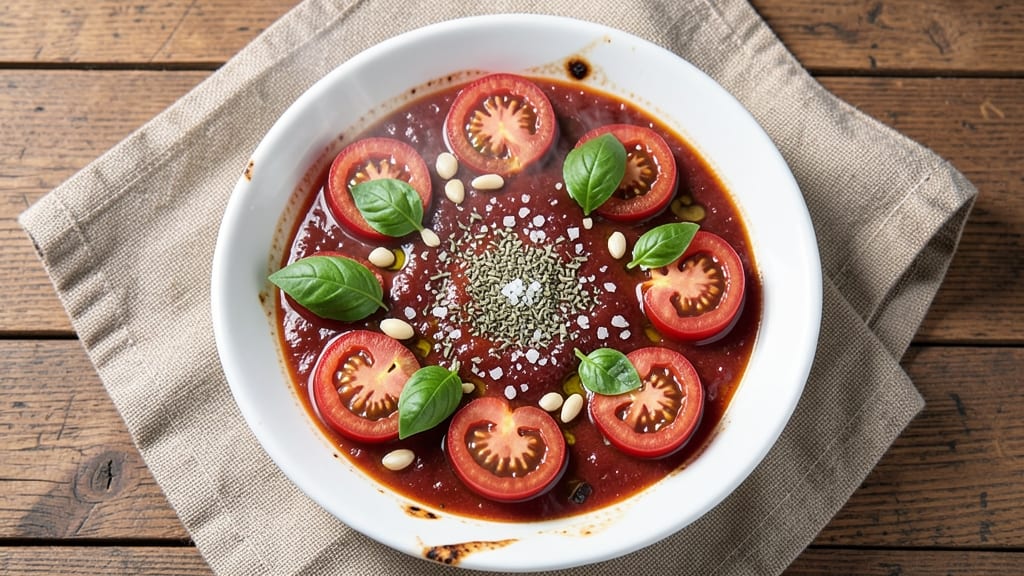
This artisan pizza sauce recipe transforms simple ingredients into a rich, umami-packed base that elevates every slice. The secret lies in roasting tomatoes to deepen their natural sweetness while building layers of flavor through slow simmering and fresh herbs.
I developed this sauce after years of tasting authentic Neapolitan versions, and it delivers that perfect balance of tangy, sweet, and savory notes without any shortcuts.
What sets this sauce apart is the combination of roasted tomatoes for depth, high-quality olive oil for richness, and a blend of fresh basil and oregano for that classic Italian aroma. The texture is intentionally chunky—just enough tomato pieces to add visual appeal and texture contrast.
Unlike store-bought sauces, this version builds flavor over time, rewarding you with a sauce that tastes even better the next day.
Creating this sauce takes about 30 minutes of active time, but the flavor development continues as it simmers. The result is a vibrant red sauce with complex layers that clings beautifully to pizza dough, creating that perfect balance of moisture and flavor in every bite.
Whether you're making Neapolitan-style pizza or a classic New York slice, this sauce will take your pizza to the next level.
Use it immediately on fresh pizza or store it in the refrigerator for up to 5 days, where the flavors continue to meld. The sauce also freezes beautifully, making it perfect for meal prep. Here's how to make it—your pizza nights will never be the same.
Ingredients for artisan pizza sauce
Roasted tomatoes, fresh herbs, and slow-simmered richness—this sauce is pure umami magic.
| Ingredient | Amount | Notes |
|---|---|---|
| Fresh Roma Tomatoes 🍅 | 2 lb | Halved, seeds removed |
| Extra-Virgin Olive Oil 🫒 | ½ cup | High-quality, fruity kind |
| Garlic Cloves 🧄 | 6 cloves | Peeled, roughly chopped |
| Fresh Basil Leaves 🌿 | ½ cup | Packed, stems removed |
| Dried Oregano 🍃 | 1 tbsp | Italian or Mediterranean blend |
| Sea Salt 🧂 | 1 ½ tsp | Kosher or fine grain |
| Black Pepper 🌶️ | ½ tsp | Freshly ground preferred |
| Balsamic Vinegar 🍷 | 1 tbsp | Aged, for depth |
| Sugar 🍬 | 1 tsp | Balances acidity |
| Red Wine 🍷 | ¼ cup | Dry, bold variety |
The tomatoes are the heart of this sauce, and Roma tomatoes are your best bet—they're meaty and sweet. Trader Joe's or local farmers markets usually have the freshest, but any ripe vine-ripened tomatoes work. Roasting them caramelizes the sugars and deepens their flavor, so don't skip this step. For the olive oil, California extra-virgin like Corto or Bertolli adds that fruity richness that cheap oils can't match. The garlic? Freshly peeled and chopped right before roasting to preserve its potency. If you're short on time, you can sauté it separately after roasting, but roasting it with the tomatoes builds even more flavor.
No fresh basil? Dried works at half the amount, but it won't have that bright, fresh aroma. The oregano is non-negotiable for that classic Italian flavor—Italian or Mediterranean blends are best, but regular dried oregano in a pinch. Running out of red wine? Substitute with tomato paste mixed with a splash of balsamic vinegar. The sugar balances the acidity from the tomatoes and vinegar, so don't skip it—even if your tomatoes are naturally sweet. For a smokier flavor, add a dash of smoked paprika or a pinch of red pepper flakes. The sauce thickens as it cooks, so if it feels too thin, simmer uncovered for another 5-10 minutes.
This sauce tastes even better the next day as the flavors meld, so make a big batch. Store it in an airtight container in the fridge for up to 5 days, where it continues to deepen in flavor. For longer storage, freeze it in ice cube trays—perfect for single-use portions. When reheating, warm it gently on the stove or microwave it until just hot. The texture should be chunky but still spreadable—if it's too thick, thin it with a splash of water or olive oil. Trust me, you'll want to make extra—it disappears fast!
Why You'll Love This Recipe
- Five-Ingredient Magic: I swear by this—just tomatoes, olive oil, garlic, basil, and oregano. That’s it. No blender, no fancy gadgets, just a knife and a pot. Honestly, it’s the kind of recipe that makes me feel like I’ve actually cooked something, even when I’m exhausted.
- Garlic-Kissed Depth: The slow simmer lets the garlic melt into the tomatoes until it’s sweet, not sharp. That first bite? Pure satisfaction—bright, herby, with a richness from the olive oil that makes jarred sauce feel like a distant memory.
- Weeknight & Weekend Hero: Use it on pizza night, toss it with grilled chicken for a quick dinner, or drizzle it over roasted veggies. I keep a jar in the fridge for lazy Sundays and last-minute takeout nights. It’s my go-to for anything that needs a little oomph.
- Budget-Friendly Luxury: Fresh tomatoes and basil cost more than canned, sure, but a batch stretches for weeks—freeze extras for when you’re broke or just don’t feel like shopping. Plus, it tastes like a $50 restaurant sauce, not a can from the discount bin. (Yes, even on a Tuesday night.)
Step-by-step instructions for artisan pizza sauce
Here's how to craft a sauce bursting with roasted tomato flavor and deep umami notes.
Roast the Tomatoes Until Caramelized
Preheat your oven to 425°F and line a baking sheet with parchment paper. Arrange the halved 2 lb fresh Roma tomatoes (seeds removed) cut-side up on the sheet, leaving ½ inch between each half. Drizzle with 2 tablespoons of the 0.5 cup extra-virgin olive oil and sprinkle with ½ teaspoon of the 1.5 teaspoons sea salt.
Roast for 25-30 minutes until the edges are deeply caramelized and wrinkled. You'll see the skin darken to a rich amber color and the flesh soften dramatically. This roasting step develops concentrated sweetness and depth that canned tomatoes can't match. Real talk: don't skip this—it's what transforms ordinary sauce into something extraordinary.
Build the Sauce Base with Aromatics
Transfer the roasted tomatoes to a food processor or blender. Add the 6 peeled garlic cloves, 0.5 cup packed fresh basil leaves, 1 tablespoon dried oregano, 0.5 teaspoon black pepper, and remaining 0.5 cup extra-virgin olive oil. Pulse until completely smooth, scraping down the sides as needed. The sauce should be vibrant red with a velvety texture.
Here's the thing—don't rush the blending. You want every molecule of garlic and basil incorporated for maximum flavor impact. If the mixture seems too thick, add 1-2 tablespoons water to help it blend smoothly. The sauce should coat the back of a spoon with a rich, almost syrupy consistency.
Simmer and Develop Complex Flavors
Pour the blended sauce into a medium saucepan and place over medium-low heat. Add the 0.25 cup red wine and 1 tablespoon balsamic vinegar, stirring constantly to prevent scorching. Let it simmer gently for 15-20 minutes, stirring occasionally, until reduced by about 25%. The sauce should thicken slightly and develop a glossy sheen.
Taste and adjust seasoning—this is where you fine-tune the balance. Add the 1 teaspoon sugar if you want to enhance the natural sweetness of the tomatoes. The wine and vinegar should mellow out, leaving behind their bright acidity and adding layers of complexity. You're aiming for a sauce that's sweet, tangy, and just slightly acidic—like a perfect bite of a Neapolitan pizza.
Finish and Rest for Maximum Flavor
Remove the sauce from heat and let it cool to room temperature. This resting period allows the flavors to meld completely—don't skip it! Cover the saucepan with a lid and let it sit for at least 30 minutes (or up to 2 hours in the refrigerator). The sauce will thicken further as it cools, developing even more depth.
Before using, give it one final taste. If it needs more brightness, add a pinch of salt. If it's too thick, thin with a splash of water or pasta water. This sauce should be vibrant, aromatic, and ready to elevate any pizza crust. Real talk: this isn't just sauce—it's the flavor foundation for your entire pie, so treat it like the star it is.
Pro Tips For Making Artisan Pizza Sauce
- Char the Tomatoes First: I learned this the hard way—skipping the quick char changes everything. Heat a dry skillet over high flame, cut tomatoes in half, and sear cut-side down for 2-3 minutes until blackened spots appear. This concentrates flavor and softens the flesh for smoother blending.
- Use Minced Garlic, Not Chopped: Whole cloves burn before they release flavor, and chopped pieces linger awkwardly. Finely mince 3-4 cloves (about 1 tablespoon) and cook them in olive oil for 30 seconds until fragrant but not browned—this ensures even distribution without bitterness.
- Salt the Cooked Sauce Aggressively: Taste before adding basil or oregano—you’ll need more salt than you think. After simmering 15-20 minutes, add 1½ teaspoons of flaky sea salt (or 1 teaspoon table salt) and let it sit for 10 minutes. The sauce will taste bland at first, but trust the process.
- Strain for Smoothness (Or Keep It Rustic): For a silky finish, strain through a fine-mesh sieve after simmering—this removes skins and seeds for a cleaner texture. Want that classic Neapolitan look? Skip straining and blend until just smooth, leaving tiny tomato specks for authenticity.
Perfect pairings for artisan pizza sauce
Classic Pizza Pairings
This sauce plays beautifully with traditional toppings like fresh mozzarella, crispy pepperoni, and sliced bell peppers. The chunky texture contrasts perfectly with melty cheese, while the umami depth balances salty cured meats.
I always keep a batch of shredded mozzarella (about 1 cup) and sliced mushrooms (about ½ cup) on hand for quick assembly. The sauce’s bright acidity cuts through rich toppings like sausage or bacon, making every bite harmonious. 🍕
Beverage Matchups
A crisp Pinot Grigio from Italy complements the sauce’s herbal notes and acidity beautifully. For beer lovers, a Peroni or Birra del Borgo lager cleanses the palate without overpowering.
I also love pairing this sauce with a sparkling water topped with a splash of San Pellegrino and a twist of lemon—it’s refreshing yet sophisticated. Avoid heavy reds like Chianti; they’ll clash with the sauce’s brightness.
Cheese Elevations
Swap out mozzarella for burrata or ricotta salata to add creamy richness. The sauce’s acidity makes pecorino romano or parmigiano-reggiano shine even more. For a vegan option, use cashew ricotta or nutritional yeast to mimic the cheesy pull.
I drizzle extra-virgin olive oil (about 1 tbsp) over the sauce right before baking to enhance its depth. 🧀
Global Twists
Add umeboshi plum paste (about 1 tsp) for a Japanese-inspired twist, or mix in gochujang (about 1 tbsp) for a Korean fusion. The sauce also works brilliantly with grilled halloumi and roasted eggplant for a Mediterranean-inspired pizza.
For a smoky kick, stir in 1 tsp smoked paprika before simmering. These variations keep the sauce exciting while staying true to its umami roots. 🌍
Side Dish Synergy
Serve with a garlic bread drizzled with the same olive oil used in the sauce. A simple arugula salad with lemon vinaigrette balances the richness, while roasted zucchini adds freshness.
I also love pairing it with olive tapenade on crusty bread—it’s a match made in flavor heaven. The sauce’s versatility makes it perfect for any pizza night spread. 🥗
Sweet Contrasts
Finish your pizza with a drizzle of honey (about 1 tsp) or balsamic glaze to balance the sauce’s acidity. Fresh figs or peaches add a surprising sweetness that complements the umami.
For a dessert twist, use the sauce as a base for a tomato-basil bruschetta with burrata—it’s a crowd-pleaser that surprises everyone. 🍯
Nutrition facts
Frequently asked questions
Can I make this sauce without fresh tomatoes?
Yes, but the flavor won't be as vibrant. Use 2 cups high-quality canned San Marzano tomatoes (crushed or chopped) and roast them in a saucepan with 1 tbsp olive oil for 10 minutes to concentrate their flavor. Skip the oven step—simmering achieves similar caramelization. The sauce will still taste great but lack the depth of fresh, roasted tomatoes.
How do I adjust the thickness of the sauce?
If the sauce is too thick after simmering, thin it with 1-2 tablespoons water or pasta water while warm. For a thicker texture, simmer uncovered for 5-10 extra minutes to reduce it further. The ideal consistency should coat the back of a spoon but still spread easily—like thick paint. Always taste as you go!
Can I use this sauce for other dishes besides pizza?
This sauce is perfect for bruschetta, pasta, or as a dipping sauce for garlic bread. For pasta, reduce the sauce slightly longer to create a glossy coating. Drizzle it over grilled meats or roasted vegetables for instant umami depth. The wine and balsamic notes make it especially versatile for rich dishes.
Why does my sauce taste bitter after simmering?
Bitter flavors often come from overcooking or using too much garlic/basil. To fix it, add ½ teaspoon sugar or 1 teaspoon honey to balance the bitterness. For prevention, simmer at medium-low heat and never let it boil vigorously. If the bitterness persists, stir in a pinch of salt or a splash of lemon juice to brighten the sauce.
How can I make this sauce spicier?
Add ½ teaspoon red pepper flakes during the simmering step or stir in 1 teaspoon hot sauce at the end. For a smoky kick, include ½ teaspoon smoked paprika with the other spices. If you love heat, try 1-2 dashes of cayenne pepper—just