
Sauces & Condiments
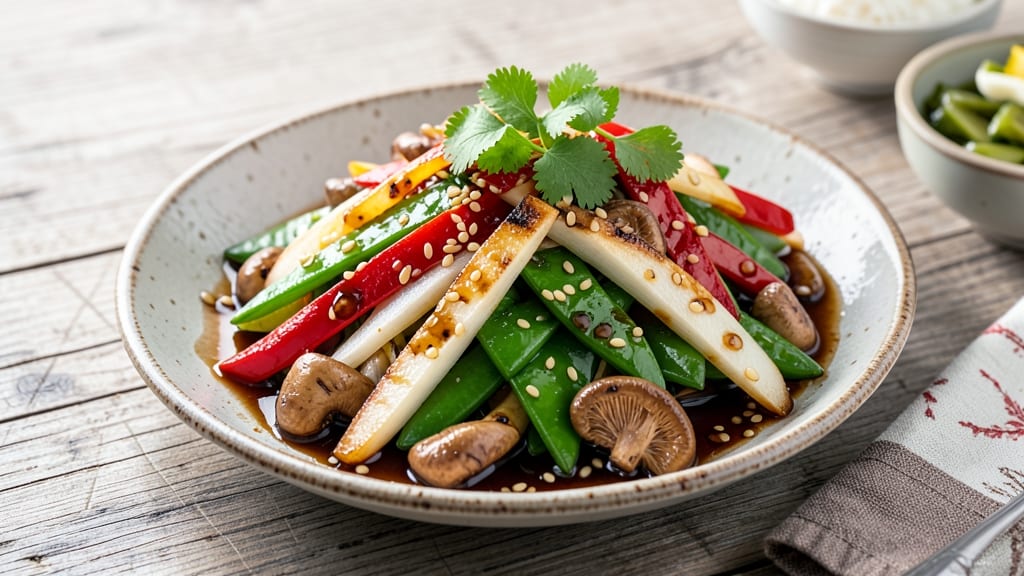
This Asian vegetable sauce recipe transforms simple stir-fry vegetables into a flavor explosion with just five ingredients and 10 minutes of active time. The secret lies in balancing salty soy sauce, nutty sesame oil, and fresh ginger for that signature umami depth that clings to every vegetable.
I developed this sauce after realizing most store-bought versions lack the bright, layered complexity of homemade—so I simplified the process without sacrificing flavor.
The foundation is a quick-simmered base of soy sauce, garlic, and ginger, which builds flavor instantly. A splash of rice vinegar brightens the sauce while sesame oil adds richness that elevates even the most basic vegetables.
What makes this sauce special is its versatility—it works equally well as a stir-fry base, roasted vegetable drizzle, or even a quick marinade for tofu or chicken.
What you’ll end up with is a glossy, aromatic sauce that coats vegetables perfectly, delivering a perfect balance of savory, slightly sweet, and tangy notes. The sauce thickens slightly as it cools, making it ideal for meal prep—just stir before using.
It keeps in the fridge for up to a week, so you can make a big batch and use it all week.
Pair this sauce with broccoli, bell peppers, snap peas, or even roasted Brussels sprouts for a meal that’s quick, healthy, and packed with restaurant-quality flavor. The best part? It’s beginner-friendly—no complicated techniques, just a few ingredients and a little patience. Let’s make this sauce!
Ingredients for asian sauce for vegetables
Five ingredients transform stir-fry veggies into restaurant-quality flavor in minutes.
| Ingredient | Amount | Notes |
|---|---|---|
| Low-Sodium Soy Sauce 🥢 | ½ cup | Kikkoman preferred for depth |
| Toasted Sesame Oil 🫒 | 1 ½ tbsp | Not cooking oil—nutty flavor |
| Fresh Ginger 🧄 | 1 tbsp | Finely grated, no zest |
| Rice Vinegar 🍶 | 2 tbsp | White or seasoned variety |
| Garlic Cloves 🧄 | 2 cloves | Minced, not powdered |
| Honey 🍯 | 1 tbsp | Or maple syrup for vegan |
| Vegetable Oil 🫒 | 1 tbsp | For simmering base |
| Diamond Crystal Kosher Salt 🧂 | ¼ tsp | Adjust to taste |
| Black Pepper 🌶️ | ⅛ tsp | Freshly cracked |
| Sesame Seeds 🌾 | 1 tsp | Toasted for garnish |
The soy sauce is your flavor anchor—Kikkoman has the perfect balance of salt and umami, but any good-quality brand works. Fresh ginger and garlic are non-negotiable here; pre-minced jars lack the punch of freshly grated or minced. Toasted sesame oil is different from regular—it's nutty and aromatic, not bland. Grab the small bottle from the Asian aisle if you're unsure. For the honey, I always use local raw honey, but maple syrup works perfectly if you're avoiding it. The vinegar should be rice vinegar, not apple cider or balsamic—it needs that clean, bright acidity.
No sesame oil? Toasted peanut oil adds a similar richness, though the flavor will differ slightly. Substituting soy sauce? Coconut aminos work in a pinch but taste milder. Fresh ginger too strong? Powdered ginger at half the amount gets you close, but you'll lose that bright zing. The honey can be swapped for maple syrup or even a touch of brown sugar—just reduce the vinegar slightly to balance sweetness. Want more depth? Add a dash of fish sauce if you're not vegetarian, or mushroom powder for umami without meat.
This sauce keeps for up to 1 week in the fridge, but it actually improves as it sits—flavors meld beautifully. I like to make a big batch and store it in small jars so I can grab one whenever stir-fry cravings hit. If it thickens too much, just add a splash of water or vinegar to loosen it up. The toasted sesame seeds are optional but add that perfect finishing crunch. Freeze for up to 3 months if you want to prep ahead—just thaw in the fridge overnight.
Why You'll Love This Recipe
- Five-Ingredient Magic: I swear by this combo—ginger and garlic sizzling in sesame oil while I chop veggies. No fancy techniques, just raw flavor popping in a pan.
- Umami Bomb: That toasted sesame oil hitting hot veggies? Pure satisfaction. The soy and vinegar balance makes every bite taste like a tiny flavor explosion.
- Weeknight Workhorse: Toss it with stir-fried greens, noodles, or even cold rice—it’s my go-to when I’m too tired to plan. (Yes, even on a Tuesday night.)
- Leftovers That Don’t Suck: The sauce actually improves overnight. Reheat with a splash of water, and it’s like making fresh sauce—minus the effort. My lazy Sunday secret.
Step-by-step instructions for Asian vegetable sauce
This umami-packed sauce comes together faster than you can say "stir-fry."
Bloom the Aromatics in Vegetable Oil
Heat the 1 tablespoon vegetable oil in a small saucepan over medium heat until shimmering but not smoking. Add the 2 cloves minced garlic and 1 tablespoon finely grated fresh ginger—you'll know they're ready when the garlic turns golden and the ginger releases its bright aroma, about 30 seconds. This step builds the flavor foundation, so don't rush it.
Here's the thing—if the garlic starts to brown too quickly, reduce the heat to medium-low. You want color without burning, which would make the sauce bitter. The oil should be hot enough to sizzle gently but not so hot that it smokes. This is where most home cooks mess up, so watch closely.
Combine Wet Ingredients for the Sauce Base
Immediately pour in the 0.5 cup low-sodium soy sauce and 2 tablespoons rice vinegar. Stir continuously for 1 minute until the mixture begins to simmer gently. The vinegar will make the sauce bubble slightly, and you'll see the soy sauce start to reduce and thicken.
Next, add the 1 tablespoon honey and 1.5 tablespoons toasted sesame oil. Stir again for 30 seconds until the honey dissolves completely. The sauce should now have a glossy sheen and a balanced sweet-savory aroma. If you're using maple syrup instead of honey, the sauce will have a slightly deeper caramel note—both work beautifully.
Season and Simmer to Perfect Consistency
Reduce the heat to low and add the 0.25 teaspoon Diamond Crystal kosher salt and 0.125 teaspoon freshly cracked black pepper. Let the sauce simmer gently for 3-4 minutes, stirring occasionally, until it thickens slightly but remains pourable. You're aiming for a consistency that coats the back of a spoon but isn't gluey.
Taste and adjust the seasoning—this is where you decide if it needs more salt, a touch of vinegar for brightness, or even a splash of water if it's too thick. The sauce should balance sweet, salty, tangy, and umami flavors perfectly. If you're unsure, err on the side of more vinegar—it brightens the whole dish.
Finish and Prepare for Serving
Remove the sauce from heat and let it cool slightly for 1 minute. The residual heat will continue to thicken it naturally. Transfer to a serving bowl and drizzle with the 1 tablespoon toasted sesame oil reserved for finishing. This adds a final nutty aroma and rich mouthfeel.
Sprinkle with 1 teaspoon toasted sesame seeds just before serving. The seeds should be warm and lightly toasted—if they're not, quickly toast them in a dry pan over medium heat for 30 seconds until fragrant. This sauce keeps well in the refrigerator for up to 5 days, making it perfect for meal prep or quick weeknight dinners.
Pro Tips For Making Asian Sauce For Vegetables
- MINCE GINGER FINE: DESCRIPTION: I learned this the hard way—grating ginger too roughly leaves you with a mouthful of texture instead of flavor. Use a microplane or the smallest holes on a box grater, then immediately press it through a fine-mesh strainer to catch any fibrous bits. That way, your sauce stays silky smooth, not chewy.
- SALT THE VEGGIES FIRST: DESCRIPTION: Toss your chopped vegetables with a pinch of salt and a drizzle of water right before cooking. This draws out excess moisture so they crisp up better when stir-frying—no more soggy, limp greens ruining your sauce. (Yes, even if you're impatient like me.)
- LOW AND SLOW WITH GARLIC: DESCRIPTION: After adding garlic to your pan, turn the heat down to medium-low. Garlic burns faster than you think, and when it does, it turns bitter. Let it cook just until fragrant—about 30 seconds—then pour in your soy sauce. No one wants a sauce tasting like charred regret.
- STIR IN SESAME OIL LAST: DESCRIPTION: Toasted sesame oil is delicate—heat it up, and it loses its nutty aroma faster than you can say "wasted ingredient." Stir it into the finished sauce off the heat, or even right before serving. That way, you get all the aroma without sacrificing flavor. (Your future self will thank you.)
Serving suggestions for leftovers
Stir-Fry Perfection
This sauce transforms simple stir-fry vegetables into a restaurant-worthy dish. Toss 1 lb broccoli florets, 1 bell pepper (any color), and ½ lb snap peas in 1 tbsp vegetable oil until crisp-tender over high heat (3-4 minutes).
Add ½ cup sauce and toss vigorously for 1 minute—the sauce will cling beautifully. Garnish with 1 tsp toasted sesame seeds and serve immediately. 🌶️
Roasted Vegetable Drizzle
Toss 2 cups cubed sweet potatoes, 1 zucchini (sliced), and 1 red onion (wedged) with 2 tbsp olive oil, ½ tsp salt, and ¼ tsp black pepper.
Roast at 400°F for 25 minutes, then drizzle with ¼ cup sauce and return to oven for 5 more minutes. The sauce caramelizes slightly, adding depth.
Noodle Bowl Elevator
Cook 8 oz rice noodles according to package, then drain and rinse under cold water. Toss with ½ cup sauce, ½ cup shredded carrots, and ¼ cup chopped cilantro.
Top with 2 tbsp crushed peanuts for crunch. The sauce's balance of sweet and umami makes it perfect for noodle dishes without overpowering.
Grilled Veggie Glaze
Brush zucchini slices, eggplant wedges, and bell pepper strips with 1 tbsp sauce before grilling at medium-high heat for 3-4 minutes per side. The sauce chars slightly, creating a smoky-sweet glaze. Serve with quinoa or over cauliflower rice for a protein-free meal.
Dipping Sauce Magic
Thin the sauce with 1 tbsp water if needed for a dipping consistency. Pair with steamed edamame, spring rolls, or crispy tofu. For extra richness, stir in 1 tsp peanut butter before serving—it adds a creamy contrast that’s irresistible. 🥢
Meal Prep Hack
Make a double batch of sauce and store it in small jars. Use it all week for quick stir-fries, roasted veggies, or even as a marinade for chicken or shrimp.
The sauce’s versatility makes it a pantry staple—just grab a jar and toss with whatever veggies you have on hand. Freeze extras in ice cube trays for single-use portions. ✨
Nutrition facts
Frequently asked questions
Can I make this sauce without sesame oil?
Yes! If you don't have sesame oil, substitute with 1 tablespoon toasted peanut oil or even ½ tablespoon neutral oil like avocado oil plus ½ teaspoon peanut butter for richness. The flavor will be slightly different but still delicious. Just remember that sesame oil gives that signature nutty aroma that complements Asian dishes perfectly.
How do I adjust the sauce for spicier vegetables like chili peppers?
For heat-loving veggies, add ½ teaspoon chili flakes or 1 teaspoon sriracha to the finished sauce. If you're using fresh chili peppers in your stir-fry, balance the heat by adding 1 extra teaspoon of honey or ½ teaspoon sugar to the sauce. The sweetness helps tame the spice while keeping that perfect umami balance.
Can I use this sauce on non-Asian vegetables?
This sauce works wonderfully with Western vegetables too. Try it on roasted asparagus, green beans, or even zucchini. The key is to adjust the cooking time—most vegetables will need 1-2 minutes less than Asian varieties since they tend to be more tender. The sauce's glossy texture clings beautifully to any vegetable surface.
What's the best way to store leftovers?
Store the sauce in an airtight container in the fridge for up to 5 days. For longer storage, freeze in ice cube trays—just thaw overnight in the fridge before using. When reheating, warm gently on the stove over low heat and stir occasionally. The sauce thickens when chilled, so add a splash of water or vinegar if it becomes too stiff.
How can I make this sauce vegetarian or vegan?
Simply swap the honey for maple syrup or agave nectar, and use coconut aminos instead of soy sauce. For extra umami, add 1 teaspoon mushroom powder or ½ teaspoon nutritional yeast when simmering. The sauce will still have that perfect balance of flavors without any animal products.