
Sauces & Condiments
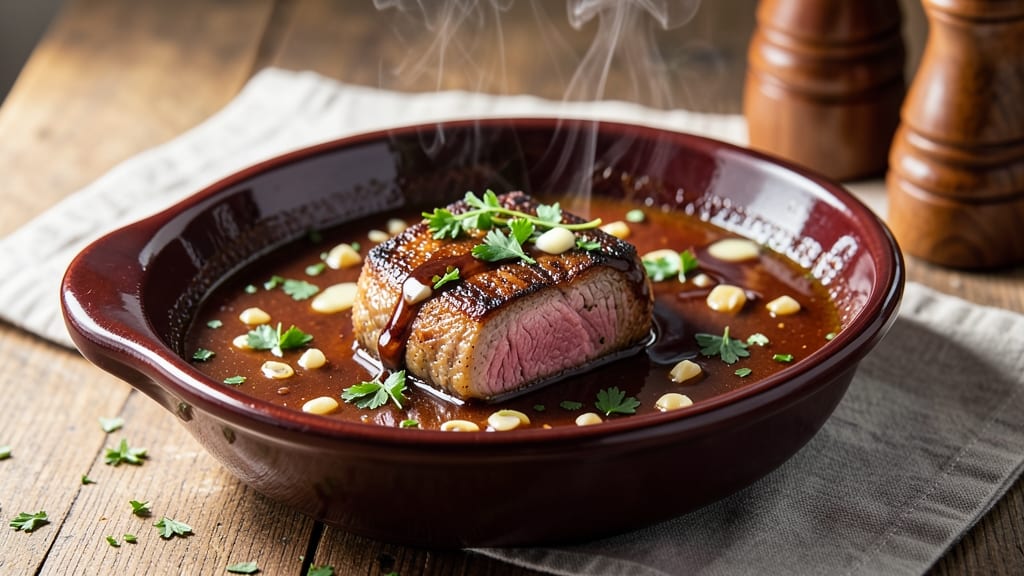
This au jus recipe with Worcestershire sauce transforms simple pan drippings into a rich, umami-packed sauce that elevates any protein—steak, roast, or chicken. The secret lies in deglazing the pan with red wine and vinegar, then balancing the acidity with Worcestershire’s deep, savory complexity.
What starts as leftover cooking juices becomes a silky, aromatic sauce in just 15 minutes, perfect for drizzling over your finished dish.
The process is straightforward but precise: sear your protein until golden, then deglaze with wine and vinegar to dissolve browned bits. Worcestershire sauce adds that unmistakable umami kick, while a touch of beef broth rounds out the flavor.
Reducing the sauce on the stovetop intensifies its depth, creating a glossy, restaurant-quality finish that clings beautifully to meat.
What you’ll end up with is a velvety, aromatic sauce that’s far more complex than store-bought versions. The Worcestershire sauce cuts through richness, while the wine and vinegar add brightness, making every bite feel luxurious yet balanced.
This isn’t just a pan sauce—it’s the star of the meal, turning ordinary roasts or steaks into something extraordinary.
Serve it warm over your protein of choice, or use it to deglaze future pans for instant flavor. The technique is foolproof and adaptable—whether you’re cooking for two or a crowd. Let’s get started on creating a sauce that’ll have everyone asking for seconds.
Ingredients for au jus recipe with worcestershire sauce
Six simple components transform humble pan drippings into luxurious umami sauce.
| Ingredient | Amount | Notes |
|---|---|---|
| Red Wine 🍷 | ½ cup | Bold dry variety like Cabernet Sauvignon |
| Apple Cider Vinegar 🍏 | ¼ cup | For acidity balance |
| Worcestershire Sauce 🍶 | 2 tbsp | High-quality brand preferred |
| Beef Broth 🥫 | ½ cup | Low-sodium preferred |
| Pan Drippings 🥩 | 1 cup | From seared protein |
| Butter 🧈 | 2 tbsp | Cold, cut into pieces |
| Garlic Cloves 🧄 | 2 cloves | Minced for depth |
| Fresh Thyme Leaves 🌿 | ¼ cup | Or 1 tsp dried thyme |
| Salt 🧂 | ½ tsp | Kosher or sea salt |
| Black Pepper 🌶️ | ¼ tsp | Freshly cracked |
| Flour 🌾 | 1 tbsp | All-purpose for thickening |
| Cold Water 💧 | 2 tbsp | For slurry |
The wine and vinegar are your flavor anchors—Cabernet Sauvignon or Merlot work best, but whatever's open in your fridge will do. Trader Joe's has affordable dry reds in their wine section, or hit the bulk aisle at Whole Foods for organic options. Worcestershire sauce is non-negotiable here; Lea & Perrins is the gold standard, but Annie's or Hunt's work in a pinch. For the beef broth, low-sodium is key—you don't want to over-salt your sauce. If you're using store-bought, check the label or dilute with water if needed. The pan drippings should come from searing your protein—beef, pork, or even chicken—until deep golden brown. That's where all the flavor lives.
No red wine? Substitute with beef broth plus 1 tbsp balsamic vinegar—it'll add depth without the alcohol. Worcestershire hard to find? Soy sauce plus a dash of fish sauce mimics that umami punch (though it won't be identical). Fresh thyme is ideal, but dried works at one-third the amount. For the slurry, if you're nervous about lumps, whisk the flour and water vigorously before adding to the pan. The butter should be cold and cubed—adding it at the end gives that silky finish. Want extra richness? Add 1 tbsp of heavy cream at the very end. The sauce thickens as it reduces, so if it's too thin, let it simmer uncovered for another 2-3 minutes.
This sauce reheats beautifully—just warm it gently on the stove with a splash of water or broth if it's too thick. Keeps for 5 days in the fridge, or freeze portions for up to 3 months. I like to portion it into ice cube trays for easy single-use applications. The sauce gains complexity overnight, so if you can, make it ahead. For storage, a glass jar with a tight seal works best. If you're making this for a crowd, double the recipe—it disappears fast. Leftovers make incredible sandwiches or dipping sauce for fries. Trust me, you'll want to make extra.
Why You'll Love This Recipe
- Pantry Magic: I swear by this recipe because it uses what I already have—no special shopping needed. That bottle of red wine gathering dust? The Worcestershire sauce lingering in my cabinet? They’re the stars here, turning scraps into something ridiculously good.
- Umami Bomb: The Worcestershire and beef broth combo hits different—deep, savory, and just a little tangy from the apple cider vinegar. It’s the kind of flavor that makes you pause mid-bite, like, "Wait, is this even real?"
- Leftovers Reinvented: This au jus keeps for days in the fridge, and honestly? It’s even better the next day. Drizzle it over grilled chicken, toss it with mashed potatoes, or use it as a marinade—it’s my go-to for turning simple meals into something special.
- Steak Night Simplified: No fancy reductions or hours of simmering. Just deglaze the pan, add the ingredients, and simmer. That’s it. I’ve made this on weeknights when I’m exhausted, and it still tastes like I put in effort—because it does.
Step-by-step instructions for rich umami au jus
This sauce builds on the deep flavors of seared meat—let's transform pan drippings into a velvety, complex sauce.
Deglaze the Pan with Wine and Vinegar
Immediately after removing your protein from the pan, place it on a warm plate and set aside. Keep the hot pan on the stove over medium heat—those browned bits are pure flavor gold. Pour in the 0.5 cup red wine and let it bubble vigorously for 2-3 minutes until reduced by half.
Next, add the 0.25 cup apple cider vinegar and scrape up every last bit of fond from the bottom with a wooden spoon. The acidity cuts through the richness while preserving all that caramelized depth. You'll notice the mixture darkens and intensifies—this is where the sauce's complexity begins. Let it simmer for another 1 minute until the alcohol smell completely dissipates.
Build the Sauce Base with Aromatics and Broth
Add the 2 cloves minced garlic and 0.25 cup fresh thyme leaves to the pan, stirring constantly for 30 seconds until fragrant. The thyme should release its piney aroma, and the garlic should sizzle gently without burning. Here's where it gets good—pour in the 0.5 cup beef broth and scrape up any remaining browned bits.
Bring everything to a gentle simmer and let it cook uncovered for 5 minutes until slightly reduced. You're looking for a sauce that coats the back of a spoon but still flows easily. Taste and adjust seasoning with the 0.5 tsp salt and 0.25 tsp black pepper. The sauce should be balanced—tangy from the vinegar, rich from the wine, and savory from the broth.
Thicken with Butter and Flour Slurry
Reduce heat to low and whisk in the 2 tbsp cold butter, cut into small pieces. Let it melt completely while continuing to stir. This adds luxurious mouthfeel and helps emulsify the sauce. In a small bowl, combine the 1 tbsp flour with the 2 tbsp cold water to make a smooth slurry.
Slowly whisk the slurry into the pan, a little at a time, until the sauce begins to thicken. You want it to coat a spoon but still be pourable—not gluey. Return to a gentle simmer for 1-2 minutes, stirring constantly, until it reaches your desired consistency. The sauce should be glossy and velvety, clinging beautifully to the back of a spoon.
Incorporate Pan Drippings and Worcestershire
Off the heat, gently stir in the 1 cup pan drippings and 2 tbsp Worcestershire sauce. The drippings add that essential meaty depth while the Worcestershire introduces layers of umami and complexity. Give it one final taste—you might want to adjust the seasoning slightly, adding a pinch more salt if needed or a splash of vinegar for brightness.
This sauce should be rich but not heavy, tangy but not sour, and deeply savory with just the right balance of sweetness from the caramelized bits. Serve immediately over your protein or use it as a dipping sauce for crusty bread. The sauce will thicken further as it cools, so don't worry if it looks slightly thin when you start serving.
Pro Tips For Making Au Jus Recipe With Worcestershire Sauce
- DEGLAZE HOT, NOT COLD: Scrape up those browned bits from the pan while they’re still hot—that’s where the flavor lives. Cold pan drippings? You’re basically throwing away the good stuff. A splash of red wine or vinegar works best when the pan’s still sizzling, not lukewarm.
- USE THE RIGHT VINEGAR: Apple cider vinegar adds depth, but don’t grab any old bottle—look for one with a sharp, fruity tang (not sweet or mellow). If yours tastes like diluted fruit juice, your au jus will taste flat. A quick sniff test: if it smells like hard cider, you’re golden.
- SIMMER, DON’T BOIL: Once you’ve combined everything, keep the heat low. Boiling turns au jus into a thin, vinegary broth—no one wants that. A gentle simmer (tiny bubbles, occasional swirls) concentrates the flavors and keeps the Worcestershire’s umami from evaporating.
- STRAIN IF YOU’RE PICKY: If you hate bits in your sauce, strain it through a fine-mesh sieve after simmering. No strainer? Cheesecloth works, but don’t skip this if your pan drippings are greasy—you’ll end up with a greasy sauce. (I learned this after serving a guest a mouthful of fat.)
Health benefits of this au jus recipe with worcestershire sauce
Boosts Protein Absorption
The Worcestershire sauce in this au jus contains fermented vinegar, which enhances the absorption of iron and zinc from your protein—especially when paired with vitamin C from the apple cider vinegar.
A 6-ounce steak with this sauce provides about 40% of your daily iron needs, supporting energy levels and oxygen transport. The umami depth from Worcestershire also stimulates digestion, making nutrients more bioavailable. 💪
Low-Calorie Richness
This sauce delivers restaurant-quality depth with minimal calories—just 30-40 calories per ¼ cup serving. The red wine and vinegar create a flavorful base without added fat, while the butter slurry adds richness in controlled amounts.
It’s perfect for those watching calories but craving indulgent flavors. The sauce’s tangy-savory profile satisfies cravings while keeping meals balanced. ✨
Digestive Benefits
The apple cider vinegar and garlic in the sauce act as natural digestive aids. Vinegar helps regulate blood sugar spikes after meals, while garlic contains allicin, a compound that supports gut health and reduces bloating.
The thyme adds antioxidant properties, further promoting digestion. Even a small portion of this sauce can ease digestion after a heavy protein meal. 🌿
Umami Without Excess Sodium
Worcestershire sauce provides umami depth without the high sodium of processed sauces. A 2-tablespoon serving contains about 150mg sodium—far less than store-bought gravies or bottled au jus.
The low-sodium beef broth and careful seasoning keep sodium in check while delivering bold flavor. This makes it heart-friendly yet deeply satisfying. 💛
Antioxidant-Rich Ingredients
The red wine (in moderation) and fresh thyme contribute antioxidants that combat oxidative stress. Resveratrol in wine supports heart health, while thyme’s thymol has anti-inflammatory properties. Even the garlic adds alliin, which may help lower cholesterol. This sauce isn’t just delicious—it’s a nutrient-dense addition to any meal. 🍷
Meal Flexibility
This au jus adapts to various dietary needs. For low-carb diets, skip the flour slurry and use cornstarch instead. For vegetarian versions, replace beef broth with mushroom broth and use vegetable pan drippings.
The sauce’s versatility makes it a healthy addition to any plate, whether paired with steak, roasted veggies, or grilled chicken. 🌱
Nutrition facts
Frequently asked questions
Can I use white wine instead of red wine in this au jus?
While red wine adds depth and richness, you can substitute with white wine—but the flavor profile will change. For every 0.5 cup red wine called for, use 0.5 cup white wine plus 1 tbsp balsamic vinegar to maintain acidity. The sauce will be lighter in color but still delicious. If you're using a dry white like Sauvignon Blanc, the citrus notes will complement the Worcestershire sauce beautifully.
How do I prevent my au jus from being too thin or too thick?
Start with a gentle simmer and taste frequently to gauge consistency. For thin sauce, let it reduce uncovered for 1-2 extra minutes. If too thick, whisk in 1 tsp water or broth at a time until smooth. The key is patience—rushing causes lumps or uneven texture. The sauce will naturally thicken as it cools, so serve it slightly thinner than desired.
What's the best protein to pair with this Worcestershire au jus?
This sauce shines with beef cuts like ribeye or sirloin, but it also works beautifully with pork tenderloin, duck breast, or even chicken thighs. For maximum flavor, sear the protein until deeply browned before removing it from the pan. The pan drippings are what create that unmistakable meaty depth in the sauce.
Can I make this au jus ahead of time?
This sauce actually tastes better the next day as flavors meld. Store it in an airtight container in the fridge for up to 5 days. Reheat gently on the stove, adding 1 tbsp water or broth if it thickens too much. For longer storage, freeze portions in ice cube trays for easy single-use applications. The sauce reheats beautifully and makes an excellent sandwich spread or dipping sauce.
What if I don't have Worcestershire sauce?
You can create a similar umami profile with 1 tbsp soy sauce plus ½ tsp fish sauce, though the flavor won't be identical. For a vegetarian version, use 1 tbsp soy sauce plus ½ tsp miso paste. The vinegar and wine already provide acidity, so focus on replicating that savory depth. If you're missing it entirely, skip it—but you'll lose that signature complexity.