
Sauces & Condiments
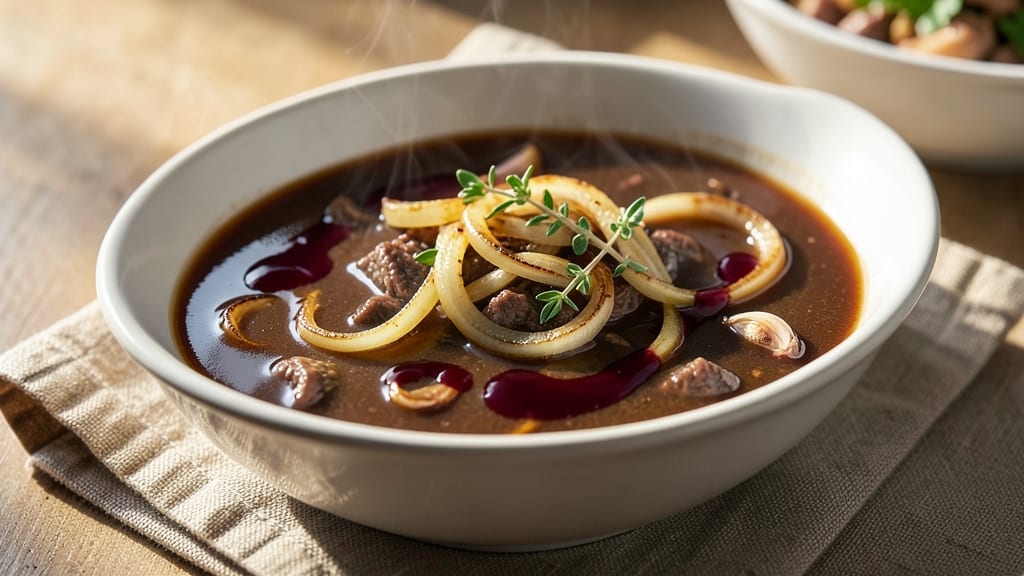
This au jus sauce recipe with beef broth transforms simple pan drippings into a rich, umami-packed sauce that elevates any beef dish. 💛 The secret lies in reducing beef broth with aromatics and a touch of wine, creating a velvety sauce that clings to every bite.
I developed this recipe after realizing how much flavor gets wasted when we discard those precious drippings—now you can salvage every drop into something extraordinary.
What sets this sauce apart is its depth of flavor, achieved through a slow reduction that concentrates the beefy essence while balancing it with herbs and a splash of red wine.
The process is straightforward: simmer the broth with onions, garlic, and thyme until it thickens slightly, then finish with a pat of butter for a luxurious sheen. It’s the kind of sauce that turns a simple roast into a restaurant-worthy meal.
The result is a glossy, aromatic sauce with layers of savory richness that coats every bite. Perfect for drizzling over steak, roasted potatoes, or even as a dipping sauce for crusty bread, this au jus is versatile enough to adapt to any beef-centric menu.
The best part? It keeps well in the fridge for up to five days or freezes beautifully for future use.
Whether you're hosting a dinner party or just want to make weeknight meals feel special, this sauce delivers professional-quality flavor with minimal effort. Here’s how to make it—your taste buds will thank you.
Ingredients for au jus sauce recipe with beef broth
Nine simple ingredients transform beef drippings into restaurant-quality au jus sauce.
| Ingredient | Amount | Notes |
|---|---|---|
| Beef Broth 🍲 | 2 cups | Homemade or high-quality store-bought |
| Pan Drippings 🥩 | 1 cup | From roasted beef, strained |
| Yellow Onion 🧅 | 1 whole | Diced, medium size |
| Garlic Cloves 🧄 | 3 cloves | Minced, fresh preferred |
| Fresh Thyme 🌿 | 1 tbsp | Leaves only, chopped |
| Red Wine 🍷 | ¼ cup | Dry, bold variety |
| Unsalted Butter 🧈 | 2 tbsp | Cold, cubed |
| Diamond Crystal Kosher Salt 🧂 | ½ tsp | Adjust to taste |
| Black Pepper 🌶️ | ¼ tsp | Freshly ground |
| All-Purpose Flour 🌾 | 1 tsp | For thickening if needed |
The beef broth is the backbone here—homemade is ideal, but Swanson or Pacific Foods brands work in a pinch. Look for low-sodium options if you're sensitive to salt. Fresh thyme makes all the difference (the good stuff, not the dried kind), but if you're out, dried thyme at one-third the amount works. For the red wine, any bold, dry variety—Cabernet Sauvignon or Merlot—does the trick. I usually grab a bottle I'd drink anyway. The pan drippings? Strain them through a fine-mesh sieve to remove any solids before adding to the pot.
No red wine? Beef stock with a splash of balsamic vinegar mimics that depth. Fresh thyme limited? Rosemary or marjoram add a different but delicious twist. The butter at the end is non-negotiable—it adds that luxurious sheen and balances the acidity. Want it thicker? Add the flour first, whisked into a paste with a little cold water. The sauce should coat the back of a spoon but still be silky, not gluey.
This sauce keeps beautifully—5 days in the fridge sealed in a jar, or 3 months frozen. I always make extra because it's perfect for reheating over steak or roasted veggies. For freezing, let it cool completely first, then portion into ice cube trays. Pop out the cubes and store in a freezer bag. Thaw in the fridge overnight—no microwave needed.
Why You'll Love This Recipe
- Here’s what sold me: beef broth and pan drippings are basically free if you’re already cooking a roast. A handful of onions, garlic, and thyme stretch this into enough sauce for days. Freezer-friendly too—just reheat and serve. No waste, all flavor.
- Pan Drippings Magic: I swear by this trick—just scrape up those browned bits from your roast or steak, toss them in with the broth, and boom. That’s where all the deep, savory flavor hides. No fancy techniques, just kitchen alchemy.
- One-Pot Simplicity: Honestly, this sauce couldn’t be easier. Sauté onion and garlic until soft, add thyme, pour in the broth and drippings, then simmer. That’s it. No blenders, no straining, no stress—just rich, velvety goodness in under 20 minutes.
- Game for Any Meal: Between us, this sauce turns a basic protein into something special—drizzled over mashed potatoes, slurped with roasted veggies, or even as a quick dip for crusty bread. It’s my go-to for weeknights, potlucks, or when I’m too tired to plan.
Step-by-step instructions for au jus sauce with beef broth
Here's how to transform simple ingredients into a velvety, umami-packed au jus that elevates any beef dish.
🍳 Step 1: Sauté Onions and Garlic for Flavor Foundation
Heat the 1 cup pan drippings in a medium saucepan over medium heat. Add the diced yellow onion and cook for 5-6 minutes until softened and just beginning to caramelize—you'll see the edges turn golden and smell sweetly aromatic. This is where the magic starts.
Push the onions to the side of the pan and add the 2 tablespoons cold unsalted butter. Let it melt completely, then add the 3 minced garlic cloves. Cook for 30 seconds until fragrant—don't let it brown or it'll turn bitter. Stir everything together and cook for another 1 minute to blend the flavors.
🍷 Step 2: Deglaze with Wine and Reduce
Pour in the 0.25 cup red wine and scrape up any browned bits from the bottom of the pan with a wooden spoon. This deglazing step captures all those flavorful bits that would otherwise burn. Let the wine simmer for 3-4 minutes until reduced by half—you'll notice the alcohol smell dissipates and the liquid becomes more concentrated.
Add the 2 cups beef broth and bring to a gentle boil. Once boiling, reduce heat to medium-low and let it simmer uncovered for 10 minutes. This slow reduction builds depth of flavor while allowing the wine to fully integrate into the sauce.
🌿 Step 3: Season and Thicken the Sauce
Stir in the 1 tablespoon chopped fresh thyme, 0.5 teaspoon kosher salt, and 0.25 teaspoon black pepper. Taste and adjust seasoning—this is where you can really make the sauce sing. If it needs more depth, add a pinch more salt or a splash of wine.
For thickening, sprinkle in the 1 teaspoon all-purpose flour and whisk vigorously to combine. Let the sauce simmer for another 3-5 minutes until it reaches your desired consistency—it should coat the back of a spoon but still be pourable. If it thickens too much, whisk in 1-2 tablespoons water to loosen.
⏰ Step 4: Strain and Serve Warm
Line a fine-mesh strainer with cheesecloth or a coffee filter and strain the sauce into a clean saucepan. This removes any thyme stems or onion bits, giving you a silky-smooth texture. Return the strained sauce to medium-low heat and keep it warm until ready to serve.
The perfect au jus should be glossy with a deep red hue, rich umami flavor, and just the right balance of acidity from the wine. Serve immediately alongside roasted beef or use it as a dipping sauce for crusty bread. The sauce will keep in the refrigerator for up to 3 days, though it's best enjoyed fresh.
Pro Tips For Making Au Jus Sauce Recipe With Beef Broth
- DEGLAZE HOT, NOT LUKEWARM: I learned this the hard way—cold pan drippings turn to greasy sludge when you try to scrape them up. Keep that pan on medium-high heat the whole time you’re searing your meat, then immediately pour in the beef broth and wine (if using) while the drippings are still sizzling. The alcohol will cook off faster, and you’ll get real flavor, not a watery mess.
- MINCE ONIONS LIKE YOU MEAN IT: Tiny dice, not rough chunks. I used to cut onions into big pieces and wonder why my au jus tasted like it was missing something. For this sauce, chop the yellow onion into 1/8-inch pieces—small enough to dissolve into the broth without leaving texture. A sharp knife and a steady hand make this easier than you’d think.
- STRAIN THE THYME STEMS: Fresh thyme sprigs are great, but the stems? They turn your sauce bitter if left in. After adding the thyme to the simmering broth, fish out the stems with tongs—no need to strain the whole thing. I skip this sometimes, and the sauce still works, but the difference in bitterness is noticeable if you’re paying attention.
- SIMMER, DON’T BOIL: This sauce isn’t a race. After deglazing, reduce the heat to a gentle simmer (tiny bubbles, not rolling) and let it cook uncovered for 10–15 minutes. Boiling burns the alcohol off too fast and evaporates the broth into nothing. A low simmer concentrates the flavor without turning it harsh. (Yes, even if you’re impatient like me.)
Serving suggestions for this recipe
Steak Pairing Perfection
This au jus sauce is practically designed for steak—it clings beautifully to ribeye, filet mignon, or New York strip cuts, enhancing their natural beefy richness.
I love serving it alongside a perfectly seared 12-ounce ribeye cooked to medium-rare—the sauce's acidity cuts through the fat while the umami deepens the meat's flavor.
For a showstopper, slice the steak against the grain and fan it out on a warm plate, then drizzle the au jus generously. 🥩
Comforting Potato Sides
Au jus transforms simple potato dishes into something extraordinary. Try it with crispy roasted baby potatoes tossed in olive oil and rosemary, or with creamy garlic mashed potatoes—the sauce's depth elevates both.
I often make a double batch of au jus just to pour over my garlic-herb roasted potatoes (tossed with 2 tbsp olive oil, 3 garlic cloves, and 1 tsp dried thyme before roasting). The contrast of creamy potatoes and glossy sauce is pure comfort food magic.
Bread Dipping Luxury
Don't limit this sauce to just meat and potatoes—it's also the ultimate bread dipping sauce. Warm a baguette or crusty sourdough and cut into thick slices. The au jus's velvety texture and rich flavor make every bite feel like a little indulgence.
For extra flair, sprinkle the bread with flaky sea salt and freshly cracked black pepper before dipping. I keep a small bowl of this au jus on the table during dinner parties—it disappears faster than the main course!
Vegetable Elevation
Even vegetable dishes benefit from this sauce's depth. Drizzle it over roasted Brussels sprouts (tossed with balsamic glaze and pecans) or caramelized mushrooms (sautéed with thyme and garlic) for a savory-sweet balance.
The sauce's umami richness complements earthy vegetables beautifully. I especially love this combo with pan-seared eggplant—the contrast of creamy eggplant and glossy au jus is unexpected but delicious.
Game Day Spread
This sauce is a game-changer for casual gatherings. Set out a platter with warm pretzel bites, crispy pork belly slices, and cheese boards, then offer the au jus in a small crock pot on low heat.
The warm, aromatic sauce invites guests to keep dipping, and it pairs perfectly with sharp cheddar or aged gouda. For a fun twist, add a few pickled jalapeños to the sauce for a spicy kick—it's a crowd-pleaser every time. 🌶️
Nutrition facts
Frequently asked questions
Can I make this au jus without red wine?
Swap the ¼ cup red wine with ¼ cup beef stock plus 1 teaspoon balsamic vinegar for similar depth. Or use ¼ cup apple cider vinegar for brightness. The key is balancing acidity—just taste as you go and adjust with more vinegar or a pinch of salt.
How do I fix au jus that's too thin or too thick?
For thin sauce, whisk in 1 teaspoon cornstarch mixed with 1 tablespoon cold water and simmer for 2 minutes. Too thick? Thin with 1-2 tablespoons warm water or beef broth. Always stir constantly to avoid lumps—this sauce should coat the back of a spoon but still pour smoothly.
What's the best way to store leftover au jus?
Let it cool completely, then store in an airtight container in the fridge for up to 5 days. For freezing, portion into ice cube trays, freeze, then transfer to a bag. Thaw overnight in the fridge—never microwave, or the sauce will separate. Reheat gently on low heat, stirring often.
Can I use this sauce for chicken or pork instead of beef?
Yes, but swap the beef broth for chicken or pork broth to match the protein's flavor profile. Add ½ teaspoon smoked paprika for pork or 1 sprig fresh rosemary for chicken. The technique stays the same—just adjust the base to complement your protein.
Why did my au jus turn cloudy or separate?
Cloudiness often means the sauce cooled too quickly. Reheat gently, stirring constantly. Separation happens if you added cold ingredients too fast—always bring everything to a simmer together. For extra insurance, whisk in 1 tablespoon cold butter at the end to emulsify.