
Sauces & Condiments
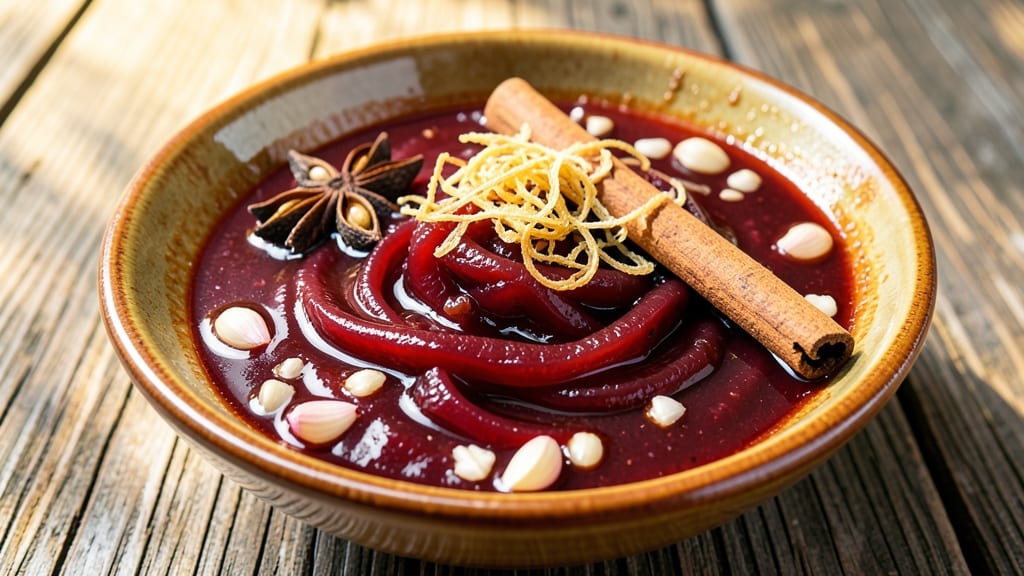
This authentic Chinese plum sauce recipe transforms simple ingredients into a vibrant, tangy-sweet glaze that elevates stir-fries, Peking duck, and grilled meats to restaurant-quality levels.
The secret lies in balancing ripe plum paste, rice vinegar, and brown sugar while simmering until thick and glossy—a process that captures the bold flavors of traditional Chinese cuisine without shortcuts.
What sets this sauce apart is its versatility and depth of flavor. Unlike store-bought versions, this recipe builds layers of complexity by toasting whole spices like star anise and cinnamon before blending them into the sauce.
The result is a glaze that’s both sweet and tangy, with a subtle warmth from the spices that lingers on the palate.
By the time you’re done, you’ll have a foolproof sauce that’s rich enough to coat proteins or thin enough to drizzle over vegetables. The texture is velvety yet slightly sticky, clinging to every bite for maximum flavor impact.
It keeps well in the fridge for up to 2 weeks, making it perfect for meal prep or gifting.
Whether you’re serving it as a dipping sauce for Peking duck, a glaze for grilled ribs, or a stir-fry finish, this plum sauce delivers the authentic taste of Chinese street food—right in your own kitchen. Let’s get started!
Ingredients for authentic chinese plum sauce
Nine simple ingredients for a sauce that tastes like Chinese street food magic.
| Ingredient | Amount | Notes |
|---|---|---|
| Ripe Plum Paste 🍑 | 1 cup | High-quality, unsweetened preferred |
| Rice Vinegar 💧 | ½ cup | White or seasoned variety |
| Light Brown Sugar 🍚 | ½ cup | Packed firmly for accuracy |
| Star Anise Pods 🌿 | 2 whole | Toasted lightly for aroma |
| Cinnamon Sticks 🌿 | 1 whole | 1-inch pieces for infusion |
| Garlic Cloves 🧄 | 3 cloves | Minced for depth of flavor |
| Fresh Ginger 🌿 | 1 tbsp | Finely grated, skin on |
| Red Chili Flakes 🌶️ | 1 tsp | Adjust for heat preference |
| Soy Sauce 🍶 | 1 tbsp | Light or dark variety |
| Sesame Oil 🫒 | 1 tbsp | Toasted for nutty aroma |
Plum paste is the heart of this sauce, so don’t skimp on quality. Look for unsweetened varieties at Asian markets—they often have the best selection. The riper the plums, the deeper the flavor. Star anise and cinnamon? Toast them lightly in a dry pan first (just until fragrant)—this brings out their aroma without burning. I grab mine from the spice aisle at Trader Joe’s or H Mart, but any grocery store’s bulk section works. Fresh ginger? Buy it whole, grate what you need, and freeze the rest—it keeps forever.
No plum paste? Substitute apricot jam or date syrup—just add a splash of water to thin it out. Short on rice vinegar? Apple cider vinegar in a pinch, but it’ll taste slightly different. Want less heat? Skip the chili flakes or use half the amount. The soy sauce can be swapped for coconut aminos if you’re avoiding gluten. Sesame oil is non-negotiable for that nutty depth—don’t use regular vegetable oil. If you’re making this ahead, the sauce actually tastes better after sitting overnight as the flavors meld.
This sauce keeps for 2 weeks in the fridge, sealed tightly in a jar. It’s perfect for meal prep—just reheat gently on the stove with a splash of water if it thickens. Freezes beautifully for up to 6 months. I always make double batches because it disappears fast. Store it in small jars for gifting—everyone loves homemade plum sauce. The texture will thicken as it cools, so add a little water if you prefer it thinner when serving.
Why You'll Love This Recipe
- Pantry Magic: I swear, this sauce comes together with stuff you already have. No fancy prep—just simmering plum paste with vinegar and spices until it’s glossy and fragrant. Honestly, the hardest part is resisting the urge to taste-test mid-simmer.
- Sweet-Savory Balance: That first bite? It’s like a hug for your taste buds—tangy rice vinegar cutting through the deep caramelized plum and warm spices. The star anise and cinnamon add this subtle, cozy depth that makes it way more interesting than store-bought versions.
- Glaze or Dip: Slather it on roasted duck, drizzle it over steamed buns, or serve it as a dip for spring rolls. I’ve even used it to glaze sticky rice—it’s that versatile. (Yes, even on a Tuesday night.)
- Lasts All Week: Make a big batch—it keeps for weeks in the fridge, and the flavor only gets richer. Plus, the ingredients are cheap, so you’re not breaking the bank for something this good. My secret weapon for lazy days.
Step-by-step instructions for authentic Chinese plum sauce
This tangy-sweet glaze delivers the perfect balance of traditional Chinese flavors—just follow these simple steps.
Toast the Spices for Maximum Flavor
In a dry skillet over medium heat, gently toast the 2 whole star anise pods and 1 whole cinnamon stick for 1-2 minutes until fragrant. You'll smell that warm, aromatic essence—this is where the magic starts. Remove the spices immediately when they begin to smoke slightly, then transfer them to a small bowl and set aside.
Toasted spices add depth that you won't get from raw versions. Don't rush this step—proper toasting unlocks the full potential of these warming flavors in your sauce. Keep an eye on them; they can go from perfect to burnt in seconds.
Simmer the Vinegar and Sugar Base
In the same skillet (no need to clean it), combine 0.5 cup rice vinegar and 0.5 cup light brown sugar. Bring to a boil over medium-high heat, then reduce to medium and let it simmer for 5-7 minutes until the sugar dissolves completely and the mixture thickens slightly. You're looking for a syrupy consistency that coats the back of a spoon.
The vinegar will bubble vigorously at first, but as it reduces, you'll notice the aroma becoming more concentrated. This is your flavor foundation—don't walk away. Stir occasionally to prevent sticking, but let it develop its own caramelized notes.
Build the Sauce with Aromatics and Heat
Add the toasted spices, 3 cloves minced garlic, 1 tablespoon finely grated fresh ginger, and 1 teaspoon red chili flakes to the simmering mixture. Stir well to combine, then cook for another 3-4 minutes until the garlic turns golden and the spices infuse the liquid. You'll see the sauce darken slightly and smell that perfect balance of sweet, tangy, and spicy.
Here's where the sauce starts taking shape. The chili flakes will add just the right amount of heat, while the ginger and garlic bring that classic Chinese aromatic punch. Taste after 3 minutes—if you want more heat, add a pinch more chili flakes now.
Incorporate the Plum Paste and Finish
Reduce the heat to low and stir in the 1 cup ripe plum paste until completely dissolved. The sauce will thicken noticeably as it incorporates. Cook for an additional 2-3 minutes, stirring constantly, until the mixture becomes glossy and coats the back of a spoon smoothly. You're aiming for that perfect balance between thick glaze and pourable sauce.
This is the moment that matters: the plum paste transforms everything. The sauce should be thick enough to coat proteins beautifully but still flow well enough to drizzle. If it's too thick, add 1 teaspoon water at a time until you reach the right consistency.
Add the Final Touches and Rest
Remove the sauce from heat and stir in 1 tablespoon soy sauce and 1 tablespoon sesame oil. Let it cool slightly for 5 minutes, then taste and adjust seasoning if needed. The soy sauce adds umami depth while the sesame oil gives that nutty aroma that makes this sauce truly authentic.
For best results, let the sauce sit at room temperature for 30 minutes before using. This resting period allows all the flavors to meld together perfectly. The sauce will thicken slightly as it cools, which is exactly what you want for that ideal glaze consistency.
Pro Tips For Making Authentic Chinese Plum Sauce
- Bloom the Spices First: Toss whole star anise and cinnamon sticks into a dry pan over medium-low heat for 30 seconds before adding liquid—just until they release their aroma. I learned this the hard way after a batch tasted flat; the oils need to wake up first.
- Simmer Low and Slow: Keep the sauce at a gentle bubble, not a rolling boil, or the rice vinegar will evaporate too fast and make the plum paste taste harsh. I used to rush it, and the balance was always off.
- Mash the Plum Paste: Break up the plum paste with a fork before adding it to the sauce—this ensures even distribution and prevents clumpy, undercooked bits. Sounds obvious, but I’ve seen people just dump it in whole.
- Sweeten Gradually: Add the brown sugar in two batches: half at the start, the rest at the end. This lets the flavors meld without making the sauce cloyingly sweet too soon—my grandmother’s trick for depth.
Creative variations of this dish
Sweet vs. Tangy Balance
Adjust the sweetness-to-tanginess ratio based on your preference. For a more tangy sauce, increase the rice vinegar to 0.6 cups while keeping the sugar at 0.5 cups. For a sweeter version, add 1 extra tablespoon of brown sugar and reduce vinegar to 0.4 cups.
I often make two small batches—one sweet for glazing meats and one tangy for dipping. 🍯
Spicy Kick Variations
For mild heat, reduce the red chili flakes to ½ teaspoon or substitute with ½ teaspoon ground Sichuan peppercorns for a numbing spice. For fiery heat, add ½ teaspoon gochugaru (Korean chili flakes) or 1 sliced Thai chili.
I love adding a pinch of white pepper for depth without color. 🌶️
Regional Adaptations
In Cantonese-style versions, replace 1 teaspoon of soy sauce with 1 teaspoon of oyster sauce for extra umami. For Sichuan-inspired sauce, add 1 teaspoon of doubanjiang (fermented chili bean paste) and ½ teaspoon of Sichuan peppercorns. These tweaks bring bold regional flavors to your table. 🗺️
Fusion Twists
For a Hawaiian fusion, swap ½ cup plum paste with ½ cup mango chutney and add 1 teaspoon of lime zest. For a Japanese-inspired version, replace sesame oil with 1 teaspoon of mirin and add ½ teaspoon of grated daikon.
These creative swaps keep the sauce exciting. 🍍
Vegetarian-Friendly
Keep the recipe 100% vegetarian by ensuring your plum paste and soy sauce are plant-based. For extra richness, stir in 1 tablespoon of tahini at the end. I’ve also added 1 teaspoon of miso paste for deeper umami—just simmer it in with the spices. 🌱
Storage Hacks
For longer shelf life, store the sauce in sterilized glass jars with a parchment paper barrier to prevent mold. If it thickens in the fridge, thin with 1 teaspoon of water or rice vinegar before using. I freeze portions in ice cube trays for easy single-use servings later. ❄️
Nutrition facts
Frequently asked questions
Can I make this plum sauce without plum paste?
Yes! For a quick substitute, use ½ cup apricot jam or ½ cup date syrup mixed with 1 tablespoon water to thin it. For a more authentic texture, blend 1 cup pitted dried plums with 2 tablespoons water until smooth before using in the recipe. The flavor will differ slightly but still deliver that sweet-tangy profile.
How do I adjust the thickness of the sauce?
If your sauce is too thick, thin it with 1 teaspoon water or rice vinegar at a time while warm. For a thicker glaze, simmer uncovered for 2-3 extra minutes to reduce further. The ideal consistency coats the back of a spoon but remains pourable. Remember, it thickens more as it cools, so start slightly thinner if needed.
What's the best way to use leftover plum sauce?
Leftover sauce is perfect for marinating proteins (like chicken or tofu) for 30-60 minutes before cooking, or as a glaze for grilled meats. Brush on in the last 2 minutes of cooking for maximum flavor. It also makes an excellent dipping sauce for spring rolls or dumplings, or drizzle over stir-fried vegetables for instant depth.
Why does my sauce taste too sweet?
If your sauce tastes overly sweet, balance it by adding 1 extra tablespoon of rice vinegar and simmering for 1-2 minutes to let the acidity mellow. For a deeper flavor without added sweetness, toast ½ teaspoon of ground cinnamon and stir it in. The spices help mask excess sweetness while adding complexity. Taste as you go—small adjustments make all the difference!
Can I make this sauce in a slow cooker?
Combine all ingredients in your slow cooker and cook on Low for 2-3 hours, stirring occasionally. The low-and-slow method enhances the spices' aromas. If it reduces too much, add 1-2 tablespoons water before serving. The texture will be slightly thinner but still delicious. This method is great for hands-off cooking!