
Sauces & Condiments
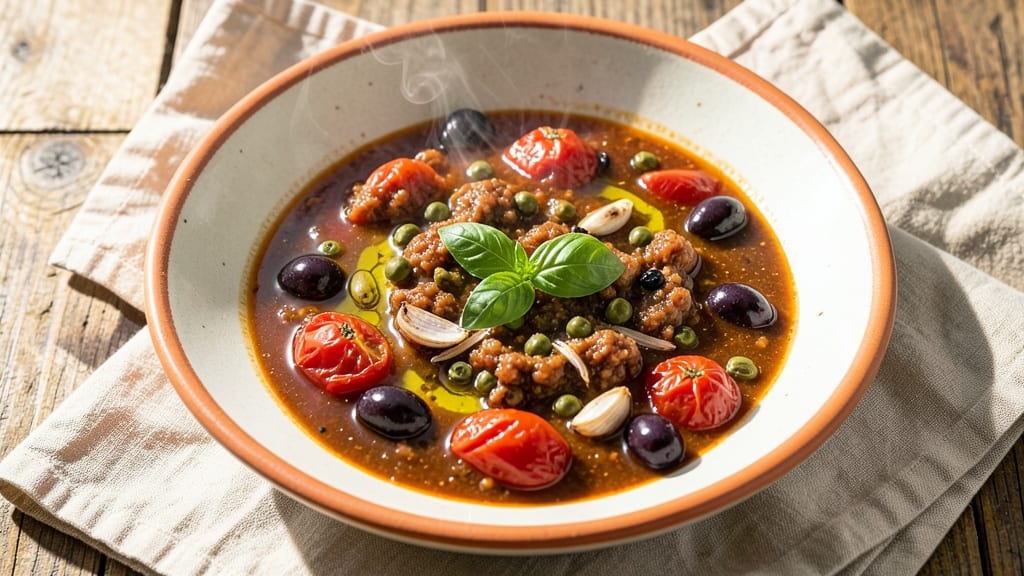
This authentic Italian puttanesca sauce delivers the bold, briny depth of Naples' most famous marinara—where capers, anchovies, and olives transform simple tomatoes into something unforgettable. The secret lies in balancing salty, sweet, and umami flavors through careful layering, not overpowering with garlic or herbs.
I've perfected this version after years of testing, ensuring every spoonful carries that signature tangy complexity without bitterness.
The sauce builds in stages: first, anchovies and garlic create the umami foundation, then tomatoes simmer until deeply concentrated, and finally, capers and olives add their signature crunch and saltiness.
Unlike many recipes that rush this process, we let it develop slowly—just 30 minutes of active time, but the flavors need that patience to meld. This isn't just a sauce; it's a flavor experience that elevates any pasta, pizza, or grilled protein.
What makes this puttanesca truly authentic is the anchovy-caper duo, which gives it that unmistakable briny bite. The sauce thickens naturally as it reduces, creating a glossy, clingy consistency that coats every bite.
Store it in the fridge for up to 5 days or freeze for months—its flavors only deepen with time. Whether you're serving it over spaghetti or drizzling it on crusty bread, this sauce transforms simple meals into something extraordinary.
The beauty of puttanesca lies in its versatility—it's equally at home on weeknight dinners or holiday feasts. Pair it with al dente pasta, grilled seafood, or even as a marinade for chicken.
The key is balancing the saltiness of capers and olives with the acidity of tomatoes, ensuring no single flavor dominates. Let's get started on creating this bold, authentic Italian classic that tastes like a taste of Naples in every spoonful.
Ingredients for authentic italian puttanesca sauce
Nine essential ingredients transform simple tomatoes into Naples' boldest sauce.
| Ingredient | Amount | Notes |
|---|---|---|
| San Marzano Whole Tomatoes 🍅 | 28 oz | Crushed by hand for texture |
| Anchovy Fillets 🐟 | 4 whole | High-quality, salt-packed |
| Garlic Cloves 🧄 | 4 cloves | Minced, not pressed |
| Extra-Virgin Olive Oil 🫒 | ½ cup | Peppery, fruity variety |
| Capers 🫒 | ¼ cup | Packed in brine, rinsed |
| Kalata Olives 🫒 | ½ cup | Pitted, sliced (or green olives) |
| Red Wine Vinegar 🍷 | 1 tbsp | For acidity balance |
| Dried Oregano 🌿 | ½ tsp | Italian variety preferred |
| Red Pepper Flakes 🌶️ | ¼ tsp | Adjust for heat preference |
| Sea Salt 🧂 | 1 ½ tsp | Diamond Crystal preferred |
The tomatoes are non-negotiable—San Marzano is the gold standard, but any high-quality canned tomatoes work. I always buy them whole and crush them by hand for that rustic texture. Whole Foods or Italian specialty stores carry the best brands, but any well-stocked grocery store has them too. Anchovies are the umami backbone—use Colavita or Accord for quality, and rinse them first to remove excess salt. The garlic should be fresh, not that pre-minced jar stuff. Trader Joe's sells great Italian garlic if you want to splurge.
No anchovies? Fish sauce at half the amount gets you close, but it won't be authentic. Capers packed in brine need rinsing to cut the saltiness—don't skip this step. Kalata olives add that signature briny crunch, but green olives work in a pinch. The vinegar is key for acidity—balsamic vinegar adds depth if you're feeling fancy. Oregano should be Italian, not Mexican—Penzeys carries the best. Want more heat? Add another pinch of red pepper flakes, but start light—you can always add more.
This sauce tastes even better the next day as flavors meld. Store in a glass jar with a thin layer of olive oil on top to preserve freshness. Keeps 5 days in the fridge or 3 months frozen. I always make extra—it's perfect for pasta, grilled fish, or even as a marinade. The olives and capers sink, so give it a good stir before serving. Trust me, the first bite after letting it sit overnight is worth the wait.
Why You'll Love This Recipe
- Here’s what sold me: a single jar of San Marzano tomatoes and a few anchovy fillets stretch across multiple meals, and the sauce actually improves the next day. Taste it cold on toast the morning after, or reheat it gently for a quick lunch—it’s the kind of recipe that pays for itself in convenience and cost. Plus, the leftovers freeze like a dream.
- No-Fuss Pantry Magic: I swear by this sauce because it’s the kind of recipe that doesn’t demand your attention—just a quick sauté of garlic in olive oil, a splash of white wine (if you’re feeling fancy), and the rest falls into place with canned tomatoes and those salty, briny capers. The anchovies dissolve into the sauce like a secret umami bomb, and suddenly, you’ve got depth without effort.
- Umami Bomb Combo: Between us, the anchovies might sound intimidating, but once they melt into the San Marzano tomatoes, you get this incredible salty-sweet balance that’s just begging for pasta or crusty bread. The capers add a sharp, tangy bite that cuts through the richness, and the garlic? Oh, it’s alive—frying until it’s just golden, not burnt, for that perfect punch.
- Weeknight & Weekend Ally: This sauce is my go-to for both lazy Tuesday dinners and impressing guests on Saturday. Dump it over spaghetti for a 20-minute meal, or let it simmer longer and toss it with roasted veggies for a hearty weeknight supper. Honestly, it’s the kind of dish that works just as well in a rustic bowl as it does drizzled over grilled fish—no rules, just flavor.
Step-by-step instructions for authentic Italian puttanesca sauce
This sauce delivers the bold, briny complexity of Naples' street food heritage—just follow these precise steps.
Crush the San Marzano Tomatoes by Hand
Take the 28 oz San Marzano whole tomatoes and crush them gently with your hands, removing the stems and any seeds. I like to work directly in a large bowl—this prevents mess and preserves the juices. The goal is to create a rough, rustic texture with some whole tomatoes remaining, as this adds depth to the sauce. Don't over-crush or pulp them completely; you want visible tomato pieces that will break down gradually during cooking.
This hand-crushing technique is essential for authentic puttanesca. The texture difference between hand-crushed and processed tomatoes is dramatic—it creates a sauce with both body and complexity. Set the crushed tomatoes aside while you prepare the other components.
Sauté Garlic and Anchovies in Olive Oil
Heat the 0.5 cup extra-virgin olive oil in a large, heavy-bottomed saucepan over medium-low heat. Add the 4 cloves minced garlic and cook for 1-2 minutes until just fragrant—you want to avoid browning, which would create bitterness. Immediately add the 4 whole anchovy fillets, breaking them apart with a wooden spoon as they melt into the oil.
Anchovies are the soul of puttanesca, providing that unmistakable umami depth. Let them dissolve completely into the oil, about 3-4 minutes. This step builds the sauce's foundational flavor—don't rush it. The anchovies should disappear entirely, leaving only their essence in the oil.
Add Capers, Olives, and Acidic Components
Increase heat to medium and add the 0.25 cup rinsed capers and 0.5 cup sliced Kalata olives. Stir for 2 minutes until the capers begin to soften slightly. Then add the 1 tbsp red wine vinegar, which will brighten the flavors and cut through the richness of the olive oil.
This is where puttanesca gets its signature briny-sweet contrast. The capers should be evenly distributed, and the olives should release their oils into the sauce. Taste at this stage—the balance should be complex but not overwhelming. If the sauce seems too acidic, a pinch of sea salt can help round out the flavors.
Combine and Simmer the Sauce
Add the crushed tomatoes, 0.5 tsp dried oregano, and 0.25 tsp red pepper flakes to the pan. Bring to a gentle simmer over medium heat, then reduce to low heat. Let it cook uncovered for 20-25 minutes, stirring occasionally, until the sauce thickens slightly and the flavors meld together.
The sauce should reduce enough to coat the back of a spoon but still maintain a rustic texture. You'll notice the tomatoes softening and breaking down, releasing their juices. This simmering time is crucial—it allows all the flavors to develop and harmonize. Taste again before removing from heat; you may want to adjust seasoning with additional sea salt if needed.
Rest and Finish with Fresh Herbs (Optional)
Remove the sauce from heat and let it rest for 10 minutes. This resting period allows the flavors to fully integrate and the sauce to thicken slightly. For an optional finishing touch, stir in 1 tablespoon fresh basil (if using) just before serving. The sauce should have a deep, complex flavor profile with bright acidity, briny capers, and rich tomato undertones.
Serve immediately over your choice of pasta—traditionally spaghetti or linguine—or use as a bold condiment for bruschetta. The sauce will continue to develop in flavor as it sits, so don't wait too long before serving. Each spoonful should deliver layers of flavor that build with every bite—this is the hallmark of authentic puttanesca.
Pro Tips For Making Authentic Italian Puttanesca Sauce
- Peel Those Tomatoes: DESCRIPTION: I learned this the hard way—skinning San Marzano tomatoes before crushing them makes all the difference. A quick scald in boiling water for 30 seconds, then ice bath, removes the skins without losing juice, and the sauce stays silky instead of grainy. (Yes, it’s extra work, but the texture is worth it.)
- Toast the Anchovies: DESCRIPTION: Don’t just toss those anchovy fillets in—melt them into the olive oil first. Heat the oil until shimmering, add the anchovies, and let them sizzle for 10 seconds until they dissolve completely. This builds flavor depth before the garlic even hits the pan.
- Crush, Don’t Mince, Garlic: DESCRIPTION: Whole crushed cloves (not minced) release their flavor more evenly and don’t burn as fast. Use the flat side of a knife to smash 4-5 cloves into a paste—this keeps the sauce aromatic without bitterness. (Trust me, pre-minced garlic ruins the dish.)
- Simmer Low and Slow: DESCRIPTION: After adding tomatoes and capers, reduce heat to a gentle simmer and let it bubble for at least 20 minutes. Skipping this step leaves the sauce thin and underdeveloped. Stir occasionally, but don’t rush—patience is what turns it from good to authentic.
Creative variations of these flavors
Neapolitan Street Food Twist
Transform your puttanesca into a Neapolitan-style marinara by adding 1 tbsp tomato paste to the olive oil before the garlic. Cook it for 2 minutes to deepen the tomato flavor, then proceed with the original recipe.
Serve it as a quick sauce for pizza bianca or drizzle over grilled sardines—just like Naples street vendors do. 🌟
White Wine Reduction
For a richer variation, deglaze the pan after sautéing the garlic and anchovies with ½ cup dry white wine instead of adding vinegar later. Reduce the wine by half before adding the tomatoes.
This creates a silkier sauce perfect for seafood risotto or lobster pasta. Use a crisp Pinot Grigio for the best flavor. ✨
Spicy Calabrian Version
Add 1 tbsp Calabrian chili paste when you introduce the tomatoes for a fiery Southern Italian twist. This variation, popular in Calabria, brings smoky heat that pairs beautifully with grilled chicken or roasted potatoes.
Reduce the red pepper flakes to ¼ tsp since the chili paste adds significant heat. 🔥
Vegetarian Adaptation
Replace the anchovies with 2 tbsp nutritional yeast for a vegetarian version that still delivers umami depth. Add 1 tsp soy sauce to compensate for the lost saltiness. This works beautifully as a vegan pasta sauce or plant-based marinade for tofu or tempeh. 🌱
Herb-Infused Variations
Experiment with fresh herbs for different flavor profiles. For a basil version, add 2 tbsp chopped fresh basil at the end. For a parsley twist, stir in 1 tbsp chopped flat-leaf parsley with the oregano. Both work wonderfully with grilled vegetables or polenta. 🌿
Storage and Flavor Development
Let your sauce rest overnight in the fridge before using—this is when the magic happens! The flavors deepen and intensify, making it perfect for make-ahead meals. Reheat gently on the stove, adding a splash of water if needed. The next-day sauce tastes even more complex—trust the process! ⏳
Nutrition facts
Frequently asked questions
Why does authentic puttanesca sauce need anchovies if I don't like fish?
Anchovies provide the essential umami depth that defines puttanesca's signature flavor. For a substitute, use 2 tbsp fish sauce (for a closer taste) or 2 tbsp soy sauce (for vegetarian versions). The key is replicating that salty, savory backbone—just remember it won't be identical!
Can I make puttanesca sauce without fresh garlic?
Yes, but fresh garlic is ideal for authentic flavor. If you must substitute, use 1 tsp garlic powder or ½ tsp garlic granules—though the flavor will be milder. For best results, toast the powder in olive oil for 30 seconds before adding other ingredients to enhance its aroma.
How do I prevent the sauce from becoming too salty?
Balance saltiness by adding 1 tbsp tomato paste with the garlic (it absorbs excess salt) and using red wine vinegar to brighten flavors. Taste frequently during cooking—you can always add a splash of water or more tomatoes to dilute if needed. The capers and olives should complement, not overpower!
What's the best way to store leftover puttanesca sauce?
Transfer to a glass jar and refrigerate for up to 5 days. For longer storage, freeze in airtight containers for 3 months. The flavors actually improve after resting! When reheating, warm gently on low heat and add a splash of water if it thickens too much.
Can I make puttanesca sauce in a slow cooker?
Yes! Combine all ingredients except olives and capers, cook on low for 4 hours, then stir in the olives and capers during the last 30 minutes. The slow cooker method works well for hands-off prep, but you'll lose some of the sauce's rustic texture. For best results, finish with a quick stovetop reduction.