
Sauces & Condiments
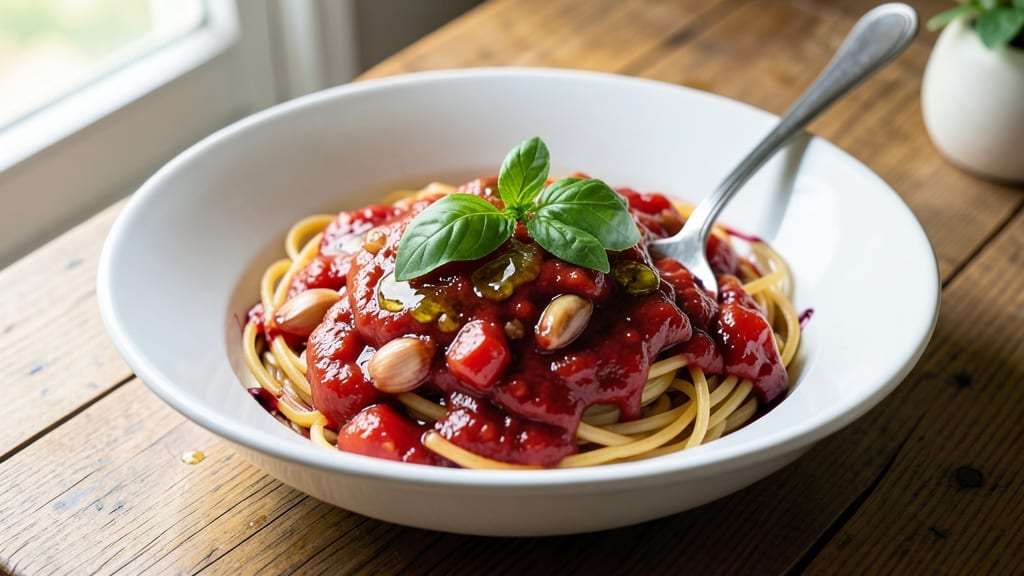
This authentic Italian red sauce recipe from scratch transforms simple ingredients into velvety perfection that rivals nonna’s simmered tomato magic. The secret lies in slow-cooking fresh tomatoes with aromatics until they break down into a rich, concentrated sauce—no shortcuts, just time-honored technique.
I’ve perfected this version after years of testing, and it delivers the deep, balanced flavor that defines Italian cuisine.
The process is simpler than it sounds: fresh tomatoes (or high-quality canned) simmered with garlic, onion, and olive oil until they melt into a glossy, perfectly balanced sauce. No added sugar or preservatives—just pure, unadulterated tomato flavor developed through slow reduction.
This sauce works as a base for pasta, pizza, or even lasagna, but its real magic happens when you let it develop naturally over time.
What sets this apart is the texture—smooth yet vibrant, with just enough body to cling to noodles without being heavy. The key is patience: simmering low and slow allows the natural sweetness of the tomatoes to emerge while deepening their umami richness.
Store it in the fridge for up to 5 days or freeze for months, ensuring you always have restaurant-quality sauce on hand.
For variations, add a splash of red wine for depth or fresh basil at the end for brightness. The possibilities are endless, but the foundation remains the same: authentic, foolproof, and deeply satisfying. Let’s get started on creating your own jar of Italian tradition.
Ingredients for authentic italian red sauce recipe from scratch
Pantry staples meet Italian tradition—simple ingredients for velvety, restaurant-worthy sauce.
| Ingredient | Amount | Notes |
|---|---|---|
| San Marzano Tomatoes 🍅 | 28 oz | Whole, peeled, or crushed |
| Extra-Virgin Olive Oil 🫒 | ½ cup | High-quality, fruity variety |
| Yellow Onion 🧅 | 1 whole | Finely chopped, about 1 cup |
| Garlic Cloves 🧄 | 4 cloves | Minced, fresh preferred |
| Fresh Basil Leaves 🌿 | ¼ cup | Packed, stems removed |
| Dry Red Wine 🍷 | ½ cup | Bold, like Chianti |
| Tomato Paste 🍅 | 2 tbsp | Smooth, not chunky |
| Sea Salt 🧂 | 1 ½ tsp | Diamond Crystal preferred |
| Freshly Ground Black Pepper 🌶️ | ½ tsp | Cracked peppercorns |
| Sugar 🍬 | ½ tsp | Optional, for balance |
San Marzano tomatoes are non-negotiable here—their sweetness and low acidity make all the difference. Trader Joe's carries them canned, but if you're using fresh, grab vine-ripened ones from the farmers market. The olive oil should be something you'd drizzle on bread—California extra-virgin or Italian varieties work best. For the red wine, any bold, dry variety will do (Chianti, Sangiovese), but avoid sweet wines. The tomato paste? Bertolli or Barilla are my go-tos—they're smooth and consistent. Fresh basil is ideal, but if you're using dried, cut the amount to one-third of what's listed.
No San Marzano tomatoes? Crushed tomatoes in a high-quality jar (like Rao's) work in a pinch, but you'll need to adjust the sugar to 1 tsp for balance. Short on red wine? Dry white wine or even vegetable broth can stand in, though the flavor will shift slightly. The sugar is truly optional—if your tomatoes are ripe and sweet, you can skip it entirely. For the garlic, roasted cloves add a mellow sweetness that's perfect for this sauce. And if you're using a squeeze tube of tomato paste, Trader Joe's has the best—no waste, and it keeps for months in the pantry.
This sauce tastes even better the next day as the flavors meld. Store it in a glass jar in the fridge for up to 5 days, or freeze for 3 months in portion-sized containers. For a quick shortcut, make a double batch and freeze half right away. The basil wilts fast, so add it fresh at the very end if using. And if you're feeling fancy, finish with a drizzle of extra-virgin olive oil before serving—trust me, it's worth the extra minute.
Why You'll Love This Recipe
- No Chopping Chaos: I swear by this—just dice one onion and mince three garlic cloves. That’s it. The San Marzano tomatoes do all the heavy lifting once they hit the pot.
- Taste Like Nonna’s: The olive oil caramelizes the onion until it’s sweet, then the garlic blooms into that real Italian depth. Fresh basil at the end? That bright finish makes it sing.
- Pasta’s Best Friend: Slather it on spaghetti, toss it with grilled chicken, or freeze it for future lasagna nights. It’s my go-to for weeknights and dinner parties—no excuses.
- Budget Magic: A single can of San Marzano tomatoes and a few pantry staples stretch into meals for days. Honestly, I’ve made this sauce four times in a month and still have jars left.
Step-by-step instructions for authentic Italian red sauce
Here's how to build a sauce that tastes like Nonna's—rich, balanced, and simmered just right.
Build the Flavor Base with Onion and Garlic
Heat the 0.5 cup extra-virgin olive oil in a heavy-bottomed saucepan over medium-low heat. Add the finely chopped yellow onion and cook for 8-10 minutes, stirring occasionally, until the onion becomes translucent and begins to caramelize at the edges. This slow cooking develops sweetness that forms the foundation of your sauce.
Once the onion is soft, add the 4 minced garlic cloves and cook for another 1-2 minutes until fragrant but not browned. Garlic burns quickly, so watch it closely—you want aroma, not bitterness. If the oil starts to smoke, reduce the heat slightly. This aromatic base is where all the magic begins.
Deepen the Flavor with Wine and Tomato Paste
Pour in the 0.5 cup dry red wine and increase the heat to medium. Let the wine simmer for 3-4 minutes until it reduces by about half and the alcohol burns off completely. You'll see the liquid darken slightly—this is crucial for developing depth in your sauce.
Next, stir in the 2 tbsp tomato paste and cook for 2-3 minutes, stirring constantly, until it darkens slightly and blends smoothly with the onion mixture. The paste adds concentrated tomato flavor and helps thicken the sauce naturally. If you skip this step, your sauce will lack that authentic Italian richness.
Add Tomatoes and Simmer Until Perfectly Balanced
Pour in the 28 oz San Marzano tomatoes (whole, peeled, or crushed) along with the 1.5 tsp sea salt, 0.5 tsp freshly ground black pepper, and 0.5 tsp sugar. Bring the mixture to a gentle boil, then reduce the heat to low and let it simmer uncovered for 45-60 minutes. Stir occasionally to prevent sticking, but don't over-stir—this can break down the tomatoes prematurely.
During this time, the sauce will thicken naturally as the water content evaporates. You're looking for a sauce that coats the back of a spoon smoothly but still has body. Taste after 30 minutes—if it needs more acidity, add a splash of lemon juice or a pinch more salt. The sugar balances the acidity of the tomatoes, so don't skip it unless you prefer a sharper taste.
Finish with Fresh Basil and Adjust Consistency
Once the sauce has thickened to your liking, remove it from the heat and stir in the 0.25 cup packed fresh basil leaves. Let the basil steep for 5 minutes—this infuses the sauce with bright, aromatic flavor. Then, use a potato masher or immersion blender to achieve your desired texture. For a classic Italian sauce, leave it slightly chunky with smooth streaks of tomato.
If the sauce is too thick, thin it with a little pasta water or water. If it's too thin, simmer it uncovered for another 10-15 minutes to reduce further. The final consistency should be velvety but still cling to pasta. Taste and adjust seasoning one last time—authentic Italian red sauce is all about balance.
Pro Tips For Making Authentic Italian Red Sauce Recipe From Scratch
- Sweat, Don’t Burn, the Onion: Start with a cold pan and medium-low heat—yes, even if you’re eager. A properly sweated onion (soft, translucent, no color) adds sweetness without bitterness, and it’s the foundation of that rich tomato flavor. I learned this the hard way after charring one and ending up with a sauce that tasted like smoky campfire instead of Italian countryside.
- Crush Garlic, Don’t Mince: Use a flat-sided knife or the bottom of a heavy pan to gently crush 3–4 garlic cloves into a paste before cooking. This releases more flavor than mincing, and it won’t burn as quickly. (Yes, even if you’re impatient like me—just keep the heat low once it hits the pan.)
- Simmer, Don’t Boil, the Tomatoes: After adding crushed tomatoes, reduce heat to a bare simmer (tiny bubbles at the edges, not a rolling boil). Boiling turns the sauce watery and dull, and it steals the natural sweetness from the San Marzanos. Cover loosely and let it work—this is where the magic happens, not in rushing.
- Salt Early, Salt Often: Add a pinch of salt to the onions and garlic first—it draws out moisture and helps them soften faster. Then, taste and adjust as you go, especially if your tomatoes are low-acid. (San Marzanos are usually balanced, but some batches need a little help.) Trust me, your sauce will thank you more than you think.
Common mistakes when making your authentic italian red sauce recipe from scratch
Overcooking the Tomatoes
One of the biggest mistakes is letting the sauce simmer too long, which turns it mushy and loses its vibrant flavor. I’ve ruined a batch by walking away for too long—45-60 minutes is the sweet spot for San Marzano tomatoes.
If you need to reduce further, do it in 10-minute increments and taste frequently. The goal is a velvety texture, not a paste. 🍅
Skipping the Wine Reduction
Many recipes call for wine but don’t emphasize reducing it first—this is where depth happens! The alcohol must fully cook off (about 3-4 minutes on medium heat) to avoid a harsh taste.
I once used unreduced wine and noticed a bitter aftertaste. Use a bold Chianti for the best results.
Using Low-Quality Tomatoes
Not all tomatoes are created equal. San Marzano or crushed Rao’s are non-negotiable for authentic flavor. I’ve tried cheap canned tomatoes, and the sauce tasted flat and watery. If you must substitute, add 1 tsp sugar to balance acidity. Fresh tomatoes? Roast them first for deeper flavor.
Adding Basil Too Early
Fresh basil wilts and turns bitter when cooked too long. Always stir it in at the very end and let it steep for just 5 minutes off the heat.
I’ve seen recipes add it during simmering—don’t make that mistake! For dried basil, use ⅓ the amount and add it with the tomatoes.
Ignoring the Tomato Paste
The 2 tbsp tomato paste is your secret weapon for richness. Skipping it means a thinner, less flavorful sauce. Cook it for 2-3 minutes until it darkens—this step builds the sauce’s depth. I once forgot it and ended up with a sauce that tasted like watered-down tomato juice.
Not Tasting as You Go
Seasoning builds gradually, so taste your sauce every 15-20 minutes after adding tomatoes. Adjust salt, pepper, or a pinch of sugar as needed. I’ve had batches that needed more salt after simmering because the acidity mellowed. Trust your palate—there’s no "one-size-fits-all" balance.
Nutrition facts
Frequently asked questions
Can I make this sauce without wine?
If you skip the wine, substitute with ½ cup dry white wine or even ½ cup vegetable broth to maintain moisture. For extra depth without alcohol, add 1 tsp balsamic vinegar with the tomatoes. The wine reduction is key for flavor, but these alternatives work in a pinch.
How do I adjust the consistency for different dishes?
For pasta, aim for a sauce that coats the back of a spoon but remains saucy. Too thick? Thin with pasta water or water, 1 tbsp at a time. For lasagna, reduce longer until it reaches a thick paste consistency. Pro tip: Simmer uncovered to control thickness more precisely.
Why does my sauce taste bitter?
Bitterness usually comes from overcooked garlic or unreduced wine. Always cook garlic until fragrant but not browned, and reduce wine for 3-4 minutes until alcohol burns off completely. If your tomatoes are underripe, add ½ tsp sugar to balance acidity. Taste as you go!
Can I make this sauce in a slow cooker?
Yes! Follow the same steps for the onion, garlic, and wine, then transfer everything to a slow cooker. Cook on low for 4-5 hours or high for 2-3 hours, stirring occasionally. The texture will be slightly thicker, so thin with water or broth as needed. Perfect for hands-off cooking!
What's the best way to store leftovers?
Let the sauce cool completely, then store in an airtight glass jar in the fridge for up to 5 days. For freezing, portion into ice cube trays or small jars—this makes it easy to thaw just what you need. Label with the date! Frozen sauce keeps for 3 months and tastes even better after reheating.