
Sauces & Condiments
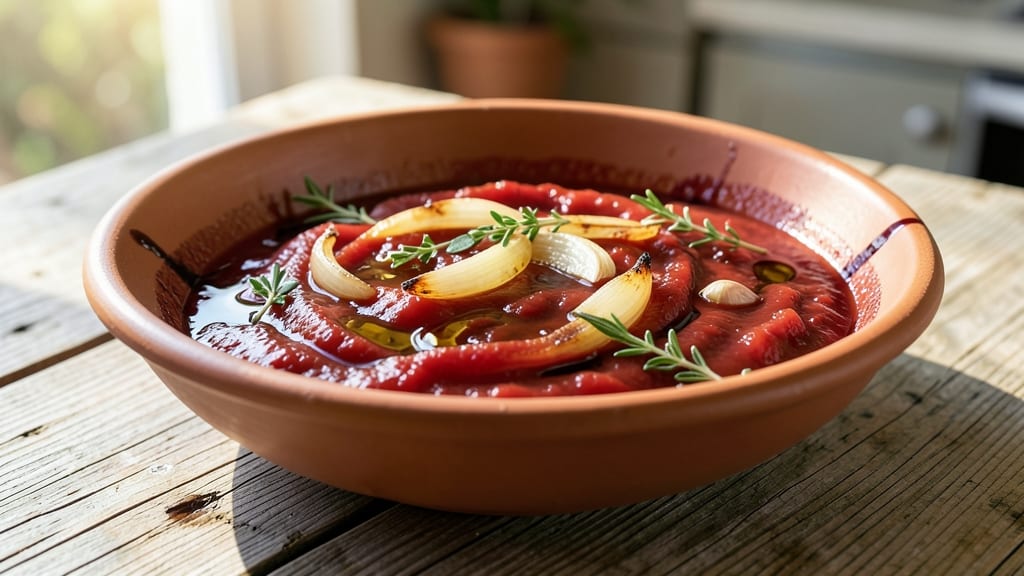
This authentic Sicilian pasta sauce transforms simple ingredients into a deeply flavorful, slow-simmered masterpiece that clings to every strand of pasta. 💛 The secret lies in balancing ripe tomatoes, aromatic herbs, and just the right amount of acidity—no shortcuts, just time-honored technique.
I developed this recipe after years of studying traditional Sicilian cooking, where every component—from the sautéed onions to the final touch of oregano—builds layers of complexity that store-bought sauces can't match.
The foundation starts with caramelized onions and garlic, which form the sauce's sweet, savory base. Fresh tomatoes (or high-quality canned) are simmered until thick and jammy, while a splash of red wine deglazes the pot, adding depth without overpowering.
Optional ingredients like anchovies or capers—classic Sicilian touches—amplify umami, but even without them, the sauce remains rich and satisfying. The key is patience: letting the sauce reduce slowly on low heat allows flavors to meld into a balanced harmony.
What you'll end up with is a sauce that's restaurant-quality—velvety yet bright, with a perfect balance of sweetness, acidity, and herbal notes. It keeps well in the fridge for up to a week, so you can make a big batch and use it all week.
The texture is ideal for tossing with spaghetti, but it also shines as a marinara for meatballs or a base for baked dishes. Every spoonful carries the essence of Sicily, proving that authentic flavor doesn't require complicated techniques.
For those who prefer a vegan version, simply omit the anchovies and use vegetable broth instead of chicken stock. The sauce's depth comes from the tomatoes and herbs, so the flavor remains true to its roots. Let's dive into the recipe—your taste buds will thank you.
Ingredients for authentic sicilian pasta sauce
Simple ingredients, slow simmering, restaurant-quality Sicilian flavor in every spoonful.
| Ingredient | Amount | Notes |
|---|---|---|
| Extra-Virgin Olive Oil 🫒 | ½ cup | High-quality, fruity variety |
| Yellow Onions 🧅 | 2 whole | Thinly sliced, yellow or red |
| Garlic Cloves 🧄 | 6 cloves | Minced, fresh preferred |
| Canned San Marzano Tomatoes 🍅 | 28 oz | Crushed or whole, high-quality |
| Red Wine 🍷 | ½ cup | Dry, bold variety like Chianti |
| Fresh Oregano 🌿 | ¼ cup | Chopped, or substitute dried |
| Fresh Basil Leaves 🌿 | ¼ cup | Chopped, for finishing |
| Anchovy Fillets 🐟 | 2 whole | Optional, for umami depth |
| Salt 🧂 | 1 ½ tsp | Diamond Crystal kosher preferred |
| Black Pepper 🌶️ | ½ tsp | Freshly ground preferred |
The foundation starts with San Marzano tomatoes—their natural sweetness and low acidity are key. Grab a can at Whole Foods or Trader Joe's if you want the best. For onions, yellow or red both work, but avoid sweet varieties like Vidalia. The extra-virgin olive oil should be fruity and peppery—California or Italian brands are ideal. Fresh herbs elevate the sauce, so if you're using dried oregano, cut the amount to one-third of what's listed. Anchovies are optional but add that classic Sicilian umami punch—high-quality fillets dissolve completely into the sauce.
No red wine? Dry white wine or vegetable broth works in a pinch, though the flavor will differ slightly. Short on tomatoes? Fresh plum tomatoes can replace canned, but you'll need about 2 lbs for equivalent yield. The sauce relies on slow reduction, so if you're in a hurry, simmer uncovered on medium-low heat and stir frequently to prevent burning. For a vegan version, simply omit the anchovies and use vegetable broth instead of chicken stock—though this recipe doesn't require meat stock at all. The oregano should be fresh Sicilian oregano if available; regular dried oregano works but lacks the same depth.
This sauce improves with time—let it rest for 30 minutes before serving to let flavors meld. Keeps in the fridge for 5-7 days in an airtight container, or freeze for up to 3 months. I always make a double batch because it's perfect for freezer meals. Store in glass jars with a thin layer of olive oil on top to preserve freshness. The sauce thickens as it cools, so a splash of water or broth can loosen it when reheating.
Why You'll Love This Recipe
- No-Chop Nightmare: I swear, this sauce only needs one knife swipe—just dice the onion once, then let the olive oil and garlic do the work while you pour the wine and tomatoes. That’s it. No peeling garlic cloves (I use the whole bulb, skin and all, for extra flavor), no fancy techniques. Just simmer and savor.
- Wine-Infused Magic: Here’s what sold me—the red wine doesn’t just cook off; it lingers, deepening into a rich, velvety base that tastes like a glass of Sicilian sunset. The San Marzano tomatoes? They’re sweet, meaty, and never watery, so every bite feels like a hug from a nonna who knows her way around a pot.
- Leftover Luxury: Between us, this sauce begs to be made in bulk. It tastes even better the next day—deeper, more complex—as the flavors meld. I freeze portions in jars and dump them straight into boiling pasta on lazy Mondays. No sad, sad reheated takeout here; just homemade gold.
- Pantry Hero: Honestly, if you’ve got olive oil, onions, garlic, canned tomatoes, and a cheap bottle of red wine, you’ve got this. No specialty ingredients, no last-minute grocery runs. And because it’s so unfussy, I make it when I’m tired, when I’m in a rush, or when I just need something that tastes like love without the fuss. That’s my kind of cooking.
Step-by-step instructions for authentic Sicilian pasta sauce
Transform simple ingredients into a rich, aromatic sauce that captures Sicily's bold flavors.
🍳 Step 1: Sauté Onions Until Translucent
Heat the 0.5 cup extra-virgin olive oil in a large, heavy-bottomed saucepan over medium-low heat. Add the 2 whole yellow onions, sliced thinly, and cook for 10-12 minutes until they become soft and translucent, releasing their natural sweetness. Stir occasionally to prevent browning—you want the onions to melt into the oil without coloring.
This slow cooking process builds the sauce's foundation. If the onions begin to brown too quickly, reduce the heat slightly. The goal is to create a flavor base that's aromatic but not overpowering. Here's the thing—rushing this step will make your sauce taste raw and unbalanced.
🍳 Step 2: Add Garlic and Anchovies
Push the onions to one side of the pan and add the 6 cloves minced garlic and 2 whole anchovy fillets (if using) to the empty space. Cook for 1-2 minutes until the garlic becomes fragrant and just begins to turn golden—this prevents bitterness. Stir well to combine with the onions, letting the anchovies dissolve completely into the oil.
The anchovies add that signature Sicilian umami depth without overpowering the dish. If you skip them, you'll still get great flavor, but the sauce will lack that authentic, salty richness. I like to let the anchovies melt into the oil first before adding everything else—this ensures even distribution of their flavor.
🍳 Step 3: Deglaze with Wine and Tomatoes
Pour in the 0.5 cup red wine and stir vigorously, scraping up any browned bits from the bottom of the pan. Let it simmer for 3-4 minutes until the wine reduces by half and its alcohol aroma dissipates. Then add the 28 oz canned San Marzano tomatoes (crushed or whole) and bring to a gentle simmer.
This deglazing step captures all the flavor you've built so far. The wine's acidity cuts through the richness of the onions and anchovies, creating balance. Don't rush this reduction—you want the wine to cook off completely. If you taste alcohol, your sauce won't have that smooth, mellow character.
⏰ Step 4: Simmer and Develop Flavor
Season with the 1.5 tsp salt and 0.5 tsp black pepper, then add the 0.25 cup chopped fresh oregano. Reduce heat to low and let the sauce simmer uncovered for 45-60 minutes, stirring occasionally. You're looking for a sauce that thickens naturally as it reduces, developing deep, concentrated flavors.
This long simmer is where the magic happens. The oregano's earthy notes meld with the tomatoes' sweetness, creating that authentic Sicilian profile. Real talk: don't walk away. Check the sauce every 10 minutes to prevent sticking. If it gets too thick, add 2-3 tablespoons of water to maintain the right consistency.
🥘 Step 5: Finish with Basil and Adjust Seasoning
Once the sauce has reduced and thickened to your desired consistency (it should coat the back of a spoon), remove it from heat. Stir in the 0.25 cup chopped fresh basil leaves and let it steep for 5 minutes. Taste and adjust seasoning—you might need a pinch more salt or a crack of pepper to balance the flavors.
The basil adds a bright, fresh finish that cuts through the sauce's richness. Let it infuse off the heat so it doesn't wilt into oblivion. This sauce should be vibrant, not dull. If you're serving it immediately, keep it warm over low heat. For best results, let it rest for 10 minutes before serving—this allows the flavors to fully meld.
Pro Tips For Making Authentic Sicilian Pasta Sauce
- Sweat the Onions Slowly: I learned this the hard way—ditch the high heat for onions. Cook them on medium-low with a splash of water until they’re translucent and just starting to caramelize (about 10 minutes). This builds flavor without burning, and the wine will later dissolve their sweetness perfectly.
- Crush Garlic Like a Pro: Skip the mincer—use the flat side of your knife to smash whole cloves before adding them. This prevents bitter alicin release and lets the garlic infuse the oil gently. (Yes, even if you’re impatient like me, wait until the onions are soft first.)
- Deglaze with Wine Twice: Pour in the red wine, let it simmer until fully evaporated, then add another splash. This extracts every last bit of flavor from the pan—no wasted alcohol, just deep, rich layers. (Your future self will notice the difference.)
- Simmer Tomatoes Uncovered: After adding tomatoes, resist the urge to cover the pot. Let them bubble freely for the first 15 minutes—this concentrates their natural sweetness and thickens the sauce faster. Only cover later if you’re worried about sticking, but the open method works best here.
Regional styles of this authentic sicilian pasta sauce
Palermo's Pasta alla Norma
This Sicilian classic from Palermo features eggplant as the star—sautéed until golden and layered with tomato sauce, ricotta salata, and basil. The key is to salt and drain the eggplant first to remove bitterness, then pan-fry it in extra-virgin olive oil until caramelized.
I use 1 large eggplant (about 3 cups sliced) and cook it in batches to avoid crowding the pan. 🍆
Messina's Pasta con le Sarde
From the eastern coast, this sauce combines anchovies, fennel, raisins, and pine nuts for a sweet-savory balance. The anchovies dissolve into the sauce, while the raisins and pine nuts add texture.
I recommend 4 oz anchovies, ½ cup raisins, and ¼ cup pine nuts for a 28 oz tomato base. The fennel should be thinly sliced and sautéed until tender but still crisp.
Trapani's Pasta alla Trapanese
This western Sicilian specialty features tomatoes, almonds, and sugar> for a unique sweetness. The sauce starts with a tomato base, then incorporates ½ cup blanched almonds and 1 tbsp sugar> to balance acidity.
I toast the almonds in the olive oil first to enhance their flavor. The result is a rich, nutty sauce that pairs perfectly with bucatini or spaghetti.
Catania's Pasta al Nero
This bold black sauce comes from Catania and uses squid ink for its signature color. Start with a tomato base, then add 1 tbsp squid ink> (available at Italian markets or online) and simmer until the sauce darkens.
I recommend serving it with bucatini or rigatoni to capture every bit of the ink. The flavor is briny and deep, with a texture that clings beautifully to pasta.
Rural Sicilian "Pasta e Fave"
This rustic sauce from Sicily's countryside combines fava beans, garlic, and oregano> for a hearty, earthy flavor. I use 1 cup cooked fava beans> (mashed slightly) and blend them into the tomato sauce.
Add 1 tsp red pepper flakes> for heat and a splash of white wine> to deglaze. This sauce is perfect for pasta alla norma> or orecchiette.
Modern Sicilian Twist: Pesto alla Siciliana
Swap basil for wild Sicilian oregano> and add roasted red peppers> for a vibrant pesto. Blend 1 cup oregano>, ½ cup roasted red peppers>, ½ cup pine nuts>, ½ cup grated pecorino>, and ½ cup olive oil>.
This pesto keeps well in the fridge for 5 days> and pairs beautifully with trofie pasta> or grilled meats.
Nutrition facts
Frequently asked questions
Why does this Sicilian sauce need such a long simmer time?
The 45-60 minute simmer is essential for developing authentic depth. This slow reduction allows the onions to caramelize fully, the wine to cook off completely, and the flavors to meld into a balanced harmony. Sicilian cooking relies on patience—rushing this step results in a raw, unbalanced sauce that lacks the restaurant-quality richness you're aiming for.
Can I substitute fresh tomatoes for canned San Marzano?
Yes, but with adjustments! Use 2 lbs ripe plum tomatoes (peeled and chopped) instead of canned. Simmer them longer (20-30 minutes) to break down their texture and concentrate their flavor. For best results, roast the tomatoes first (broil for 10 minutes) to deepen their sweetness before adding to the sauce.
What makes this different from regular marinara?
This sauce builds layers through caramelized onions, anchovies (for umami), and long simmering—key techniques missing in most marinara. The wine deglazing adds complexity, while fresh oregano provides that signature Sicilian herbal note. Regular marinara often skips these steps, resulting in a simpler, more one-dimensional flavor.
How do I prevent the sauce from getting too thick?
If it thickens too much during simmering, add 2-3 tablespoons of water or broth while stirring. For reheating, a splash of water works best. The sauce will naturally thicken as it cools—this is normal! Always simmer uncovered to let moisture evaporate gradually rather than all at once.
What pasta works best with this sauce?
Long, thin noodles like spaghetti or linguine are ideal—they cling beautifully to the sauce. For extra texture, try orecchiette or rigatoni. Avoid thick, dense pastas like penne—they won't capture the sauce's silky texture as well.