
Sauces & Condiments
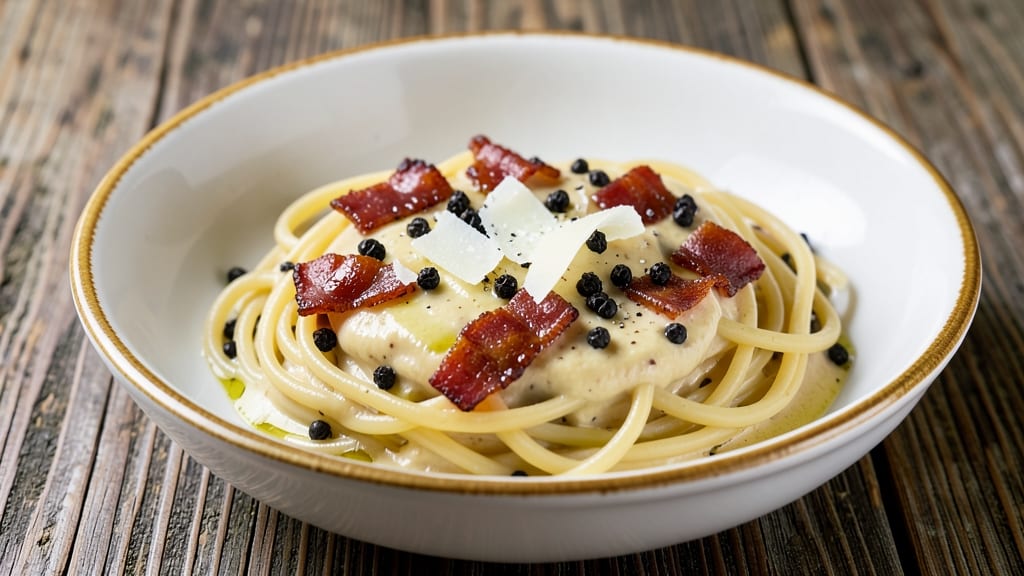
This basic carbonara sauce recipe delivers the creamy, peppery perfection that makes traditional pasta dishes unforgettable. The secret lies in a properly emulsified egg-yolk base that combines with rendered pancetta and sharp Italian cheeses, creating a sauce that clings beautifully to every strand of pasta.
What sets this method apart is the technique for achieving that signature velvety texture without risking a broken emulsion.
The foundation begins with high-quality ingredients: fresh egg yolks, aged Pecorino Romano, and authentic pancetta or guanciale. Black pepper is essential for that classic carbonara bite, while a splash of starchy pasta water serves as the emulsifier that binds everything together.
The process requires precise timing and gentle heat to create a sauce that's rich yet light, creamy without being greasy.
What you'll achieve is a sauce that's perfectly balanced—creamy from the egg yolks and cheese, savory from the pancetta, and brightened by fresh black pepper. This method ensures the sauce remains stable even when reheated, making it ideal for meal prep or serving family-style.
The result is a carbonara sauce that rivals restaurant-quality versions while keeping the preparation straightforward.
Whether you're preparing a classic carbonara or using this sauce as a base for other dishes, this recipe provides the essential technique for creating a flawless egg-yolk emulsion every time.
The key steps include proper temperature control and gradual incorporation of hot pasta water, which transforms simple ingredients into a luxurious sauce that elevates any pasta dish.
Ingredients for basic carbonara sauce
Eight essential ingredients transform into restaurant-quality carbonara sauce with perfect egg-yolk emulsion.
| Ingredient | Amount | Notes |
|---|---|---|
| Fresh Large Egg Yolks 🥚 | 4 whole | Separated from large eggs |
| Pancetta or Guanciale 🥓 | 4 oz | Diced into small pieces |
| Pecorino Romano Cheese 🧀 | 1 cup | Freshly grated, aged |
| Freshly Ground Black Pepper 🌶️ | 1 tsp | Coarsely cracked preferred |
| Unsalted Butter 🧈 | 2 tbsp | Cold, cubed for rendering |
| Extra-Virgin Olive Oil 🫒 | 2 tbsp | High-quality, fruity |
| Pasta Water 💧 | ½ cup | Reserved from cooked pasta |
| Diamond Crystal Kosher Salt 🧂 | ½ tsp | For seasoning pasta water |
The quality of your egg yolks and cheese makes all the difference. Fresh, large egg yolks from pasture-raised eggs yield the richest emulsion—avoid powdered egg products. For the cheese, Pecorino Romano is non-negotiable; its sharp, salty profile cuts through the richness. Whole Foods Market or specialty Italian markets carry the best aged varieties. Pancetta or guanciale should have visible marbling and a firm texture—Trader Joe's carries excellent pre-diced options, but if buying whole, ask your butcher to slice it thinly. The black pepper must be freshly ground; pre-ground loses potency within weeks.
No pancetta? Guanciale works perfectly, though it's pricier. Substituting bacon will alter the flavor profile—it's smokier and less refined. For a vegetarian version, mushroom duxelles (finely chopped mushrooms sautéed with garlic and herbs) can replace the cured meat, though the sauce will have a different character. The butter and olive oil should be cold when added to prevent premature emulsification. If you're concerned about the sauce breaking, add the pasta water gradually while whisking vigorously. The kosher salt in the pasta water acts as an emulsifier, so don't skip it—even if your pasta is already salted.
Once emulsified, this sauce reheats beautifully—keep it in the fridge for up to 3 days in an airtight container, sealed with plastic wrap pressed directly on the sauce to prevent a skin from forming. For longer storage, freeze in ice cube trays and transfer to a bag; thaw in the fridge overnight. The sauce thickens as it cools, so add a splash of warm water when reheating. Portion into individual servings before freezing for easy meal prep—simply toss with fresh pasta and a sprinkle of black pepper when ready to serve.
Why You'll Love This Recipe
- Same ingredients, endless uses: toss with spaghetti for dinner, stir into eggs for breakfast, or even slather on toast. My kids beg for it—yes, even when I’m too tired to cook.
- No-Fuss Technique: I swear by this method—just toss pancetta in a pan until crispy, then whisk yolks with cheese off the heat so they don’t scramble. Two steps, zero stress.
- Rich Without Effort: That creamy yolk-butter-cheese combo? It’s like a hug for your taste buds—salty, peppery, and so satisfying you’ll forget it took less time than ordering takeout.
- Weeknight or Guest Night: Same ingredients, endless uses: toss with spaghetti for dinner, stir into eggs for breakfast, or even slather on toast. My kids beg for it—yes, even when I’m too tired to cook.
Step-by-step instructions for perfect carbonara emulsion
Master this technique and you'll achieve a silky, never-breaking sauce every time.
Render Pancetta Until Golden and Crisp
Heat a large skillet over medium heat and add the 4 oz diced pancetta or guanciale. Let it cook undisturbed for 5-6 minutes until the fat renders out and the meat becomes deep golden brown and crispy. Stir occasionally, but avoid breaking the pieces too much—you want texture in your sauce.
This slow rendering process extracts maximum flavor from the cured meat. If the pancetta starts smoking or browning too quickly, reduce the heat slightly. You'll know it's ready when the fat in the pan reaches about 170°F—this is your signal to remove the skillet from heat momentarily. Remove the pancetta with a slotted spoon and set aside, leaving the rendered fat in the pan.
Prepare the Egg-Yolk Mixture Off Heat
In a medium bowl, whisk together the 4 whole fresh large egg yolks, 1 cup freshly grated Pecorino Romano cheese, and 1 tsp freshly ground black pepper. The mixture should be thick and pale yellow, resembling a custard. I use a wire whisk for this step to incorporate maximum air, which helps create the emulsion later.
Here's the critical part: the pan must be off heat when you add the egg mixture. The residual heat from the rendered fat will be enough to gently cook the eggs into a silky sauce without scrambling them. If you add the eggs to a hot pan, you'll end up with curdled eggs instead of a creamy emulsion.
Combine and Emulsify with Pasta Water
Return the skillet to low heat and add the reserved pancetta back to the rendered fat. Immediately pour in the egg mixture and whisk constantly for 30-45 seconds until it begins to thicken. This is where the magic happens—the fat from the pancetta and the starch from the pasta water create the emulsion that binds everything together.
If the sauce starts to look too thick, add 1-2 tablespoons of the reserved pasta water at a time, whisking vigorously after each addition. You're aiming for a sauce that coats the back of a spoon but still flows smoothly. The key is to work quickly and keep whisking—this prevents the eggs from cooking too fast and breaking the emulsion.
Finish with Butter and Olive Oil
Remove the skillet from heat completely and add the 2 tbsp cold cubed unsalted butter and 2 tbsp extra-virgin olive oil. Whisk until the butter melts and the sauce becomes glossy and silky. The fat from the butter and olive oil adds richness and helps stabilize the emulsion even further.
Taste and adjust seasoning with additional Pecorino Romano cheese or black pepper if needed. The sauce should be tangy, slightly salty, and richly peppery. If it's too thick, add more pasta water 1 tablespoon at a time until it reaches your desired consistency. The sauce will thicken slightly as it cools, so aim for a slightly looser texture when hot.
Toss with Pasta and Serve Immediately
Add the drained pasta to the skillet and toss gently but thoroughly to coat each strand with the sauce. Work quickly—carbonara is best served immediately while the sauce is at its peak texture. If you notice the sauce starting to tighten up as it cools, add a splash of hot pasta water to loosen it.
The final result should be al dente pasta perfectly coated in a glossy, creamy sauce with visible flecks of crispy pancetta. Serve immediately with additional Pecorino Romano cheese and freshly cracked black pepper on top. Each bite should deliver a perfect balance of rich, creamy sauce, salty cheese, and peppery heat.
Pro Tips For Making Basic Carbonara Sauce
- Cook Pancetta Low: I learned this the hard way—crispy pancetta tastes great, but it burns before the guanciale renders its fat. Keep the heat at medium-low, stirring often, until the meat just turns golden and the fat pools. That’s when you know it’s ready for the eggs.
- Grate Cheese Fresh: Pre-shredded Pecorino Romano hides anti-caking agents that turn your sauce grainy. Use a microplane or fine grater right before mixing it into the eggs—it dissolves smoother and adds a sharper bite. (Yes, even if it’s a pain.)
- Reserve the Fat: Drain the pancetta/guanciale almost completely, but leave 1-2 tablespoons of fat in the pan. That residual fat emulsifies the egg sauce better than butter alone—it’s the bridge between richness and texture.
- Temper Eggs Slowly: Skip the microwave—heat the yolks gently off the stove in a bowl over simmering water (or a double boiler) until they’re just warm, not hot. Cold eggs dumped into hot pasta turn rubbery. Warm eggs? Creamy perfection. (Your future self will thank you.)
Make-ahead tips for leftovers
Pre-Make Sauce Base
Prepare the pancetta and cheese mixture ahead of time to streamline your cooking day. Cook the 4 oz pancetta until crispy, then store it in an airtight container with the rendered fat.
Grate the 1 cup Pecorino Romano and keep it refrigerated in a sealed container—it stays fresh for 3 days this way. I like to pre-grate cheese because it's easier to measure and mix later. 💡
Egg-Yolk Prep Ahead
Whisk the 4 egg yolks with 1 tsp black pepper and store them in a small bowl covered with plastic wrap pressed directly on the surface. This prevents a skin from forming and keeps them fresh for 24 hours in the fridge.
I always label these bowls "Carbonara Eggs" so I don't accidentally use them for baking. 🥚
Freeze Sauce Portions
For long-term storage, combine the rendered pancetta fat, grated cheese, and whisked egg yolks in a bowl. Transfer to ice cube trays and freeze for 2 hours. Pop out the cubes and store in a freezer bag for up to 1 month.
To use, thaw overnight in the fridge, then reheat with 1 tbsp pasta water per cube while whisking constantly over low heat. 🧊
Pasta Water Reserve
Cook your pasta 1 minute less than package instructions and reserve 1 cup pasta water in a small container. The starchy water is essential for emulsification—it acts like a natural thickener when added to the sauce.
I keep this water warm in a separate pot on the stove so it's ready when I need it. 💧
Reheating Perfection
When reheating pre-made sauce, use a double boiler method for the creamiest results. Place the sauce in a heatproof bowl over simmering water, whisking constantly until warmed through.
Add 1 tbsp hot pasta water at a time if the sauce thickens too much. Never microwave—it causes the emulsion to break and creates a grainy texture. 🔥
Meal Prep Timeline
Here's my foolproof schedule: Cook pancetta the night before (15 minutes); grate cheese and whisk eggs the morning of (5 minutes); then assemble and toss with fresh pasta in 10 minutes.
The sauce stays stable for 3 days in the fridge, so you can prep multiple servings for busy weeks. 📅
Nutrition facts
Frequently asked questions
Why does my carbonara sauce break or get grainy?
The most common causes are adding eggs to a hot pan or overcooking them. Always combine the egg mixture with the rendered fat off heat or at low heat, and whisk constantly for only 30-45 seconds. If it starts to curdle, immediately remove from heat and add 1 tbsp cold water while whisking vigorously. The sauce should be glossy and silky, not scrambled.
Can I make carbonara sauce without eggs?
Traditional carbonara requires eggs for the signature creamy texture, but you can create a vegetarian version using 1/2 cup heavy cream or cashew cream instead. Replace the egg yolks with these alternatives and add them to the rendered pancetta fat while whisking over low heat. For best results, use 1/4 cup pasta water to help emulsify the cream-based sauce.
What's the difference between carbonara and Alfredo sauce?
Carbonara uses egg yolks, cheese (Pecorino Romano), and pancetta/guanciale for a rich, peppery flavor with a creamy yet slightly textured finish. Alfredo is made with just butter, cream, and Parmesan, resulting in a smoother, milder sauce. Carbonara's emulsion comes from the fat in pancetta and starchy pasta water, while Alfredo relies solely on dairy for creaminess.
How do I know when my pancetta is perfectly rendered?
Look for deep golden brown color and crispy edges on the pancetta pieces. The fat should be bubbling gently but not smoking. When you lift a piece, it should release easily from the pan. The rendered fat should reach about 170°F—if it's too hot, the eggs will scramble when added. Remove the pancetta briefly to let the pan cool slightly before combining with eggs.
Can I use whole milk instead of pasta water for the sauce?
Never use whole milk in carbonara—it will create a heavy, curdled mess. The starchy pasta water is essential for creating the proper emulsion. If you're short on pasta water, you can use 1/4 cup warm water mixed with 1 tsp cornstarch as a substitute, but it won't have the same rich flavor. Always keep some pasta water reserved when cooking your noodles.