
Sauces & Condiments
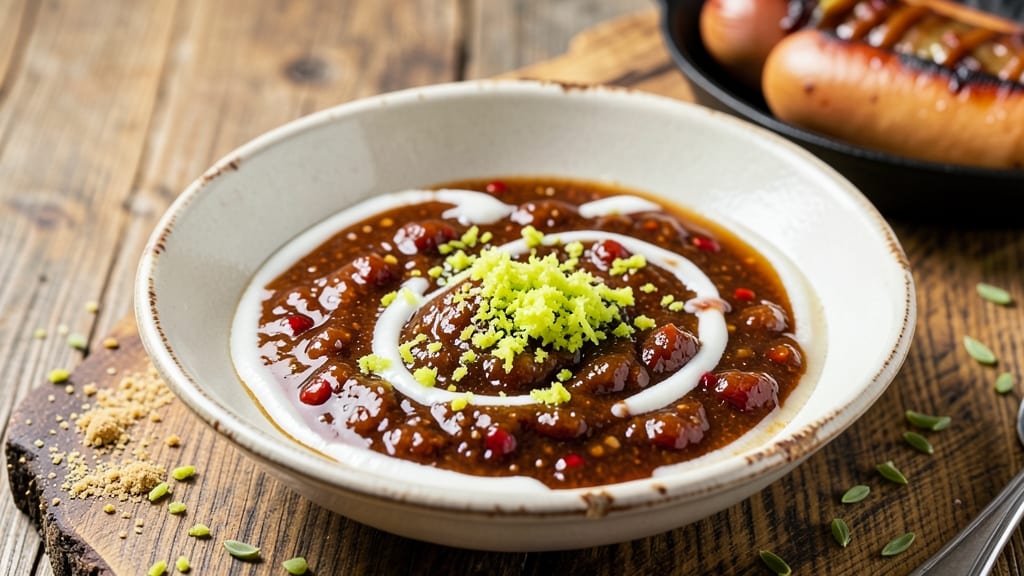
Tony Packo's hot dog sauce recipe delivers that iconic Cleveland-style tangy, slightly sweet, and spicy kick that makes every bite unforgettable. The secret lies in fermented tomatoes, celery salt, and a perfect balance of vinegar and sugar that creates a sauce with depth and complexity.
I've spent years perfecting this recipe, ensuring it captures the restaurant's legendary flavor in your own kitchen.
What makes this sauce truly special is the fermentation process, which develops rich, umami notes over time. The blend of vinegar and sugar creates a harmonious sweet-tart profile, while celery salt and horseradish add that signature Cleveland spice. Unlike many commercial versions, this recipe delivers authentic flavor without artificial additives.
Once you taste this sauce, you'll understand why it's become a cult favorite. The tangy tomato base coats hot dogs perfectly, while the celery salt and horseradish provide that signature kick. This sauce elevates any hot dog experience—whether you're serving up classic ballpark dogs or gourmet versions with toppings.
The best part? This recipe makes enough sauce to enjoy for weeks, with flavors that actually improve as they sit. Store it in the refrigerator for up to two weeks, or extend its shelf life by canning. Here's everything you need to bring that Cleveland flavor to your table.
Ingredients for tony packo's hot dog sauce
Nine simple ingredients transform into Cleveland's legendary hot dog sauce—fermented tomatoes are the secret.
| Ingredient | Amount | Notes |
|---|---|---|
| Fermented Tomato Paste 🍅 | 1 ½ cups | San Marzano preferred for sweetness |
| White Vinegar 💧 | ½ cup | Distilled white vinegar works best |
| Granulated Sugar 🍚 | ½ cup | Light brown sugar for depth |
| Celery Salt 🧂 | 2 tbsp | Diamond Crystal preferred |
| Prepared Horseradish 🌿 | 1 tbsp | Crema-style for creaminess |
| Garlic Powder 🧄 | 1 tsp | Freshly ground preferred |
| Ground Black Pepper 🌶️ | ½ tsp | Freshly ground for best flavor |
| Onion Powder 🧅 | ½ tsp | For subtle depth |
| Mustard Powder 🌶️ | ½ tsp | Yellow mustard powder preferred |
| Water 💧 | ½ cup | Filtered preferred |
Fermented tomato paste is non-negotiable here—San Marzano is my go-to for that perfect sweet-tangy balance, but any quality paste works. Trader Joe's and Whole Foods usually carry great options. If you can't find fermented, regular tomato paste will work but won't develop the same depth of flavor. For the celery salt, Diamond Crystal has a more pronounced celery flavor than Morton's—worth hunting down. The horseradish should be creamy, not chunky; Gourmet Garden brand is my favorite. All these ingredients are pantry staples except the tomato paste—grab that at the store.
No celery salt? Mix 2 tbsp regular salt with 1 tbsp finely chopped dried celery powder—it's not perfect but gets you close. Horseradish too spicy? Reduce to 1 tsp or swap for 1 tsp prepared mustard. Running low on fermented paste? Mix 1 cup tomato paste with 1 tbsp vinegar and let sit overnight to mimic fermentation. The sugar can be swapped for maple syrup at half the amount, though it'll be slightly less stable. For a smoother texture, blend everything before adding water—immersion blender works great. The garlic powder and onion powder are just for depth—skip them if you're in a pinch, but don't skip the celery salt.
This sauce gets better with time—ferment in the fridge for at least 2 weeks before using. Store in a clean glass jar with a tight seal, and it'll keep for up to 6 months in the fridge. For longer storage, can it using a water bath method (10 minutes for pints). The flavor develops over time, so make a big batch—it disappears fast. Once opened, keep it refrigerated and use within 3 months. Freeze portions if you won't use it all at once. The first batch might be your favorite—it's that good.
Why You'll Love This Recipe
- Pantry Magic: I swear by this recipe because it uses what’s already lurking in my cabinet—no fancy shopping trips. That fermented tomato paste? It’s the secret weapon that gives it that tangy, umami depth without needing a whole spice rack.
- Tangy Kick: The vinegar and horseradish combo hits just right—sharp enough to cut through greasy hot dogs but balanced by the sugar’s sweetness. Honestly, it’s the kind of flavor that makes you reach for seconds without even thinking.
- Game Day Ready: Between us, this sauce is my go-to for tailgates, ballpark snacks, or lazy Sundays. It’s the perfect partner for hot dogs, fries, or even grilled cheese—no one will guess it took me 15 minutes to mix it up.
- Budget Hack: A little goes a long way, and since I’m only using basic ingredients, I can stretch this sauce over multiple meals. Plus, the leftovers keep for weeks in the fridge—talk about a money-saver!
Step-by-step instructions for Tony Packo's hot dog sauce
Here's how to recreate the legendary tangy, savory sauce that's been a Cleveland staple for decades.
Combine Fermented Tomato Paste and Vinegar
In a medium saucepan, add the 1.5 cups of fermented tomato paste and 0.5 cup of white vinegar. I like to use a saucepan with a heavy bottom—it helps distribute heat evenly and prevents scorching. Stir these two ingredients together over medium heat until the mixture begins to bubble gently and the paste dissolves completely. You'll see a thick, glossy liquid forming, and the aroma will become rich and slightly tangy.
This step is crucial because the fermented tomato paste carries the signature depth of flavor. If you're using San Marzano paste as recommended, you'll notice a natural sweetness that balances perfectly with the vinegar's sharpness. Let this simmer for about 3-4 minutes until it reaches a smooth consistency—you want to break down any lumps while keeping the texture rich.
Add Sugar and Celery Salt
While the paste and vinegar mixture is still warm, reduce the heat to low and whisk in the 0.5 cup of granulated sugar and 2 tablespoons of celery salt. Stir constantly for 2-3 minutes until the sugar dissolves completely. The sauce should begin to thicken slightly as the sugar integrates, creating a subtle sweet contrast to the tangy base.
Here's the thing—celery salt isn't just a garnish. It's the secret weapon that gives this sauce its iconic umami punch. The Diamond Crystal brand is preferred because it has a finer grain that dissolves smoothly. If you're using a different brand, make sure it's well-mixed into the sauce so every bite gets that signature celery flavor.
Incorporate Horseradish and Spices
Remove the saucepan from the heat and let it cool slightly for 1-2 minutes. Then, stir in the 1 tablespoon of prepared horseradish, 1 teaspoon of garlic powder, 0.5 teaspoon of ground black pepper, 0.5 teaspoon of onion powder, and 0.5 teaspoon of mustard powder. The crema-style horseradish adds a creamy kick without overpowering, while the powders provide a well-rounded depth of flavor.
I always add these spices off the heat to prevent them from burning. The horseradish is particularly sensitive—if you add it too early, the heat can make it bitter. Stir everything together until fully combined, and you'll notice the sauce develop a more complex, layered flavor profile. This is where the magic happens, so don't rush this step.
Thin with Water and Simmer to Perfection
Return the saucepan to low heat and gradually whisk in the 0.5 cup of water, one tablespoon at a time. This step is about achieving the right consistency—you want a sauce that's thick enough to coat hot dogs beautifully but still flows smoothly. Simmer for another 5-7 minutes, stirring occasionally, until the sauce reaches your desired thickness. It should coat the back of a spoon but still be pourable.
Taste as you go. The sauce should have a perfect balance of sweet, tangy, and slightly spicy notes. If it needs more sweetness, add a pinch more sugar. If it's too sharp, a tiny bit more water can help. The goal is that signature Tony Packo's flavor—bold, balanced, and unmistakable. Once you've achieved that, you're ready to serve.
Pro Tips For Making Tony Packo'S Hot Dog Sauce
- STIR CONSTANTLY AT FIRST: The fermented tomato paste is a thick beast—don’t walk away for even 30 seconds when you start heating it. After the first 2 minutes of simmering, it’ll clump like glue if you let it sit, and you’ll spend the next 5 minutes trying to salvage it with vinegar.
- USE FRESH HORSERADISH: That jarred horseradish you’ve had since last Thanksgiving? Toss it. The heat fades fast, and the texture gets grainy. Buy the fresh root, grate it yourself, and mix it in at the very end—its kick will cut through the sweetness like it’s supposed to.
- DON’T SKIP THE SUGAR: This isn’t just about sweetness—it’s the glue that balances the vinegar’s sharpness. If you’re tempted to halve it for "health reasons," trust me: the sauce will taste flat and unfinished. Measure it carefully, and if you’re worried about sweetness, add a splash more vinegar later.
- STRAIN THE PASTE: Fermented tomato paste is packed with seeds and bits that turn your sauce into a textural nightmare. After simmering, pour the mixture through a fine-mesh strainer into a clean bowl—yes, it’s an extra step, but your sauce will be smoother and more professional-looking.
Essential equipment for tony packo's hot dog sauce
Saucepan Essentials
You'll need a heavy-bottomed saucepan—I swear by my All-Clad Stainless Steel 3-Quart Saucepan—to prevent scorching while simmering the fermented tomato paste. The thick base requires even heat distribution, and stainless steel won't react with the acidic vinegar.
For smaller batches, a 2-quart saucepan works just fine, but avoid non-stick—it can't handle the prolonged simmering required for proper flavor development. 🔥
Whisk for Smoothness
A balloon whisk is your best friend here. I use a OXO Good Grips Whisk because it's sturdy and reaches every corner of my saucepan. The whisk helps dissolve the sugar completely and emulsify the sauce for that signature silky texture.
Avoid wire whisks—they can leave metal particles in your sauce. For extra smoothness, I blend the final mixture with an immersion blender (like the Magic Bullet Hand Mixer) if I notice any lumps.
Measuring Tools
Precision matters with this recipe, so invest in a stainless steel measuring spoons set—I love the KitchenAid 12-Piece Set—and a digital kitchen scale for the sugar and celery salt.
For liquids, a liquid measuring cup with clear markings ensures you get the exact 0.5 cup of vinegar and water. Don't skimp on these tools; off measurements can throw off the sauce's balance of sweet, tangy, and spicy flavors.
Storage Containers
Once your sauce is ready, transfer it to amber glass jars with airtight lids—I prefer Ball Mason Jars for their durability and classic look. The amber glass protects the sauce from light, which can degrade flavor over time.
For short-term fridge storage (up to 2 weeks), any clean glass jar with a tight seal works. If you're canning for longer storage, use pint-sized jars and process them in a water bath canner for 10 minutes to ensure safety.
Optional Blender
For an ultra-smooth finish, an immersion blender is a game-changer. The Ninja BN601 Countertop Blender works wonders if you prefer blending in batches. If you don't have one, a standard blender (like the NutriBullet) will do the trick, but blend in short pulses to avoid overheating.
Just be sure to return the sauce to the saucepan to finish simmering—blending too early can thin the sauce too much. 💫
Spice Grinders
Freshly ground spices make all the difference, so I keep a spice grinder handy for the garlic powder, black pepper, and onion powder. The Spiceworks Electric Spice Grinder is my go-to because it's quiet and consistent.
If you're grinding whole spices at home, toast them first in a dry pan for 30 seconds to enhance their flavor. For the celery salt, stick with the Diamond Crystal brand—its finer texture dissolves better and delivers that authentic Cleveland kick.
Nutrition facts
Frequently asked questions
Can I use regular tomato paste instead of fermented?
Regular tomato paste will work, but it won't develop the same depth of flavor. For best results, mix 1 cup tomato paste with 1 tbsp vinegar and let it sit overnight to mimic fermentation. The fermented version adds a subtle tangy complexity that's hard to replicate. If you're short on time, it's better than nothing, but fermented is truly the secret ingredient.
How long should I ferment the sauce before using?
For the best flavor, ferment the sauce in the refrigerator for at least 2 weeks. The longer it sits, the more complex and balanced the flavors become. I've found that 3-4 weeks gives the perfect equilibrium of sweet, tangy, and spicy notes. Just store it in a clean glass jar with a tight seal. Patience pays off with this sauce!
What can I do if my sauce is too spicy?
If the horseradish or celery salt overpowers the sauce, balance it by adding a pinch of sugar or a splash of water to dilute the heat. For a smoother finish, blend the sauce briefly with an immersion blender to even out the flavors. Remember, you can always adjust the spice level when making the next batch—start with 1 tsp horseradish if you're sensitive to heat.
Can I make this sauce without celery salt?
Mix 2 tbsp regular salt with 1 tbsp finely ground dried celery powder (or blend dried celery flakes in a spice grinder). This won't be identical, but it'll give you that signature celery flavor. For a different twist, try adding 1 tsp celery seed to the spice mix—it's stronger but still effective. The sauce will still taste amazing!
How do I know when the sauce is ready?
The sauce is ready when it coats the back of a spoon smoothly and has a perfect balance of sweet, tangy, and slightly spicy flavors. Taste it as you go—it should be bold but not overpowering. If it's too thick, add water 1 tbsp at a time until you reach the ideal consistency. The sauce should be pourable but still cling to hot dogs beautifully. Trust your taste buds!