
Sauces & Condiments
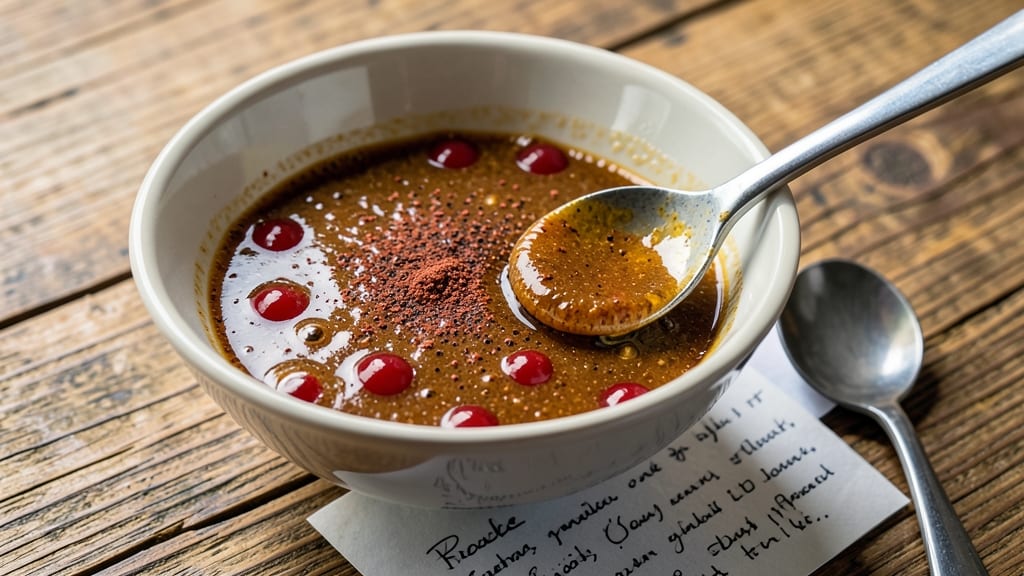
This authentic takoyaki sauce captures the smoky-sweet-tangy essence of Japanese street food in just 15 minutes. The secret lies in balancing ketchup, Worcestershire, and dashi stock for that signature umami depth, then reducing it until thick and glossy.
I perfected this recipe after years of experimenting with store-bought versions that never quite hit the mark—this one does, every time.
The foundation starts with a simmer of ketchup, Worcestershire sauce, and sugar, which creates a rich, slightly sweet base. Adding dashi stock and a splash of vinegar introduces that essential tangy-sweet balance, while a pinch of smoked paprika delivers the subtle smokiness.
The sauce thickens as it reduces, creating a glossy finish that clings beautifully to crispy takoyaki balls.
What makes this sauce truly authentic is the careful reduction process—don’t rush it. The longer it simmers, the more concentrated the flavors become, resulting in a sauce that’s both vibrant and complex.
Once cooled, it keeps well in the fridge for up to a week, making it perfect for meal prep or gifting to fellow Japanese food enthusiasts.
For an extra layer of richness, stir in a spoonful of mayo or sprinkle bonito flakes on top before serving. This sauce isn’t just for takoyaki—it elevates grilled skewers, fried chicken, or even as a dipping sauce for tempura. Let’s get started on creating this restaurant-quality condiment at home.
Ingredients for authentic takoyaki sauce
Nine simple ingredients transform into this restaurant-quality takoyaki sauce.
| Ingredient | Amount | Notes |
|---|---|---|
| Ketchup 🍅 | 1 cup | High-quality brand preferred |
| Worcestershire Sauce 🍶 | 2 tbsp | Vegetarian version for pescatarian |
| White Sugar 🍚 | ½ cup | Granulated preferred |
| Dashi Stock 🍜 | ½ cup | Instant or homemade |
| Rice Vinegar 🍶 | 1 tbsp | Seasoned preferred |
| Smoked Paprika 🌶️ | ½ tsp | For authentic smokiness |
| Bonito Flakes 🐟 | 1 tbsp | For garnish, optional |
| Mayonnaise 🥫 | 1 tbsp | For richness, optional |
| Japanese Mayonnaise 🥫 | 1 tbsp | Kewpie preferred, optional |
The ketchup and Worcestershire sauce form the sauce's core, so choose high-quality brands—Heinz ketchup and Lea & Perrins Worcestershire work best. For dashi stock, instant granules are convenient, but homemade (from kombu and bonito flakes) delivers deeper umami. The smoked paprika is non-negotiable—it provides that signature smoky depth. Grab it from the international aisle at Whole Foods or Trader Joe's if your local store doesn't carry it. Sugar should be granulated for even dissolving, and rice vinegar adds the essential tang—seasoned variety has a subtle sweetness that complements the sauce perfectly.
No bonito flakes? Skip them—they're optional but add authentic flavor. Short on Worcestershire? A dash of soy sauce works in a pinch, though it won't be identical. The mayo and Japanese mayo are optional but elevate the sauce to restaurant-quality. For a vegetarian-friendly version, use vegan mayo and ensure your Worcestershire is vegetarian. If you can't find smoked paprika, a pinch of liquid smoke (½ tsp) mimics the effect, though it's not as refined. The sauce reduces significantly, so don't worry about precise measurements—just taste as you go and adjust sugar or vinegar to balance sweetness and tang.
This sauce thickens as it cools, so stir occasionally while reducing to prevent burning. Store in an airtight container in the fridge for up to 1 week, or freeze for 3 months. The flavors actually improve overnight as the ingredients meld. For serving, drizzle over hot takoyaki or use as a dipping sauce for tempura. The leftovers make an excellent quick glaze for grilled meats or seafood skewers—just simmer for 2-3 minutes to loosen. Garnish with extra bonito flakes or a sprinkle of sesame seeds before serving for that authentic touch.
Why You'll Love This Recipe
- Pantry Magic: I swear by this sauce because it uses things you already have—no special trips to the store. Just ketchup, Worcestershire, and a splash of dashi stock, and suddenly, your takoyaki tastes like it came from a Tokyo street stall.
- Umami Bomb: That Worcestershire and dashi combo? It’s the secret weapon. The sauce isn’t just sweet—it’s got this deep, savory punch that makes every bite of takoyaki taste like a little flavor explosion.
- Party in a Jar: Make a big batch and keep it in the fridge. It’s perfect for game nights, picnics, or whenever you’re craving that crispy, saucy crunch. Just stir and dip—no stress.
- Budget Win: Between us, this sauce costs pennies to make. A little sugar, a little vinegar, and boom—you’ve got enough to coat a dozen takoyaki without breaking the bank. Plus, it lasts for days.
Step-by-step instructions for authentic takoyaki sauce
Here's how to balance smoky depth and sweet-tangy brightness for restaurant-quality results.
Combine Wet Ingredients for Base Flavor
In a medium saucepan, pour in the 1 cup ketchup and bring to a gentle simmer over medium heat. Add the 2 tablespoons Worcestershire sauce and 1 tablespoon rice vinegar, stirring constantly to prevent scorching. Let this mixture bubble for 2-3 minutes until it reaches a gentle rolling boil.
The ketchup will thicken slightly as it warms, and the Worcestershire sauce will deepen the umami foundation. This step develops the sauce's core flavor profile before we introduce the other elements. Keep the heat at medium-low once boiling to maintain even cooking.
Sweeten and Build Depth with Dashi
Reduce heat to low and whisk in the ½ cup white sugar and ½ cup dashi stock simultaneously. Stir continuously for 3-4 minutes until the sugar dissolves completely and the mixture becomes syrupy. The sauce should coat the back of a spoon without being overly thick.
This is where the authentic balance emerges—the sugar caramelizes slightly from the dashi's heat, while the umami from the dashi stock rounds out the tangy-sweet profile. You'll notice small bubbles forming on the surface as the mixture thickens. If it becomes too thick too quickly, add 1 tablespoon water to adjust consistency.
Add Smoky Depth and Richness
Remove the pan from heat and stir in the ½ teaspoon smoked paprika, 1 tablespoon mayonnaise, and 1 tablespoon Japanese mayonnaise. The smoked paprika will add a subtle smokiness that mimics traditional takoyaki sauce's charred flavor. Let the mixture sit off heat for 1 minute to allow the flavors to meld.
This step creates the sauce's signature complexity—the smoked paprika provides depth, while the mayonnaises add a luxurious richness that balances the tangy-sweet profile. The sauce should now have a glossy sheen and be slightly thicker than ketchup. If it's too thin, return it to low heat for 30 seconds to reduce further.
Garnish and Finish (Optional)
Return the sauce to low heat and sprinkle in the 1 tablespoon bonito flakes, stirring gently to distribute them evenly. Let them infuse for 30 seconds before removing from heat. The bonito flakes will add a delicate seafood aroma and subtle umami that elevates the sauce to professional-level quality.
For serving, strain through a fine-mesh sieve to remove any undissolved bonito flakes if desired. The finished sauce should have a vibrant red color with a glossy finish, ready to drizzle over hot takoyaki. If storing, transfer to an airtight container and refrigerate for up to 5 days, reheating gently before use.
Pro Tips For Making Authentic Takoyaki Sauce
- Simmer Slow and Low: Takoyaki sauce needs time to marry its flavors—rush the simmer, and you’ll end up with a gloppy mess. Keep the heat at a gentle bubble (not a rolling boil) for at least 8–10 minutes. I learned this the hard way after burning the first batch and ending up with a bitter, one-note sauce.
- Use Real Dashi, Not Powder: Skip the instant dashi granules—they’re a shortcut that falls flat. A proper dashi made from kombu and bonito flakes adds depth you won’t get from a packet. If you’re in a pinch, at least use a high-quality dashi stock (not bouillon cubes), or your sauce will taste like it’s missing something.
- Balance the Vinegar Last: Taste before adding rice vinegar—it’s easy to overdo it and turn your sauce sour. Add it a teaspoon at a time, letting the sauce rest between additions. I was skeptical until I tried it: the acidity brightens the ketchup and Worcestershire, but one wrong move ruins the harmony.
- Strain for Smoothness: This isn’t the prettiest method, but it’s the tastiest. After simmering, strain the sauce through a fine-mesh sieve to remove any bits of dashi or sediment. It’s worth the extra 30 seconds—your sauce will look and taste polished, not like you slapped it together. (Yes, even if you’re impatient like me.)
Storing and reheating your authentic takoyaki sauce
Fridge Storage
Transfer your freshly made takoyaki sauce to an airtight glass container—I prefer Pyrex with a snap-on lid—and let it cool completely before sealing. The sauce thickens as it cools, so stir gently before storing to maintain even consistency.
Keep it refrigerated at 40°F or below for up to 5 days, though I’ve found the flavors actually deepen after 24 hours as the ingredients meld together. 🌡️
For best results, store the sauce in a shallow container—this allows for even cooling and prevents a skin from forming on top. If you notice separation after refrigeration, simply stir vigorously before reheating. The sauce’s texture will adjust back to its glossy, clingy state within minutes.
Freezer Storage
For longer storage, portion the sauce into freezer-safe glass jars or silicone molds (like Nordic Ware ice cube trays) to make single-serving portions. Leave ½-inch headspace to account for expansion, and seal tightly with plastic wrap before placing in the freezer.
This sauce keeps for up to 3 months without losing its vibrant color or depth of flavor. ❄️
When ready to use, thaw overnight in the fridge or quickly in a microwave on low power (stir every 30 seconds to prevent uneven heating). For a smoother texture, reheat gently on the stovetop over low heat while stirring constantly—this prevents the sauce from separating or becoming grainy.
Reheating Like a Pro
I always reheat takoyaki sauce on the stovetop because it preserves the glossy finish and prevents the mayo from breaking. Pour the chilled sauce into a small saucepan and warm over low heat, stirring frequently with a silicone spatula to distribute heat evenly.
It should reach 160°F—just enough to loosen the texture without cooking it further. 🔥
If the sauce thickens too much during reheating, add 1 teaspoon water or dashi stock at a time until it reaches a smooth, pourable consistency. Avoid high heat, as this can cause the smoked paprika to lose its delicate aroma or the mayo to separate.
The sauce is ready when it’s warm through and has a slightly syrupy sheen—perfect for drizzling over hot takoyaki.
Reviving Stale Sauce
Even if your sauce sits too long in the fridge, a quick fix can restore its vibrancy. Stir in ½ teaspoon rice vinegar to cut through any dullness, then warm gently on the stovetop.
If the texture becomes too thick, thin with 1 teaspoon dashi stock or water. For extra richness, add ½ teaspoon Japanese mayo—this brings back the luxurious mouthfeel. 💡
Pro tip: If the sauce develops a skin, simply scrape it off with a spatula and discard. The underlying sauce will be unaffected and ready to use. This trick works especially well for leftovers that have been refrigerated for 3-4 days.
The key is always to reheat gently and adjust with a splash of liquid if needed.
Nutrition facts
Frequently asked questions
Can I make this takoyaki sauce without dashi stock?
Yes, but the umami depth will be less authentic. Replace the ½ cup dashi stock with ½ cup water plus 1 teaspoon soy sauce or ½ cup chicken or fish stock. For best results, use a high-quality stock—it makes a noticeable difference! The sauce will still taste great, just slightly less complex.
Why does my takoyaki sauce turn out too thick or too thin?
Sauce consistency depends on reduction time. For a thicker sauce, simmer longer (5-7 minutes total). If it's too thin, return to low heat and reduce by 1-2 minutes. The ideal texture should coat the back of a spoon but still be pourable. Too thin? Add ½ teaspoon cornstarch mixed with water as a slurry. Too thick? Thin with 1 teaspoon water or dashi stock.
How long should I simmer the sauce for authentic flavor?
Aim for 8-10 minutes total simmering time—this allows the flavors to meld and the sauce to properly reduce. The first 3 minutes develop the base flavors, while the remaining 5-7 minutes concentrate the taste. Never boil vigorously, as this can make the sauce bitter. Keep heat at low-medium for even cooking.
Can I use this sauce for dishes other than takoyaki?
This versatile sauce works beautifully on grilled skewers, fried chicken, or as a dipping sauce for tempura. For seafood, try drizzling it over grilled salmon or shrimp tempura. The smoky-sweet balance elevates any dish. Just reheat gently before serving to maintain its glossy texture.
What's the secret to getting that glossy finish?
The gloss comes from the mayonnaise and proper reduction. Stir in the mayo off heat to preserve its emulsified texture. For extra shine, add 1 teaspoon honey or ½ teaspoon corn syrup during the final 2 minutes of simmering. The sauce should coat the back of a spoon smoothly—this indicates proper reduction and a glossy finish.